
 英语
英语 中文简体
中文简体

Content
The Core Definition: Balancing Vegetables and Fruits
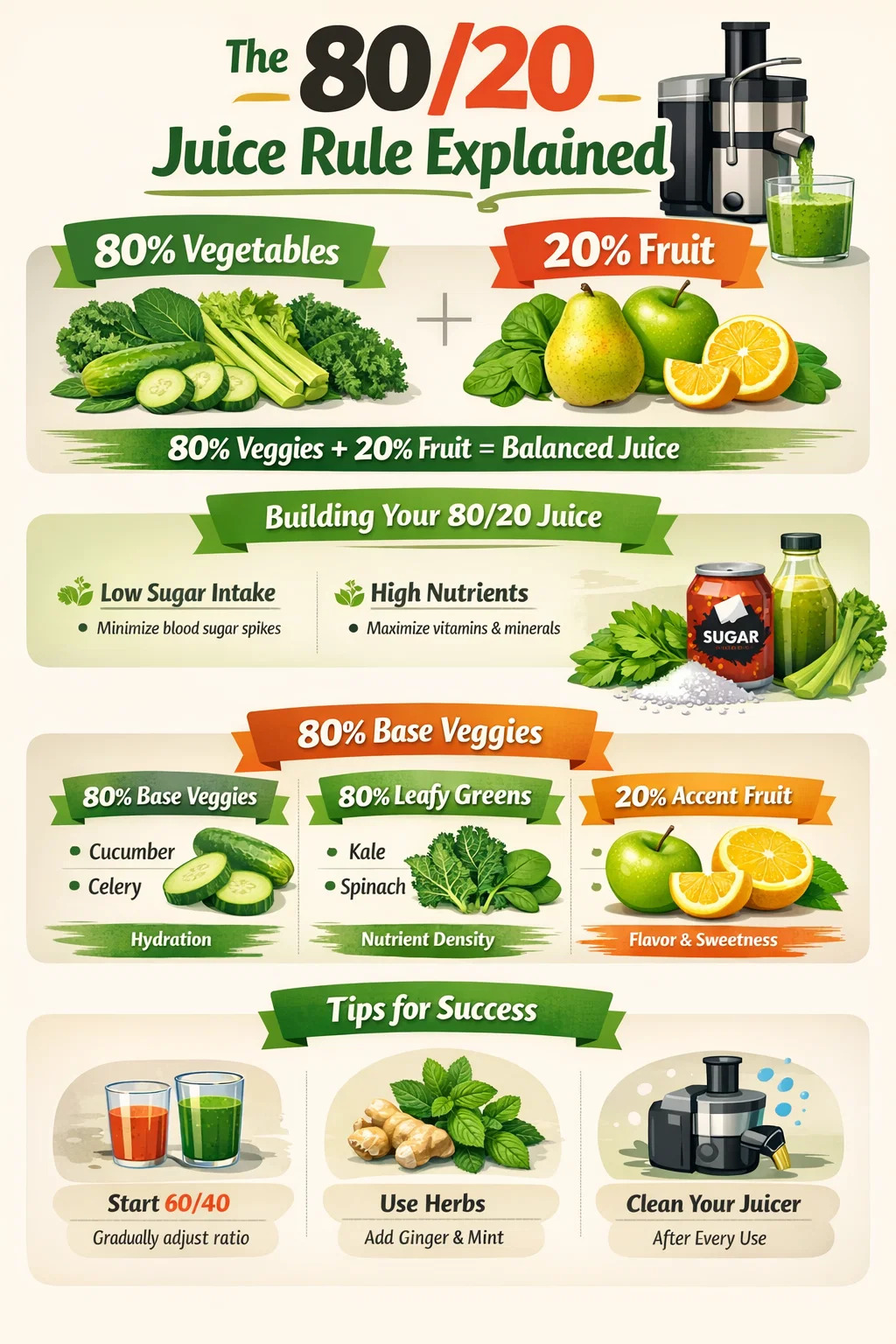
The 80/20 rule for juicing is a nutritional guideline stating that for every glass of juice you produce, 80% of the ingredients should be vegetables and only 20% should be fruits. This ratio is designed to maximize the intake of phytonutrients and minerals while strictly limiting the consumption of fructose. While using a high-quality juicer makes it easy to create delicious concoctions, relying too heavily on sweet fruits can lead to unwanted blood sugar spikes, defeating many of the health purposes of fresh extraction.
Why the 80/20 Ratio is Essential for Health
When you use a juicer, the machine removes the insoluble fiber from the produce. Fiber normally acts as a "buffer" that slows down the absorption of sugar into your bloodstream. Without it, the natural sugars in fruits like apples, pineapples, and grapes hit your system almost instantly. By sticking to the 80/20 rule, you ensure that the bulk of your drink consists of low-glycemic greens and root vegetables.
Sugar Content Comparison
To put this into perspective, consider the sugar content in common ingredients. A juice made primarily of apples can contain over 24 grams of sugar per cup, which is nearly equivalent to a standard soda. Conversely, a juice dominated by celery, cucumber, and kale typically contains less than 5 grams of sugar per serving while offering a much broader spectrum of micronutrients.
Building the Perfect 80/20 Recipe
Creating a palatable juice with your juicer while following this rule requires strategic ingredient selection. You cannot simply throw random greens together and expect a pleasant taste. You need a mix of "base" vegetables, "functional" greens, and "accent" fruits.
| Category | Recommended Ingredients | Purpose |
|---|---|---|
| Base (80%) | Cucumber, Celery, Romaine | Hydration and volume |
| Greens (80%) | Kale, Spinach, Parsley | Nutrient density |
| Fruit (20%) | Green Apple, Pear, Lemon | Flavor and sweetness |
Top Vegetables for the 80% Base
When using a masticating or centrifugal juicer, you want vegetables that yield high amounts of liquid to make the most of your produce budget. The following vegetables are the most efficient for filling up that 80% quota:
- Cucumbers: Composed of about 95% water, they provide a neutral base that carries other flavors well.
- Celery: Extremely low in calories and high in electrolytes, it adds a salty kick that balances sweet fruits.
- Leafy Greens: While they yield less juice, their chlorophyll content is unmatched. Using a cold-press juicer is best for these to prevent nutrient loss.
Smart Fruit Selection for the 20% Flavor
Not all fruits are created equal in the eyes of the 80/20 rule. Some are "smarter" choices because they offer strong flavor without overwhelming the drink with sugar. For example, lemons and limes are technically fruits, but they contain very little sugar and can be used to brighten a vegetable-heavy juice. One green apple is often the perfect amount of sweetness for a 32-ounce batch of juice processed through your juicer.
Tips for Success with the 80/20 Rule
Adopting this rule can be a challenge for beginners who are used to store-bought, sugar-laden juices. Here are several constructive ways to transition:
- Gradual Transition: Start with a 60/40 ratio for the first week and slowly increase the vegetable portion as your palate adapts.
- Use Herbs: Mint, ginger, and basil can provide a sense of "sweetness" or complexity without adding actual sugar.
- Rotate Ingredients: Don't use the same greens every day to avoid the buildup of certain alkaloids and to ensure a wide range of vitamins.
- Clean Your Machine: A dirty juicer can harbor bacteria and impart off-flavors to delicate vegetable juices. Always rinse the parts immediately after use.
Summary: The Ultimate Goal of 80/20 Juicing
The ultimate goal of the 80/20 rule is to turn your daily juice into a nutrient-dense supplement rather than a sugary treat. By utilizing your juicer to process a high volume of greens and watery vegetables, you provide your body with a massive dose of alkalinity and antioxidants. This approach supports long-term health goals, aids in inflammation reduction, and ensures that you are getting the true medicinal benefits that fresh juice has to offer.