
 英语
英语 中文简体
中文简体

Content
Essential Compatibility: Which Fruits Work Best?
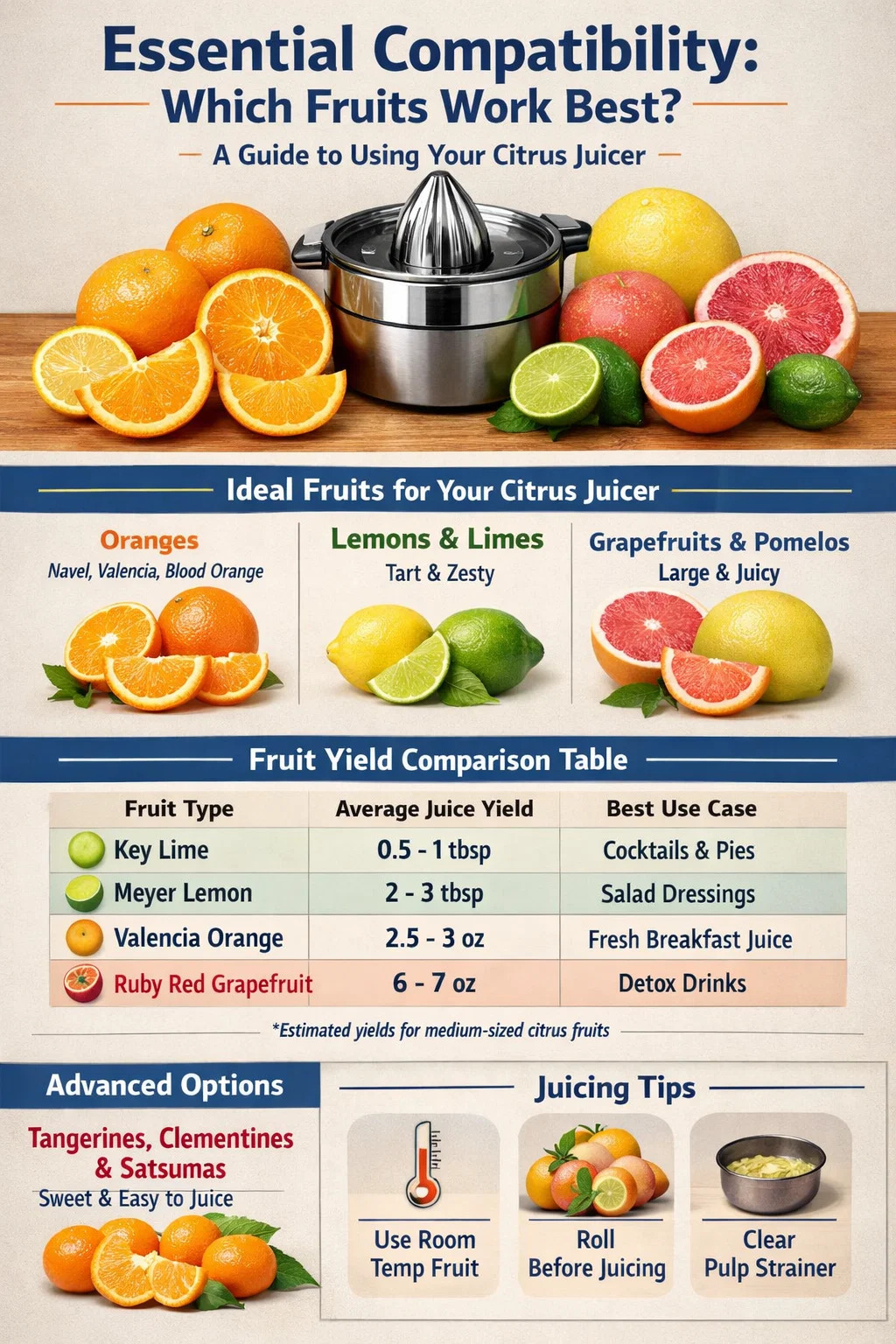
A citrus juicer is specifically engineered to extract liquid from fruits belonging to the Citrus genus. The core design—featuring a ridged cone called a reamer—is intended to shred the internal juice sacs (vesicles) of fruits with a thick, leathery rind and a segmented interior. Consequently, you can juice oranges, lemons, limes, grapefruits, pomelos, and tangerines with high efficiency. Attempting to use this specific tool for non-citrus fruits like apples or carrots will not work because the reamer cannot process solid, fiber-dense structures.
Primary Fruits for Your Citrus Juicer
The most common use for a citrus juicer involves standard breakfast fruits. However, the versatility within this category is broader than many realize. Each fruit offers a different yield and acidity level, requiring slight adjustments in how you handle the machine.
Oranges are the gold standard. A medium-sized orange typically yields about 2 to 3 ounces of juice. Valencia oranges are often preferred for juicing because they have a higher liquid content and fewer seeds compared to Navel varieties, which can sometimes turn slightly bitter if the juice is left to sit.
Lemons and Limes
These are smaller but have very tough rinds. Using a citrus juicer for these fruits is much more effective than hand-squeezing, as the reamer can reach the juice sacs near the peel. One lemon usually provides about 2 to 3 tablespoons of juice, which is vital for cooking, baking, or making fresh lemonade.
Grapefruits and Pomelos
These are the heavyweights of the citrus world. Because of their size, you need a citrus juicer with a larger reamer or an adjustable cone. A single grapefruit can yield upwards of 6 to 8 ounces of juice, making it a very efficient fruit for a quick morning drink.
Fruit Yield Comparison Table
To help you plan your grocery list, here is a breakdown of what you can expect from different fruits when using a standard citrus juicer.
| Fruit Type | Average Juice Yield | Best Use Case |
|---|---|---|
| Key Lime | 0.5 - 1 tbsp | Cocktails & Pies |
| Meyer Lemon | 2 - 3 tbsp | Salad Dressings |
| Valencia Orange | 2.5 - 3 oz | Fresh Breakfast Juice |
| Ruby Red Grapefruit | 6 - 7 oz | Detox Drinks |
Advanced Options: Tangerines, Clementines, and Satsumas
Small, easy-peel citrus fruits are often overlooked for juicing because people prefer to eat them whole. However, tangerine juice is incredibly sweet and vibrant. When using a citrus juicer for these smaller fruits, you should check if your device has a smaller reamer attachment. If the cone is too large, it may just tear the peel without extracting the juice from the center. Clementines are particularly great for kids as the juice is naturally less acidic than standard orange juice.
Can You Juice Soft Fruits or Berries?
Technically, the answer is no, but with a caveat. A citrus juicer is not built to handle the mushy texture of strawberries or the stone of a peach. However, some creative users found that very soft, overripe watermelons can be pressed against a reamer to get some liquid, but it is messy and highly inefficient. For anything that isn't citrus, a masticating or centrifugal juicer is required. Stick to citrus to protect the motor of your electric citrus juicer and to ensure the longevity of the plastic parts.
Maximizing Results with Your Citrus Juicer
To get every drop of juice out of the fruits mentioned above, follow these practical steps:
- Temperature Matters: Room temperature fruits release juice much more easily than cold ones. If they are in the fridge, take them out 30 minutes before juicing.
- The Roll Method: Before cutting the fruit in half, press it down firmly on a counter and roll it with your palm. This breaks the internal fibers.
- Check the Strainer: During a long juicing session, pulp can clog the strainer of your citrus juicer. Clear it out every 3 or 4 fruits to maintain a steady flow.
- Quartering Large Pomelos: If a pomelo is too big for the reamer, cut it into quarters instead of halves to allow the cone to reach the fruit better.
Why This Tool Is Superior for Citrus
You might wonder why you shouldn't just use a general-purpose juice extractor for these fruits. The reason lies in the pith and peel. A general juicer requires you to peel the fruit first because it grinds everything. The peel of citrus contains bitter oils that ruin the flavor. A citrus juicer leaves the peel intact, ensuring that only the sweet, internal juice is collected. This makes it the most specialized and effective tool for any fruit in the orange and lemon family.