
 英语
英语 中文简体
中文简体

Content
The Verdict: Why Masticating Juicers Are the Healthiest Choice
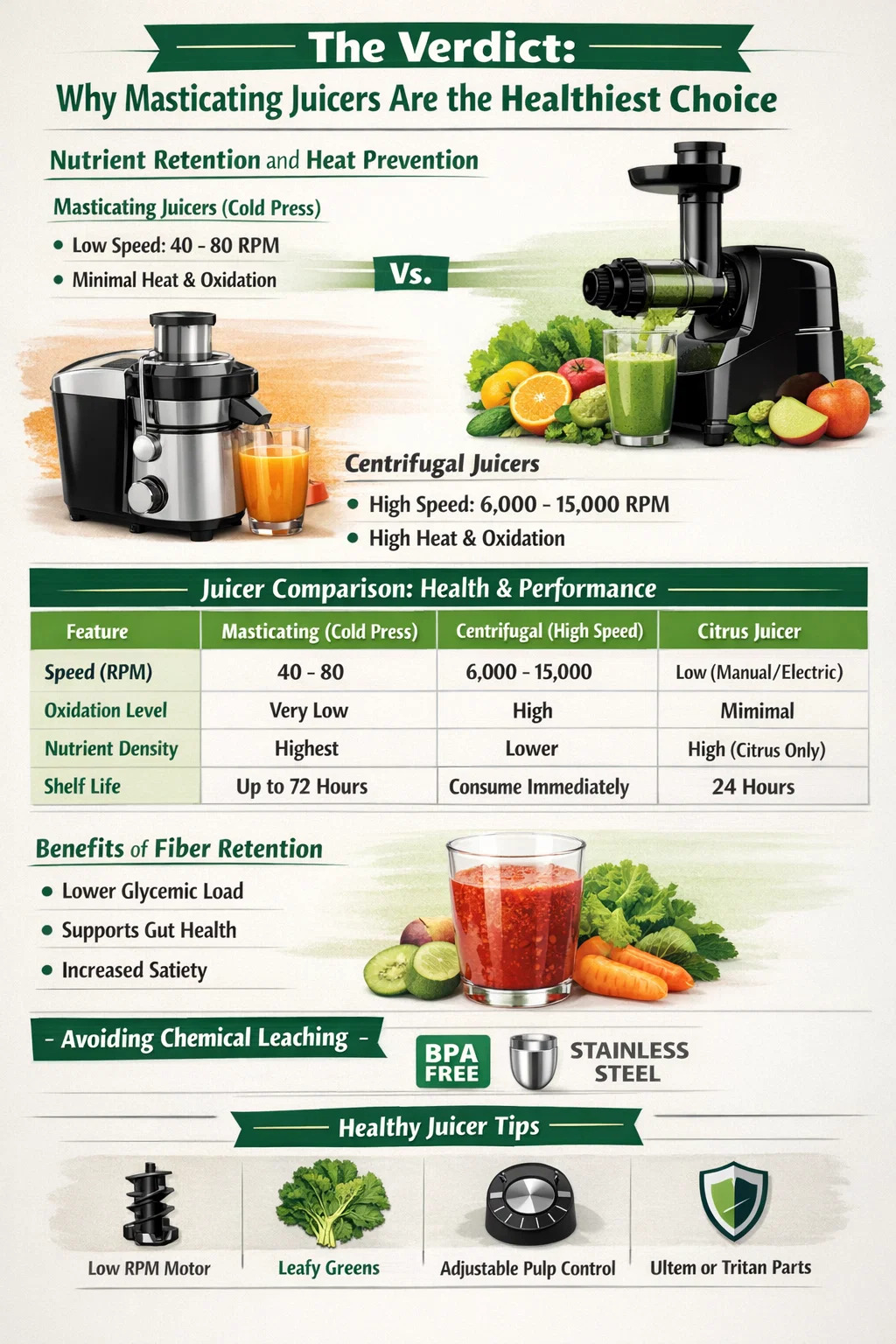
When prioritizing health and nutrient density, the masticating juicer (also known as a cold-press juicer) is the healthiest type of juicer available. Unlike high-speed models, masticating juicers use a slow-turning screw or auger to crush fruits and vegetables, which minimizes heat friction and oxidation. This gentle process ensures that delicate vitamins, minerals, and live enzymes remain intact, providing a more nutritionally potent beverage that can stay fresh for up to 72 hours.
Nutrient Retention and Heat Prevention
The primary enemy of "healthy" juice is heat. Conventional centrifugal juicers operate at speeds between 6,000 and 15,000 RPM (rotations per minute). This high-speed spinning generates heat that can thermally degrade sensitive nutrients like Vitamin C and B vitamins.
The Cold Press Advantage
In contrast, masticating juicers operate at a much lower speed, typically between 40 and 80 RPM. Because the process is mechanical pressing rather than high-speed shredding, the juice temperature remains stable. Research indicates that cold-pressed juices can contain significantly higher levels of phytochemicals and antioxidants compared to juices extracted through high-heat methods.
Comparing Juicer Types for Nutritional Quality
Understanding the technical differences between various extraction methods helps in selecting the machine that aligns best with specific wellness goals.
| Feature | Masticating (Cold Press) | Centrifugal (High Speed) | Citrus Juicer |
|---|---|---|---|
| Speed (RPM) | 40 - 80 | 6,000 - 15,000 | Low (Manual/Electric) |
| Oxidation Level | Very Low | High | Minimal |
| Nutrient Density | Highest | Lower | High (Citrus only) |
| Shelf Life | Up to 72 Hours | Consume Immediately | 24 Hours |
The Role of Fiber and Pulp Management
A common health concern with juicing is the removal of fiber. However, the healthiest juicers allow for adjustable pulp control, letting users keep some soluble fiber in the drink to moderate blood sugar spikes.
Benefits of Fiber Retention
- Lower Glycemic Load: Including some pulp slows the absorption of sugars from fruits.
- Prebiotic Intake: Small amounts of insoluble fiber support gut microbiome health.
- Satiety: Juice with more texture often feels more filling than pure liquid.
Avoiding Chemical Leaching with Quality Materials
The "healthiness" of a juicer also depends on its construction. High-quality juicers use BPA-free plastics or medical-grade stainless steel. Acidic juices, such as lemon or grapefruit, can leach chemicals from low-quality plastic components.
To ensure maximum safety, health-conscious consumers should look for juicers with Ultem or Tritan plastic components, which are highly durable and non-toxic even when exposed to high-acidity ingredients.
Summary of Health Considerations
To maximize your health benefits, follow these practical steps when choosing and using your juicer:
- Select a masticating juicer to preserve live enzymes and prevent oxidation.
- Prioritize low-RPM motors to keep the juice cold and nutritionally stable.
- Choose machines with BPA-free or stainless steel parts to prevent chemical contamination.
- Look for models that efficiently juice leafy greens, as these are the most nutrient-dense ingredients for health-boosting juices.