
 英语
英语 中文简体
中文简体

Content
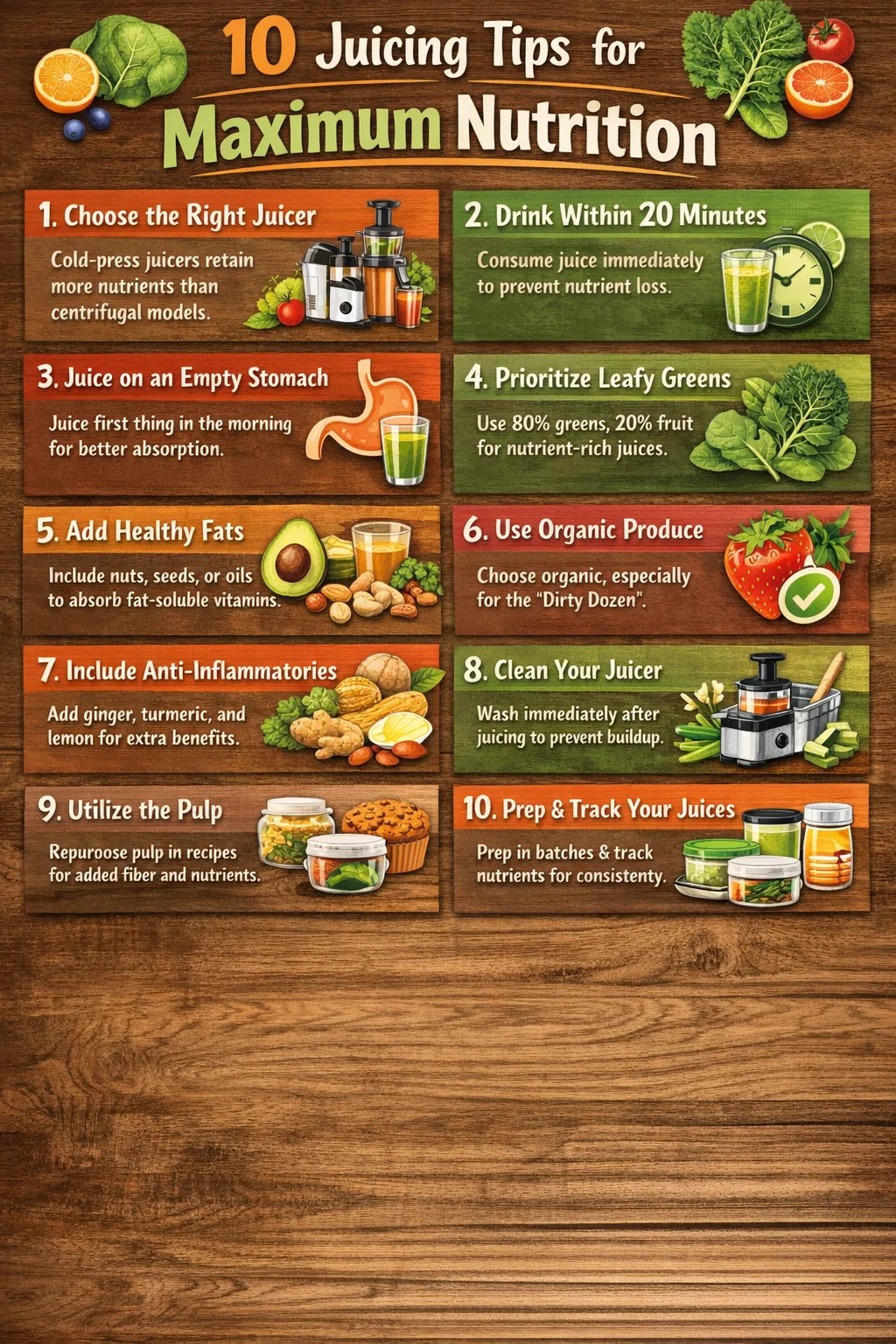
- 1 Choose the Right Juicer for Your Nutritional Goals
- 2 Drink Your Juice Within 20 Minutes of Juicing
- 3 Juice on an Empty Stomach for Better Absorption
- 4 Prioritize Leafy Greens in Every Juice Blend
- 5 Add a Fat Source to Unlock Fat-Soluble Vitamins
- 6 Use Organic Produce — Especially for High-Pesticide Items
- 7 Include Anti-Inflammatory Additions in Your Juicer Routine
- 8 Clean Your Juicer Immediately After Every Use
- 9 Don't Waste the Pulp — Use It to Extend Nutrition
- 10 Balance Blood Sugar by Managing Fruit Content Carefully
- 11 Prep and Pre-Cut Produce in Batches to Stay Consistent
- 12 Juice Seasonal Produce for Peak Nutrient Density
- 13 Track What You Juice to Identify Nutritional Gaps
If you want to get the most nutrition out of every glass, the way you use your juicer matters just as much as what you put into it. Cold-pressing at low speed, juicing on an empty stomach, and drinking within 20 minutes of juicing can increase nutrient absorption by a significant margin. These are not minor tweaks — they are the difference between a glass of sugary liquid and a genuinely functional health drink. The ten tips below are grounded in food science and real-world juicing practice, and they apply whether you use a centrifugal juicer, a masticating juicer, or a twin-gear press.
Choose the Right Juicer for Your Nutritional Goals
Not all juicers are created equal when it comes to nutrient preservation. The type of juicer you own — or plan to buy — has a direct impact on enzyme activity, oxidation levels, and the concentration of vitamins and minerals in your final glass.
Centrifugal vs. Masticating Juicers
Centrifugal juicers spin at speeds between 3,000 and 16,000 RPM, generating heat and introducing significant air into the juice. This oxidation process degrades heat-sensitive vitamins like vitamin C and folate. Studies comparing juice types have found that cold-press (masticating) juicers retain up to 42% more vitamin C compared to centrifugal machines when processing the same produce.
Masticating juicers operate at 40–100 RPM, using a slow-crushing and pressing action that mimics chewing. This low-speed process generates minimal heat and limits air exposure, preserving enzymes and phytonutrients that would otherwise be destroyed. Twin-gear (triturating) juicers take this even further, typically extracting 15–30% more juice from the same quantity of produce while retaining a higher concentration of minerals like iron and calcium.
If you already own a centrifugal juicer, you can still maximize its output — keep reading for tips that apply regardless of machine type. But if you are in the market for a new juicer, a cold-press masticating model is the most reliable investment for nutrition-focused juicing.
| Juicer Type | Speed (RPM) | Oxidation Level | Nutrient Retention | Best For |
|---|---|---|---|---|
| Centrifugal | 3,000–16,000 | High | Moderate | Speed, hard produce |
| Masticating (Cold Press) | 40–100 | Low | High | Leafy greens, nutrition |
| Twin-Gear (Triturating) | 80–160 | Very Low | Very High | Wheatgrass, maximum yield |
Drink Your Juice Within 20 Minutes of Juicing
This is one of the most overlooked juicing tips, and also one of the most impactful. The moment juice leaves your juicer and contacts air, oxidation begins. Enzymes start breaking down. Vitamin C, which is highly reactive, begins to degrade almost immediately.
Research published in the Journal of Food Science found that fresh-squeezed orange juice loses approximately 25% of its vitamin C content within 30 minutes of exposure to air at room temperature. By the two-hour mark, the loss can exceed 50%. If you are juicing specifically to capture heat-sensitive nutrients like folate, vitamin C, and live enzymes, drinking immediately is non-negotiable.
If you must store juice, use an airtight glass container filled as close to the brim as possible to minimize air space. Refrigerate immediately and consume within 24 hours for cold-pressed juice, or within 4–6 hours for centrifugal juice. Never store juice in plastic containers, which can leach BPA and other compounds into acidic juice.
Juice on an Empty Stomach for Better Absorption
Timing matters enormously in juicing. Consuming juice on an empty stomach — typically first thing in the morning or at least 30 minutes before a meal — allows your digestive system to absorb the nutrients without competing with other foods being broken down.
When your stomach is empty, juice passes through it quickly and enters the small intestine within 15–20 minutes, where nutrients are rapidly absorbed into the bloodstream. If you drink juice after a heavy meal, it can sit in the stomach while other foods digest, fermenting and losing nutritional value before absorption occurs.
For people with sensitive digestive systems, juicing on an empty stomach can occasionally cause mild nausea — especially with high-acid juices like citrus or pineapple. In those cases, diluting the juice with 30–50% water can ease the transition without significantly compromising nutrition.
Prioritize Leafy Greens in Every Juice Blend
Fruit-heavy juices taste great, but they deliver a concentrated sugar load with relatively modest micronutrient variety. Leafy greens are nutritionally dense in a way that no fruit can match — they provide chlorophyll, magnesium, folate, iron, vitamin K, and a wide spectrum of antioxidants per calorie.
A single large bunch of kale run through a masticating juicer yields roughly 4–6 ounces of juice containing over 200% of the daily recommended intake of vitamin K and substantial amounts of vitamin A and C. Spinach, romaine, Swiss chard, parsley, and wheatgrass are similarly potent.
The 80/20 Green-to-Fruit Rule
A practical framework for maximizing nutritional density is the 80/20 rule: aim for roughly 80% vegetables and greens and 20% fruit by volume. The fruit serves two purposes — it adds natural sweetness to mask the bitterness of greens, and it provides fast-absorbing natural sugars that aid nutrient transport. A green apple, half a lemon, or a few chunks of pineapple are enough to balance a powerful green base without spiking your blood sugar dramatically.
Rotate your greens regularly rather than juicing the same variety every day. Oxalic acid, found in high concentrations in spinach and chard, can contribute to kidney stone formation if consumed in extreme quantities over time. Rotating between spinach, kale, romaine, and parsley distributes the nutrient load and prevents any single compound from accumulating excessively.
Add a Fat Source to Unlock Fat-Soluble Vitamins
This is a juicing tip that most people never hear. Vitamins A, D, E, and K are fat-soluble, meaning they require the presence of dietary fat to be properly absorbed by the body. Many of the most nutrient-dense juicing ingredients — carrots, kale, spinach, sweet potato, beets — are rich in fat-soluble vitamins. But if you drink them without any accompanying fat, your body absorbs only a fraction of what's available.
A study in the American Journal of Clinical Nutrition demonstrated that carotenoid absorption from salads increased by 4 to 17 times when consumed with a fat-containing dressing compared to a fat-free version. The same principle applies directly to juice.
You have several practical options for pairing fat with your juice:
- Drink your juice alongside a small handful of nuts or seeds (walnuts, almonds, hemp seeds)
- Follow your juice with half an avocado within 15–20 minutes
- Add a teaspoon of cold-pressed flaxseed oil or hemp oil directly to the juice and stir well
- Chase the juice with a tablespoon of nut butter stirred into a small amount of water
Any of these approaches will meaningfully improve the bioavailability of fat-soluble nutrients without undermining the lightweight, easily digestible nature of your juice.
Use Organic Produce — Especially for High-Pesticide Items
Juicing concentrates everything present in your produce — including pesticide residues. When you juice five large carrots, you are also concentrating any synthetic chemicals applied to those carrots during growing. This makes the choice between conventional and organic produce more consequential for juice than for whole food consumption.
The Environmental Working Group publishes an annual "Dirty Dozen" list identifying the most pesticide-contaminated produce. For juicing purposes, strawberries, spinach, kale, peaches, pears, apples, grapes, and bell peppers consistently appear at the top of this list and should be purchased organic whenever possible.
On the other end of the spectrum, the "Clean Fifteen" includes items like avocado, pineapple, onions, cabbage, and frozen sweet peas — these can generally be purchased conventional without significant pesticide concern. Using this framework strategically allows you to prioritize your organic budget on the items that matter most.
If organic is not accessible or affordable, a produce wash made from 1 part white vinegar to 3 parts water can remove a portion of surface pesticide residues. Soaking produce for 5–10 minutes and rinsing thoroughly reduces surface contamination, though it cannot address systemic pesticides absorbed into the flesh of the plant.
Include Anti-Inflammatory Additions in Your Juicer Routine
The base juice is only part of the equation. A small number of functional add-ins can dramatically amplify the anti-inflammatory and therapeutic value of your juicer output without requiring large quantities.
Ginger Root
Fresh ginger contains gingerols and shogaols — compounds with well-documented anti-inflammatory and anti-nausea properties. A 1-inch knob of ginger run through the juicer adds a powerful warming kick and has been shown in clinical studies to reduce markers of systemic inflammation. It pairs naturally with carrot, apple, lemon, and turmeric-based juices.
Turmeric Root
Fresh turmeric root (not powdered) can be juiced directly and delivers curcumin in a highly bioavailable form. Curcumin is one of the most extensively studied anti-inflammatory compounds in nutritional science, with over 12,000 published peer-reviewed studies examining its effects. A half-inch to one-inch piece of fresh turmeric is sufficient per serving. Always combine with a small amount of black pepper or a fat source to significantly boost curcumin absorption — piperine in black pepper increases curcumin bioavailability by up to 2,000% according to research published in Planta Medica.
Lemon and Lime
Citrus juice — particularly from whole lemons and limes run through a juicer with some peel intact — adds vitamin C, d-limonene (a powerful antioxidant), and natural acidity that helps preserve other nutrients in the juice. The peel contains significantly more flavonoids than the flesh, so if your juicer can handle thin citrus peel, leaving some on adds measurable nutritional benefit.
Clean Your Juicer Immediately After Every Use
This tip is not just about hygiene — it directly affects the quality of future juices and the longevity of your machine. Pulp residue left in a juicer for more than a few hours begins to oxidize and harbor bacteria. In warm environments, this process accelerates rapidly. Residue from high-sugar fruits like beets and carrots is particularly prone to fermenting in the screen or auger of a masticating juicer.
Dried pulp is exponentially harder to remove than fresh pulp. A juicer cleaned within five minutes of use requires little more than a quick rinse and a brush. A juicer left overnight may require extended soaking and still retain residual staining or odor. Most masticating juicers have 5–7 components; a fast rinse under running water immediately after use adds under two minutes to your routine and prevents the most common reason people stop juicing — the perceived inconvenience of cleanup.
For deep cleaning, run a piece of celery or cucumber through the juicer at the end of your session. The high water content acts as a natural flush and clears residual pigments from beets or carrots before you disassemble the machine. A soft bottle brush is invaluable for cleaning the mesh screen of centrifugal juicers.
Don't Waste the Pulp — Use It to Extend Nutrition
One of the most underappreciated aspects of juicing is what remains after the juice is extracted: the fiber-rich pulp. Juicing removes most of the soluble and insoluble fiber from produce, which is actually one of the reasons juice nutrients absorb so quickly. But fiber has its own important role in digestive health, and discarding it entirely means discarding something valuable.
Carrot pulp is naturally sweet and can be incorporated into muffins, energy balls, soups, or veggie patties. Beet pulp works well in chocolate cake or brownies, adding moisture and subtle earthiness. Apple pulp can be folded into oatmeal or used as a base for homemade apple sauce. Green pulp from kale, cucumber, and celery can be frozen in ice cube trays and blended into smoothies later.
The fiber in pulp also feeds beneficial gut bacteria, supporting the microbiome that plays a central role in immune function and mental health. Incorporating pulp into other meals means your juicing practice contributes to whole-body nutrition rather than just a concentrated liquid dose.
Balance Blood Sugar by Managing Fruit Content Carefully
Pure fruit juice — even fresh-pressed, cold-processed fruit juice — is essentially a rapid-delivery sugar solution. Without the fiber that slows sugar absorption in whole fruit, fructose from juice enters the bloodstream quickly and can cause a sharp spike in blood glucose followed by a corresponding energy crash. This is a genuine nutritional concern, particularly for people managing insulin sensitivity, type 2 diabetes, or metabolic syndrome.
A 16-ounce glass of pure apple juice can contain as much as 48 grams of sugar — comparable to a can of soda — even though the nutritional profile is clearly superior. The key is not to eliminate fruit from your juicer routine, but to be intentional about quantity and type.
- Lower-sugar fruit options for juicing include green apple (lower in sugar than red), lemon, lime, grapefruit, and small amounts of berries.
- Higher-sugar items to limit include mango, pineapple, grapes, ripe banana, and beets (which have a surprisingly high glycemic impact when juiced).
- Adding a small amount of protein or fat alongside your juice (see the fat-soluble vitamin section above) slows glucose absorption and moderates the blood sugar response.
- Cucumber is an excellent high-volume juicing ingredient — it provides significant liquid yield with minimal sugar, making it ideal as a base for green juices.
People who are not managing blood sugar concerns can be more liberal with fruit content, but even from a purely nutritional standpoint, vegetables offer a more complex and varied micronutrient profile than fruit juice alone.
Prep and Pre-Cut Produce in Batches to Stay Consistent
Consistency is the single biggest factor that determines whether a juicing habit produces meaningful health results. A nutritionally perfect juice recipe you make twice a week is far less impactful than a good-enough juice you drink daily. The most common barrier to daily juicing is not motivation — it is time and friction.
Batch prepping your produce on one or two days per week removes the daily decision-making and physical prep work from the equation. Wash, peel, and chop your produce in advance, then store it in airtight glass containers or zip-lock bags in the refrigerator. Most vegetables and fruits will hold well for 3–5 days when properly stored. Pre-portioned bags — each containing exactly one serving worth of produce — make the daily juicing session as fast as loading ingredients and pressing start.
People who prep ingredients in advance are significantly more likely to maintain a daily juicing routine over 30 days compared to those who start from whole, unwashed produce each session, according to behavioral habit studies around food preparation. The friction reduction is psychologically significant and practically meaningful.
You can also freeze pre-portioned bags of produce for longer-term storage. While freezing does degrade some vitamin C and certain enzymes, the minerals, most B vitamins, and many antioxidants survive the freeze-thaw process quite well. Frozen produce can be run through a masticating juicer after brief thawing and delivers a nutritional profile that is still vastly superior to commercial bottled juice.
Juice Seasonal Produce for Peak Nutrient Density
Produce that is in season and locally grown contains measurably higher concentrations of vitamins and antioxidants than out-of-season produce that has traveled thousands of miles in cold storage. The nutrient density of fresh produce begins declining from the moment of harvest. By the time out-of-season produce reaches your juicer, it may have been in transit or cold storage for days to several weeks.
A study from the University of California found that spinach stored for just 8 days under refrigeration lost between 50% and 90% of its folate content depending on storage conditions. Produce purchased at a farmers market and juiced the same day delivers a dramatically different nutritional result than the same produce purchased at a supermarket after a cross-country journey.
Adapting your juicing recipes to seasonal availability is not just economically smart — it is nutritionally superior. Spring and summer bring abundant leafy greens, cucumbers, zucchini, tomatoes, berries, and stone fruits. Fall and winter offer beets, carrots, parsnips, citrus, pomegranate, and robust root vegetables. Each season provides its own unique phytonutrient profile, and rotating through seasonal produce naturally ensures micronutrient variety across the year.
Track What You Juice to Identify Nutritional Gaps
Casual juicing is better than no juicing, but intentional juicing — where you understand what nutrients your recipes are delivering — produces the most targeted health outcomes. If you are juicing to support immune health, your recipe priorities are different than if you are juicing to address iron deficiency, inflammation, or digestive issues.
Tools like Cronometer allow you to log your juice recipes and see a detailed breakdown of vitamins, minerals, and macronutrients per serving. Running your regular juice through a tracker once reveals whether you are getting meaningful contributions of nutrients like magnesium, folate, vitamin K, and potassium — or whether your recipes are nutritionally narrow and would benefit from diversification.
For example, a standard green juice of cucumber, spinach, green apple, and lemon is nutritionally solid but relatively low in vitamin A compared to a carrot-heavy orange juice. A person focused on eye health and immune support would benefit from alternating between these profiles rather than repeating the same recipe daily. Tracking for even one or two weeks can reveal patterns and gaps that are not obvious from casual observation.