
 英语
英语 中文简体
中文简体

Content
- 1 Choose the Right Juicer for Your Goals
- 2 Prioritize Vegetables Over Fruit in Every Recipe
- 3 Drink Your Juice at the Right Time of Day
- 4 Never Skip the Fiber Equation
- 5 Use Fresh, High-Quality Produce and Handle It Properly
- 6 Clean Your Juicer Immediately After Every Use
- 7 Rotate Your Ingredients to Avoid Overconsumption of Any One Compound
- 8 Treat Juicing as a Supplement, Not a Meal Replacement
- 9 Monitor Your Juice Intake Against Your Caloric Budget
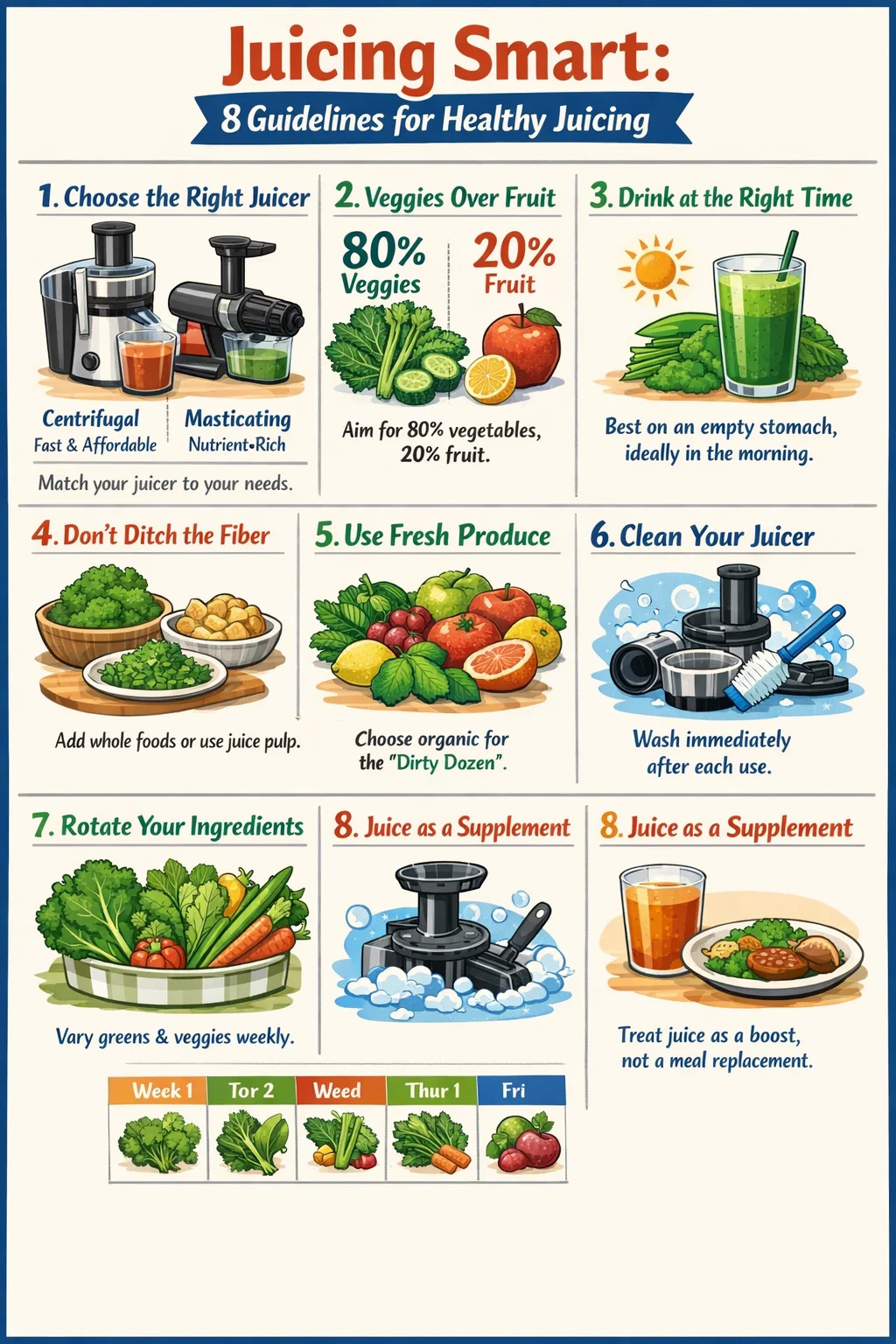
If you want a straightforward answer: juicing works best when it supplements a balanced diet rather than replacing whole foods. The right juicer, the right ingredients, and a few smart habits make the difference between a genuinely healthy routine and one that quietly loads you with sugar. The 8 guidelines below cut through the noise and give you a practical framework you can actually follow.
Choose the Right Juicer for Your Goals
The machine you use shapes the nutritional outcome of every glass you make. There are three main juicer categories on the market, and each has a distinct impact on juice quality, yield, and convenience.
Centrifugal Juicers
These are the most widely sold machines. They work by spinning ingredients against a mesh filter at speeds typically between 6,000 and 14,000 RPM. They are fast, affordable (most range from $50 to $150), and easy to clean. The trade-off is heat and oxidation. The high-speed spinning introduces air into the juice, which degrades heat-sensitive vitamins like vitamin C and certain B vitamins faster than other methods. Studies have shown that centrifugal juice should ideally be consumed within 15 to 20 minutes of preparation for maximum nutrient retention.
Masticating (Cold Press) Juicers
Masticating juicers, often called cold press or slow juicers, operate at 40 to 80 RPM. They crush and press produce rather than spinning it, which means less heat and less oxidation. Research comparing cold press and centrifugal juice has found that cold press juice retains significantly higher levels of polyphenols and antioxidants, sometimes by a margin of 20 to 30 percent. These machines also produce a higher juice yield — particularly from leafy greens like kale and spinach — and the juice stays fresh in a sealed container for up to 72 hours. The drawbacks are cost ($150 to $400+) and slower processing time.
Twin Gear (Triturating) Juicers
Twin gear juicers are the top tier in terms of nutrient preservation and juice yield. They use two interlocking gears to crush produce at very low RPMs. These machines handle wheatgrass, fibrous vegetables, and hard roots exceptionally well. They start around $400 and can exceed $700. For most home users, a quality masticating juicer is the better practical choice. But for anyone serious about maximum enzyme and mineral extraction, the twin gear juicer is worth the investment.
The key takeaway: match your juicer type to your actual usage. If you juice once a day and need speed, a centrifugal model is fine. If you juice leafy greens frequently or prep juice in batches, invest in a masticating machine.
Prioritize Vegetables Over Fruit in Every Recipe
One of the most common mistakes beginners make is building juice recipes around fruit. Fruit juice tastes sweeter and more approachable, but it comes with a significant sugar load. A standard 16-ounce glass of apple juice can contain over 45 grams of sugar — comparable to a can of soda — without the fiber that would normally slow absorption in a whole apple.
A practical ratio that many nutritionists recommend is 80 percent vegetables to 20 percent fruit. This keeps sugar content manageable while still making the juice palatable. Low-glycemic vegetables like cucumber, celery, fennel, and dark leafy greens form the ideal base. These provide chlorophyll, potassium, magnesium, folate, and a range of phytonutrients with minimal sugar impact.
If you find pure vegetable juice too bitter at first, use a small amount of green apple, lemon, or ginger to round out the flavor. Half a green apple adds roughly 8 grams of sugar — manageable as part of a larger vegetable-forward blend. Lemon and lime are particularly useful because they contribute very little sugar but dramatically improve the flavor profile of bitter greens.
Best Vegetables to Juice Regularly
- Cucumber — high water content, easy on the juicer, very low calorie
- Celery — contains apigenin and luteolin, compounds with anti-inflammatory properties
- Kale and spinach — rich in vitamins K, A, and C; best extracted with a masticating juicer
- Beet — contains nitrates that support blood pressure and exercise performance; use sparingly due to natural sugar
- Carrot — rich in beta-carotene; moderate sugar content, best combined with greens
- Ginger and turmeric — potent anti-inflammatory roots; use in small quantities (1–2 inches)
Drink Your Juice at the Right Time of Day
Timing affects how well your body absorbs the nutrients in fresh juice. The general consensus among dietitians is that juice is most beneficial when consumed on an empty stomach or at least 20 minutes before a meal. This is because without food in the stomach, nutrients from the juice — particularly water-soluble vitamins like vitamin C and B vitamins — absorb more quickly into the bloodstream.
Morning is the most effective time for most people. After an overnight fast, the digestive system is relatively clear and primed for nutrient absorption. A 12–16 ounce green juice first thing in the morning provides a concentrated mineral and vitamin boost before the day's first full meal.
Avoid drinking juice immediately after a heavy meal. When the stomach is already processing solid food, the liquid juice moves through the system faster, potentially causing fermentation and digestive discomfort. People prone to blood sugar fluctuations should also avoid drinking fruit-heavy juices on an empty stomach, as the rapid sugar absorption can cause a sharp spike followed by a dip in energy.
Pre-workout, a small beet and citrus juice can be genuinely useful. A 2012 study published in the Journal of the Academy of Nutrition and Dietetics found that beet juice — consumed 2 to 3 hours before exercise — reduced the oxygen cost of exercise by approximately 3 percent and improved endurance performance in recreational athletes.
Never Skip the Fiber Equation
One of the most frequently cited criticisms of juicing is that it removes fiber. This is true — and it matters. The pulp that most juicers extract and discard contains the insoluble fiber that supports healthy digestion, slows sugar absorption, and feeds beneficial gut bacteria. When you remove fiber from produce, you also lose some of the blood sugar modulating effect that whole fruits and vegetables provide.
This does not mean juicing is harmful, but it does mean you need to compensate elsewhere in your diet. A practical approach is to keep juicing as a supplement to whole food intake, not a substitute. On days when you juice, make a conscious effort to eat fiber-rich whole foods at your other meals — lentils, oats, whole vegetables, berries, and beans.
Another option is to blend some of the pulp back into the juice. Not all juicer pulp has the same texture — cucumber and apple pulp can be stirred back into the juice with minimal impact on taste. Alternatively, many people use vegetable pulp in soups, broths, and baked goods, which is an effective way to recover the fiber without wasting the produce.
The daily fiber recommendation from the USDA is 25 grams for women and 38 grams for men. Most adults get only 15 to 16 grams per day. If juicing is part of your routine, tracking fiber intake becomes more important, not less.
Use Fresh, High-Quality Produce and Handle It Properly
The nutritional ceiling of any juice is determined by the quality of the ingredients going into the juicer. Produce that has been stored for too long loses measurable quantities of vitamins — particularly vitamin C, which degrades with exposure to air, light, and heat. A carrot stored at room temperature for two weeks can lose up to 27 percent of its vitamin C content compared to a freshly harvested one.
Organic vs. Conventional Produce
For juicing specifically, the organic vs. conventional debate carries more weight than it does for whole foods. Because juice concentrates the liquid from a large amount of produce, it also concentrates any pesticide residues present on the skin. When you eat a whole apple, you're consuming a fraction of the residue on the surface. When you juice six apples for a single glass, you're concentrating whatever is on all six.
The Environmental Working Group's annual Dirty Dozen list consistently flags produce like strawberries, spinach, kale, peaches, apples, and grapes as having the highest pesticide loads. For these items, choosing organic for juicing is a reasonable investment. For produce with thick skins that you remove before juicing — like pineapple or avocado — conventional is generally fine.
Washing and Prepping Produce
Always wash produce thoroughly before feeding it through the juicer, even if it's organic. A produce brush works well for root vegetables and firm-skinned items. For leafy greens, a soak in a bowl of cold water followed by a rinse removes surface debris effectively. Remove any damaged or moldy portions entirely — juice should only contain produce in sound condition.
Certain items require preparation before juicing. Citrus fruits are typically peeled but the white pith can be left on, as it contains flavonoids. Beets can be juiced with their skin if organic. Hard seeds from stone fruits like peaches or cherries should always be removed before juicing.
Clean Your Juicer Immediately After Every Use
This guideline is not glamorous, but it is one of the most critical from a food safety standpoint. Fresh juice is an ideal growing environment for bacteria. Pulp residue left sitting in the juicer — even for an hour in a warm kitchen — begins to develop bacterial growth. A 2016 report from the FDA identified fresh-pressed juice as a potential vehicle for pathogens including E. coli, Salmonella, and Listeria, particularly when equipment is not cleaned between uses.
Rinse all removable parts with water immediately after juicing. This prevents pulp from drying and hardening onto mesh filters and cutting discs, which makes thorough cleaning significantly harder. Most juicer components can be placed under running water right after use, which only takes 60 to 90 seconds and makes the deeper wash much easier.
For a thorough clean, disassemble all removable parts and wash with warm soapy water. Pay particular attention to the mesh filter or screen — pulp fibers lodge easily in the fine holes and build up over time if not brushed out. Most masticating and centrifugal juicers come with a small cleaning brush designed for this purpose. Use it every time.
Once a week, do a deeper soak with a diluted white vinegar solution (one part vinegar to three parts water) for 15 minutes. This removes mineral deposits and any residual organic matter that regular washing misses. Rinse thoroughly after. Keeping your juicer consistently clean also extends its lifespan and prevents the fine mesh components from degrading prematurely.
Rotate Your Ingredients to Avoid Overconsumption of Any One Compound
A mistake that many enthusiastic juicers make — especially those who find a recipe they love — is using the same ingredients every single day for extended periods. This can lead to overconsumption of specific compounds that, at high concentrations, can be problematic.
Kale, spinach, and other dark leafy greens contain oxalates, which bind to calcium and can contribute to kidney stone formation in susceptible individuals if consumed in very large quantities. A single serving is not a concern, but juicing a pound of kale daily for months without variation adds up. Cruciferous vegetables like kale, broccoli, and cabbage also contain goitrogens — compounds that can interfere with thyroid function in people with existing thyroid conditions when consumed in concentrated raw form over extended periods.
Carrot juice is another example. Carrots are nutritious and make a great base for many recipes. But drinking large amounts of carrot juice every day can cause carotenemia — a harmless but noticeable yellowing of the skin due to excess beta-carotene accumulation. The practical solution is simple: rotate your greens weekly and vary your vegetable base.
A sensible rotation might look like this:
| Week | Primary Green | Base Vegetable | Accent |
|---|---|---|---|
| Week 1 | Kale | Cucumber | Lemon + Ginger |
| Week 2 | Spinach | Celery | Green apple + Mint |
| Week 3 | Swiss Chard | Carrot | Turmeric + Orange |
| Week 4 | Romaine | Beet | Lime + Fennel |
Treat Juicing as a Supplement, Not a Meal Replacement
Juice cleanses and extended juice fasts are marketed aggressively, and they generate strong opinions. The clinical reality is that there is no credible scientific evidence that multi-day juice cleanses "detox" the body in any measurable physiological sense. The liver, kidneys, and lymphatic system handle detoxification continuously and effectively in healthy individuals without the need for juice fasting protocols.
What juice genuinely does well is deliver a concentrated dose of micronutrients — vitamins, minerals, and phytonutrients — in a form that requires very little digestive effort. This makes it a genuinely useful addition to a diet that includes adequate protein, healthy fats, complex carbohydrates, and whole-food fiber. Used in this role, fresh juice from a quality juicer is a practical and beneficial dietary tool.
Using juice to replace meals, however, carries real drawbacks. Fresh juice contains virtually no protein and very little fat — two macronutrients that are essential for satiety, muscle maintenance, hormone production, and sustained energy. A person who replaces two meals a day with juice for an extended period will likely experience muscle loss, fatigue, and difficulty maintaining consistent energy levels, particularly if physically active.
The sustainable model is one 12–16 ounce serving of fresh juice per day, alongside regular meals that provide complete nutrition. Over time, this kind of consistent, moderate juicing habit contributes meaningfully to overall micronutrient intake, supports hydration, and adds variety to a diet — without the risks of caloric restriction or nutrient imbalance.
Who Should Be Cautious With Juicing
Certain groups should approach juicing with specific caution and ideally consult a healthcare provider before making it a regular habit:
- People with type 2 diabetes or insulin resistance — fruit-forward juices can cause rapid blood sugar spikes
- Individuals on blood thinners like warfarin — large amounts of vitamin K from leafy greens can interfere with medication effectiveness
- People with kidney disease — high oxalate and potassium content in some juices may be contraindicated
- Those with hypothyroidism — high quantities of raw goitrogenic vegetables (kale, cabbage) in juice form may compound thyroid concerns
- Pregnant individuals — raw, unpasteurized juice carries a small but real risk of bacterial contamination
For healthy adults, none of these concerns are reasons to avoid juicing — they are reasons to juice thoughtfully, rotate ingredients, and keep juice as one component of a broader dietary pattern rather than a central pillar.
Monitor Your Juice Intake Against Your Caloric Budget
Fresh juice is often perceived as a "free" or low-calorie food. For vegetable-dominant juices, this is broadly true — a 16-ounce green juice made primarily from cucumber, celery, and spinach with a bit of lemon might contain 60 to 80 calories. But juice recipes that lean heavily on fruit, beet, or carrot can carry a more significant caloric and sugar load than most people realize.
Consider a common "healthy" juice recipe: two large carrots, two apples, one orange, and an inch of ginger. This yields a 16-ounce juice with approximately 220 to 250 calories and 45 to 55 grams of sugar — nearly the entire daily recommended sugar intake in a single drink. Without the fiber of the whole produce, those sugars absorb rapidly and drive a significant insulin response.
Tracking your juice calories for the first few weeks is a useful exercise — not to be obsessive, but to establish an accurate baseline. Many people are surprised to find that their daily juice habit adds 300 to 400 unexpected calories to their intake. For someone managing weight, this is a relevant fact.
The following table gives a rough caloric and sugar reference for commonly juiced ingredients per 100 grams:
| Ingredient | Calories (per 100g) | Sugar (per 100g) | Glycemic Index (approx.) |
|---|---|---|---|
| Cucumber | 15 | 1.7g | 15 |
| Celery | 16 | 1.3g | 15 |
| Kale | 49 | 2.3g | Low |
| Carrot | 41 | 4.7g | 35–47 |
| Beet | 43 | 6.8g | 61 |
| Apple (green) | 52 | 10.4g | 38 |
| Orange | 47 | 9.4g | 43 |
| Lemon (juice only) | 22 | 2.5g | 20 |
Using this as a rough reference when building your recipes gives you a realistic picture of what you're drinking. A juice built primarily from cucumber, celery, and kale — with half a lemon and a small thumb of ginger — delivers excellent micronutrient density at under 100 calories and minimal sugar. That's the benchmark worth aiming for in daily use.