
 英语
英语 中文简体
中文简体

Content
- 1 The Short Answer: These Foods Should Never Go in Your Juicer
- 2 Fruits and Vegetables with No Juice Content
- 3 Hard Seeds, Pits, and Stones
- 4 Toxic Plant Parts That Should Never Enter a Juicer
- 5 Whole Citrus Peels: What Your Juicer Can and Cannot Handle
- 6 Extremely Fibrous Vegetables That Damage Juicer Components
- 7 Starchy Vegetables That Produce Unusable Results
- 8 Quick Reference: What Not to Put in a Juicer
- 9 Centrifugal vs. Masticating Juicers: Does It Change What You Can Juice?
- 10 Items That Surprise People: Common Mistakes Even Experienced Juicers Make
- 11 What Happens to Your Juicer When You Use It Wrong
- 12 Safe Juicer Practices That Extend Machine Life
The Short Answer: These Foods Should Never Go in Your Juicer
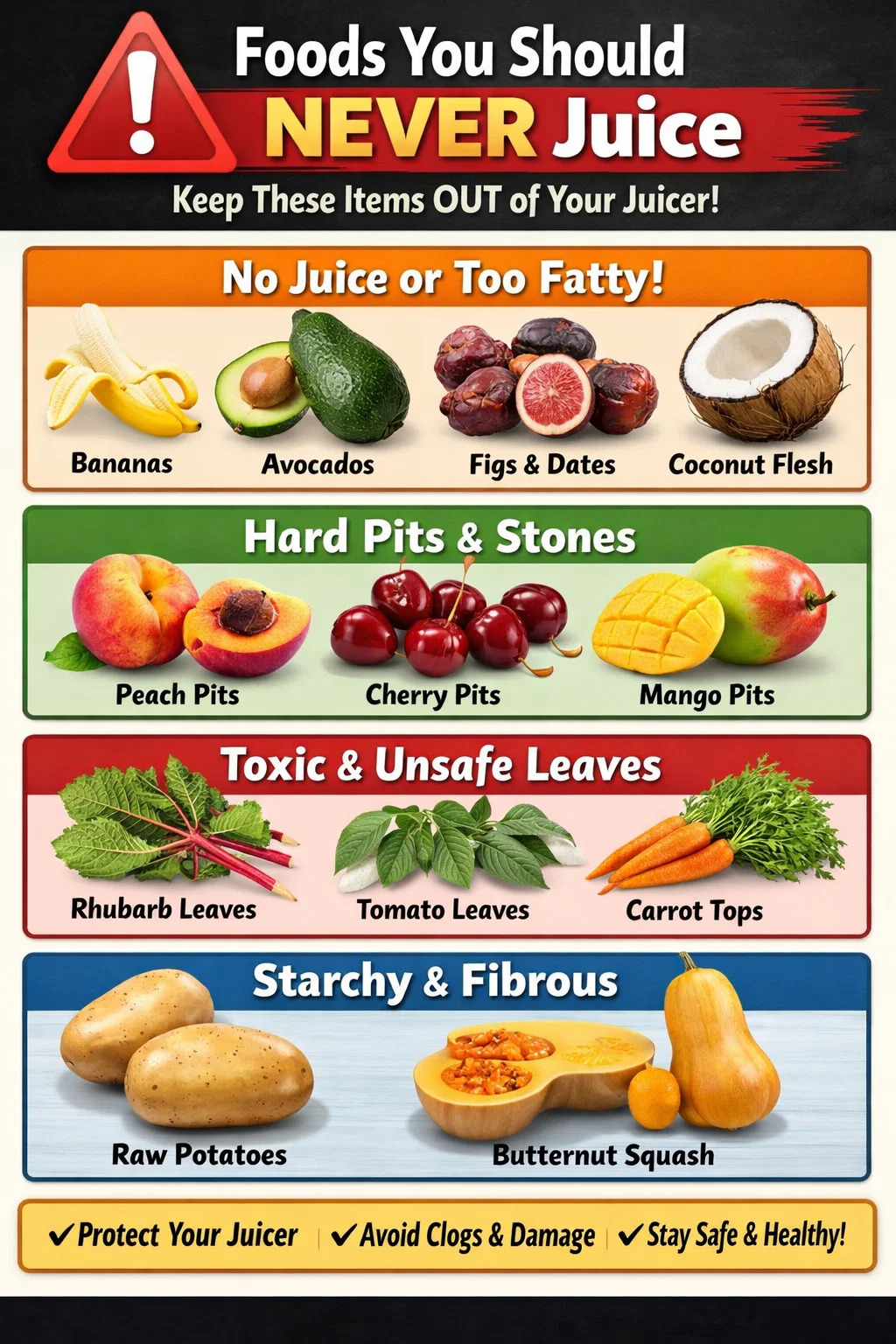
If you want a quick answer before diving into the details: never put bananas, avocados, whole citrus peels, hard pits, coconut flesh, figs, or rhubarb leaves into your juicer. These items either contain no extractable juice, are too starchy or fatty to process, or are outright toxic. Beyond damaging your machine or producing unusable results, some of these ingredients pose real safety risks.
This guide breaks down every category of food you should keep away from your juicer — whether you own a centrifugal juicer, a masticating (cold press) juicer, or a twin-gear model — along with the reasoning behind each restriction. Understanding why certain foods are incompatible with juicers will help you extend the life of your machine, avoid wasting produce, and get the most nutritious output from every session.
Fruits and Vegetables with No Juice Content
A juicer works by separating liquid from fiber. If a food item contains very little free liquid, the machine has nothing to extract — and the attempt will likely clog the filter basket, strain the motor, and produce a thick paste instead of juice.
Bananas
Bananas are one of the most commonly misused fruits in juicers. They contain around 75% water by weight, but that moisture is tightly bound within dense, starchy cells. Juicers cannot break down those cells efficiently. What comes out is a thick, gummy paste that immediately clogs the filter screen. This residue is notoriously difficult to clean and can permanently damage mesh screens if it dries inside the machine. Bananas are best used in blenders or smoothies, not juicers.
Avocados
Avocados are roughly 73% water, but their high fat content (about 15 grams per 100g serving) means the flesh emulsifies rather than separates. A juicer cannot meaningfully process avocado — you will end up with an oily, green sludge that clogs the strainer and leaves the machine coated in oxidized fat. Rancid avocado fat inside a juicer motor housing is nearly impossible to clean and can cause persistent unpleasant odors.
Figs and Dates
Dried or fresh figs and dates have concentrated sugars that turn into a sticky, caramel-like mass under the mechanical pressure of a juicer. This residue adheres to every internal surface. Even a small amount of fig pulp can block the pulp ejection chute in a centrifugal juicer within seconds. Fresh figs in particular produce very little actual juice relative to their mass.
Coconut Flesh
Mature coconut meat contains around 33 grams of fat per 100g and has a very fibrous, dense structure. Running coconut flesh through a standard juicer will overheat the motor and yield almost no liquid. Young coconut water can be used, but the flesh itself is strictly a blender or food processor ingredient. Attempting to juice mature coconut meat has been reported to burn out the motors of entry-level juicers after a single use.
Hard Seeds, Pits, and Stones
Hard pits are among the most mechanically destructive items you can put in a juicer. The blades or auger in your machine are engineered to handle produce flesh — not objects with a hardness comparable to wood or stone.
Peach, Mango, and Cherry Pits
Always remove the pit before juicing stone fruits. Peach and mango pits are large enough to jam the feed chute or instantly stall a masticating juicer's auger. Cherry pits, while smaller, can fracture under pressure and send sharp fragments into the pulp and juice. Beyond the mechanical damage, stone fruit pits (peach, cherry, apricot, plum) contain amygdalin — a compound that converts to hydrogen cyanide when crushed. While the quantities are small, deliberately crushing multiple pits is unnecessary and inadvisable.
Apple Seeds
Apple seeds also contain amygdalin. A single apple contains roughly 5 seeds, each with approximately 0.49mg of hydrogen cyanide potential. One or two seeds in a batch of juice pose negligible risk to adults, but when juicing large quantities of apples — as is common in cold-press operations — the cumulative seed count becomes a concern worth addressing. Core your apples before juicing as a consistent habit.
Watermelon Seeds (in large quantities)
Watermelon seeds are soft enough that many masticating juicers can handle them in small numbers, but large seed volumes will clog centrifugal juicers and contribute to a bitter flavor in the finished juice. Remove seeds when possible, or use seedless varieties.
Toxic Plant Parts That Should Never Enter a Juicer
Some parts of otherwise edible plants are genuinely poisonous. The fact that they come from a "healthy" plant does not make every part safe for consumption.
Rhubarb Leaves
Rhubarb stalks are perfectly fine to juice (with a caveat about tartness and oxalic acid content). The leaves, however, contain dangerously high levels of oxalic acid — up to 0.5% by weight. Consuming rhubarb leaves in any meaningful quantity can cause kidney failure, seizures, and in extreme cases, death. There have been documented human fatalities from ingesting rhubarb leaves, particularly during World War I when they were mistakenly promoted as a food source. Strip every leaf completely before juicing rhubarb stalks.
Tomato Leaves and Stems
Tomato fruit is safe and juice-friendly. The green leaves and stems of the tomato plant belong to the nightshade family and contain tomatine and solanine — alkaloids that cause gastrointestinal distress, dizziness, and neurological symptoms in sufficient quantities. Always remove all green stem and leaf material before juicing tomatoes.
Carrot Tops
Carrot greens are technically edible in small amounts, but they contain alkaloids and nitrates that become concentrated when juiced. Drinking carrot top juice regularly has been linked to bitter taste reactions and mild gastrointestinal irritation. Unlike carrot root — one of the most popular juicing vegetables — the tops offer no meaningful nutritional advantage that justifies the risk.
Elder Leaves and Unripe Elderberries
Elderberry juice is a popular immune-support drink, but only fully ripe, cooked elderberries should be consumed. The leaves, bark, roots, and unripe berries contain sambunigrin, a cyanogenic glycoside. Raw elderberry products have caused multiple reported poisoning incidents. If you are making elderberry juice, ensure the berries are fully ripe and cook them before any extraction.
Whole Citrus Peels: What Your Juicer Can and Cannot Handle
This is a nuanced category. The answer depends on what type of citrus you are using and what type of juicer you own.
Citrus peels contain d-limonene — a powerful solvent found in concentrations of up to 97% in cold-pressed citrus oils. When citrus peel is processed through a juicer in large quantities, d-limonene leaches into the juice and produces an intensely bitter, almost medicinal flavor. Beyond taste, d-limonene in high concentrations irritates the gastrointestinal lining.
For centrifugal juicers: always peel oranges, grapefruits, and tangerines completely before juicing. The white pith contributes additional bitterness from compounds like naringin (in grapefruit) and limonin.
For masticating juicers: a thin strip of organic lemon or lime peel can sometimes be included intentionally for flavor complexity — but this should be a deliberate, minimal addition, not a casual habit. Never juice thick orange or grapefruit peel through any juicer type.
Extremely Fibrous Vegetables That Damage Juicer Components
Fiber itself is not the problem — juicers are designed to separate juice from fiber. The issue arises when fibers are so long, tough, or stringy that they wrap around moving parts rather than being expelled cleanly.
Whole Stalks of Celery
Celery juice has become enormously popular — but the long, stringy fibers in celery stalks are notorious for tangling around juicer augers. This problem is worst in single-auger masticating juicers. The fix is simple: cut celery into 2-inch (5cm) segments before feeding them through. Do not feed a whole stalk in one piece. This single habit dramatically reduces jam frequency and motor strain.
Asparagus
Asparagus has a fibrous outer structure and relatively low juice yield — typically less than 40% by weight in a centrifugal juicer. The stringy fibers behave similarly to celery and can wrap around internal parts. If you choose to juice asparagus, cut it into short segments and alternate it with higher-moisture produce like cucumber to help flush fibers through the machine.
Leeks and Onions (in large quantities)
Leeks have layered, tough fibrous sheets that do not break down cleanly in most juicers. Onion juice is technically possible in small amounts, but the sulfur compounds that give onions their pungency become extremely concentrated in juice form — and the smell will permeate your juicer's components for weeks. Cleaning sulfur compounds from internal juicer parts requires multiple wash cycles and often baking soda treatments.
Starchy Vegetables That Produce Unusable Results
Starch does not dissolve into juice — it becomes a thick, chalky suspension that separates immediately and has an unpleasant mouthfeel.
Raw Potatoes
Raw potato juice does exist as a folk remedy for gastric ulcers in some Eastern European traditions, but it requires a masticating juicer and very careful preparation. For most home juicer users, raw potatoes produce a thick, starchy, gray-brown liquid that oxidizes almost immediately and is deeply unpleasant to consume. The starch content (roughly 17g per 100g of raw potato) clogs filter screens and is nearly impossible to clean quickly before it dries.
Butternut Squash and Pumpkin
These are blending vegetables, not juicing vegetables. Their flesh is dense, starchy, and low in free liquid. Attempting to run raw butternut squash through a centrifugal juicer generates intense motor strain and produces an almost zero juice yield. Even masticating juicers struggle — the dense flesh can cause pressure build-up that triggers the machine's safety shutoff.
Quick Reference: What Not to Put in a Juicer
The table below summarizes the key items to avoid, the reason they are problematic, and whether the issue is primarily about machine damage, taste, or safety.
| Food / Item | Primary Problem | Risk Type |
|---|---|---|
| Banana | Clogs filter screen; no extractable juice | Machine damage |
| Avocado | High fat causes oily sludge; clogs machine | Machine damage |
| Stone fruit pits | Mechanical damage; cyanogenic compounds | Machine + safety |
| Rhubarb leaves | High oxalic acid — toxic | Safety (serious) |
| Whole citrus peel | Extreme bitterness; d-limonene irritation | Taste + mild safety |
| Coconut flesh | Burns out motor; near-zero juice yield | Machine damage |
| Raw potato | Starch clogs filter; rapid oxidation | Machine + taste |
| Whole celery stalks | Fibers tangle around auger | Machine damage |
| Tomato leaves/stems | Solanine and tomatine alkaloids | Safety |
| Butternut squash | Dense flesh strains motor; negligible yield | Machine damage |
Centrifugal vs. Masticating Juicers: Does It Change What You Can Juice?
Yes — the type of juicer you own does affect what you can safely process. Understanding the mechanical differences helps you make better decisions at the cutting board.
Centrifugal Juicers
These machines use a fast-spinning blade (typically 6,000–14,000 RPM) to shred produce, then spin the pulp against a mesh filter basket to extract juice. They are fast and relatively affordable, but their high speed means:
- They generate more heat, which degrades heat-sensitive enzymes and vitamins
- They are more vulnerable to clogging from fibrous or starchy produce
- They handle soft fruits and leafy greens less efficiently than masticating juicers
- Hard pits cause immediate and severe blade damage
Masticating (Cold Press) Juicers
These machines use a slow-turning auger (typically 40–80 RPM) to crush and press produce. They are more versatile:
- They can process leafy greens, wheatgrass, and herbs far more effectively
- Some models handle small, soft seeds (like flax or watermelon seeds) without damage
- They are still equally vulnerable to hard pits, rhubarb leaves, coconut flesh, and bananas
- Long fibrous materials like whole celery stalks can seize the auger just as easily
The safety rules around toxic plant parts apply identically to both machine types — the juicer does not neutralize or remove toxins from rhubarb leaves, tomato stems, or stone fruit pits.
Items That Surprise People: Common Mistakes Even Experienced Juicers Make
Beyond the obvious items, there are several produce choices that experienced juicer users still get wrong.
Unpeeled Beets with Long Root Fibers
Beets themselves are excellent for juicing. But the thin root tail at the bottom of a beet is extremely fibrous and can wrap around masticating augers. Always trim the root tail before feeding beets into any juicer type. The crown end (where the leaves attach) should also be trimmed, as greens left attached to the beet will pass through in large fibrous clumps.
Melon Rinds
Watermelon rind (the white part) can actually be juiced in a masticating juicer and contains citrulline — an amino acid with some research behind it for cardiovascular health. However, the dark green outer skin of any melon is too tough for most home juicers and will cause strain or jamming. The outer skin also carries the heaviest pesticide load of any part of the melon. Always peel to the white rind or the flesh itself before juicing.
Kiwi Skin
Kiwi skin is technically edible and contains three times more fiber than the flesh. Some people juice kiwis whole. The issue is that the fuzzy outer skin contains a high concentration of oxalic acid, and when consumed in juice form — where it is more bioavailable than in whole fruit — it can contribute to kidney stone formation in susceptible individuals. People with a history of calcium oxalate stones should peel kiwis before juicing.
Excessive Amounts of Spinach
Spinach is widely used in green juices and is safe in reasonable quantities. However, spinach contains approximately 970mg of oxalate per 100g — one of the highest concentrations of any common vegetable. Juicing eliminates the fiber that normally slows oxalate absorption. Regularly consuming large volumes of spinach juice (more than 8 ounces per day) has been associated with acute oxalate nephropathy in case reports. Rotate with lower-oxalate greens like romaine, cucumber, and celery.
What Happens to Your Juicer When You Use It Wrong
Understanding the consequences of misuse motivates better habits more effectively than rules alone.
- Motor burnout: High-resistance foods like coconut flesh, dense squash, or large frozen chunks force the motor to draw excess current. Entry-level motors rated at 150–400 watts can overheat in under two minutes under this stress. Premium masticating juicers with thermal protection will shut off automatically; cheaper models will not.
- Filter screen damage: Hard pits, stones, or metal fragments in produce (rare but documented) can puncture or tear the mesh filter basket in a centrifugal juicer. Replacement screens for brand-name juicers typically cost between $15 and $45.
- Auger cracking: In twin-gear masticating juicers, introducing very hard objects can crack the stainless steel or ceramic-coated gears. Gear replacement on premium twin-gear models can cost over $100.
- Persistent odors: Sulfur compounds from large quantities of onion, garlic, or cruciferous vegetables (especially when combined with oils from avocado or coconut) become embedded in plastic juicer components. Many users report that these odors are never fully eliminated despite repeated cleaning.
- Seal and gasket degradation: Highly acidic produce (like large volumes of citrus with peel) and high-fat residues (from avocado or coconut) accelerate the breakdown of rubber seals and silicone gaskets. Degraded seals lead to leaking, which can cause electrical hazards in motorized components.
Safe Juicer Practices That Extend Machine Life
Knowing what to avoid is only half the equation. These practical habits will protect your investment and improve your juice quality consistently.
- Cut all produce into pieces no larger than the feed chute width — even if they technically fit whole, forcing large items increases motor strain
- Alternate high-fiber items (celery, fennel, beets) with high-moisture items (cucumber, apple, pineapple) to flush fibers through the machine continuously
- Never juice frozen produce — the hardness of frozen fruit is equivalent to putting ice through the machine and causes the same damage as hard pits in many centrifugal juicers
- Rinse the filter screen within 10 minutes of finishing — pulp that dries onto mesh screens requires aggressive scrubbing that accelerates mesh wear
- Run plain water through the machine for 10–15 seconds at the end of each session to flush residue from internal channels before disassembly
- For masticating juicers specifically: if the auger stalls, turn the machine off immediately and reverse the direction (if your model supports it) rather than forcing forward rotation — this prevents gear cracking