
 英语
英语 中文简体
中文简体

Content
- 1 What Are the Best Different Juice Recipes You Can Make at Home?
- 2 Green Juice Recipes: The Foundation of Any Juicing Routine
- 3 Root Vegetable Juice Recipes for Energy and Detox
- 4 Citrus-Based Juice Recipes for Immune Support
- 5 Berry Juice Recipes Rich in Antioxidants
- 6 Tropical Juice Recipes That Work in Any Juicer
- 7 Tomato-Based Savory Juice Recipes
- 8 Quick Reference: Key Juice Recipes by Health Goal
- 9 Choosing the Right Juicer for Different Juice Recipes
- 10 Tips for Getting the Most Out of Your Juicing Recipes
- 11 How to Build Your Own Different Juice Recipes from Scratch
What Are the Best Different Juice Recipes You Can Make at Home?
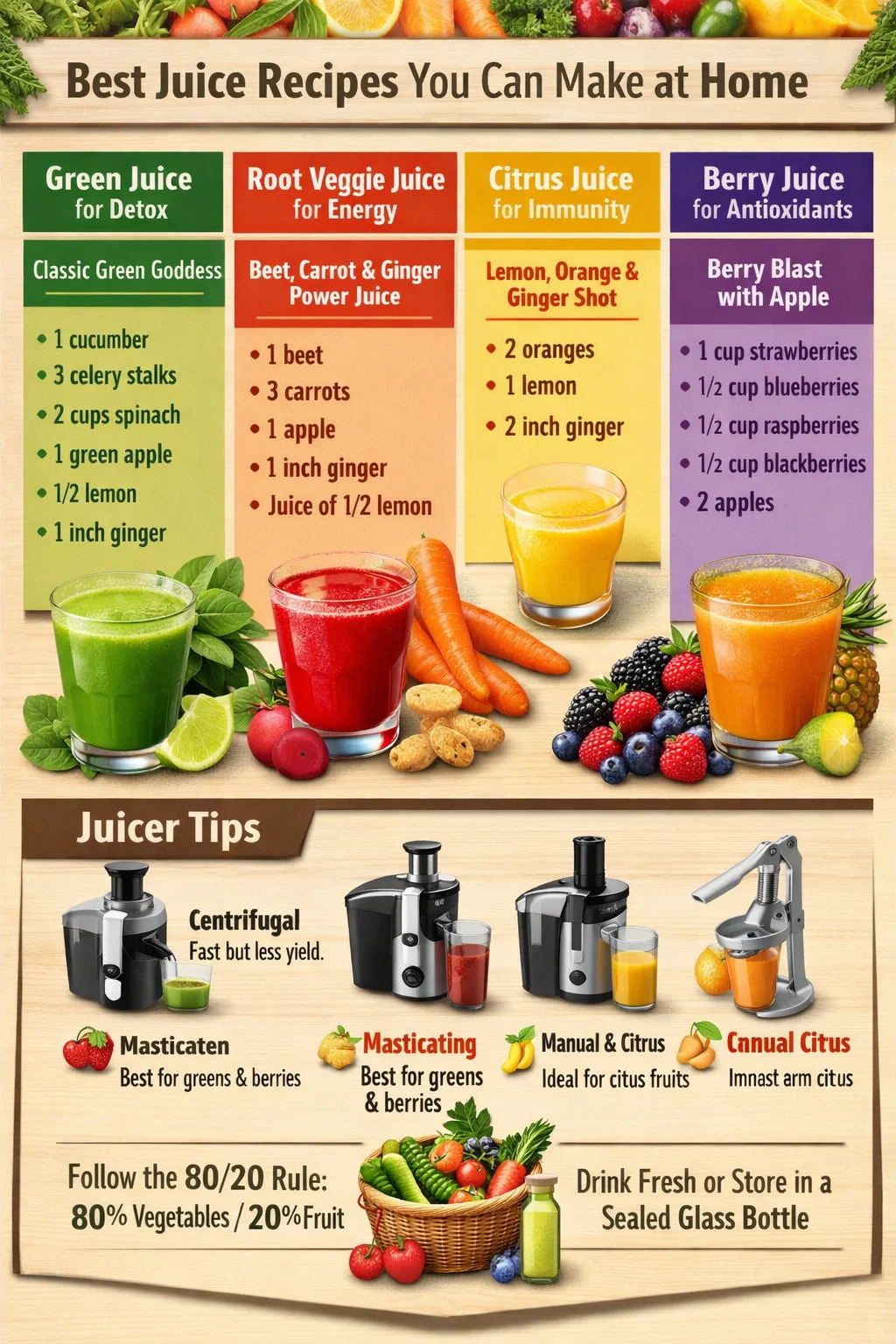
The best different juice recipes combine vegetables and fruits in a roughly 80% vegetable to 20% fruit ratio, giving you maximum nutrients without excess sugar. Whether you run a centrifugal juicer or a cold press masticating juicer, the core categories are the same: green juices, root-vegetable blends, citrus-forward mixes, berry-based drinks, and tropical combinations. Each category serves a different nutritional purpose, and once you understand the pattern, building your own recipes from scratch becomes straightforward. The sections below walk through every major type, with exact ingredient amounts, health data, and practical tips that work regardless of which juicer you own.
Green Juice Recipes: The Foundation of Any Juicing Routine
Green juice is the first category most people explore, and for good reason. Leafy greens like spinach and kale are nutritionally dense: spinach alone contains over 400% of the daily value of vitamin K per 100 grams, along with meaningful amounts of vitamin A and folate. The challenge is palatability — raw kale or celery on their own can taste sharp and bitter. The fix is pairing them with naturally sweet ingredients like green apple, cucumber, or a small wedge of lemon.
Classic Green Goddess
This is the go-to starter recipe. Run the following through your juicer in the order listed (softer ingredients before harder ones keeps the feed chute clear and the motor running efficiently):
- 1 large cucumber (unpeeled for extra antioxidants)
- 3 stalks of celery
- 2 large handfuls of spinach
- 1 green apple, cored and quartered
- Half a lemon, peeled
- 1-inch piece of fresh ginger
One important note on juicer compatibility: spinach and kale do not process well in centrifugal juicers, which spin at high RPMs and generate heat. Leafy greens need the slow, grinding action of a masticating (cold press) juicer to extract any meaningful amount of juice. If your machine is centrifugal, substitute spinach with cucumber or celery, which have high water content and juice easily at any speed.
Kale, Pear and Parsley Blend
Pears are underused in juicing but excellent for people who find green juice too bitter. They are naturally high in fiber and have a gentle sweetness that softens the chlorophyll-heavy flavor of kale and parsley. Use 2 ripe pears, 4 kale leaves (stems included), a small bunch of flat-leaf parsley, and half a lemon. The parsley is not just a garnish — it is rich in folate and vitamin C and adds a clean, herbal note that makes this recipe feel like something you'd pay $12 for at a health café.
Root Vegetable Juice Recipes for Energy and Detox
Root vegetables — carrots, beets, and turmeric — are among the most rewarding ingredients to juice. They yield a high volume of liquid, they process cleanly through almost any juicer, and their nutritional profiles are exceptional. Beets contain iron and nitrates that support circulation, carrots are a well-established source of beta-carotene (a precursor to vitamin A), and fresh turmeric root contains curcumin, which has been studied extensively for its role in reducing inflammation markers.
Beet, Carrot and Ginger Power Juice
This is one of the most popular different juice recipes for people focused on endurance and recovery. Beets contain natural nitrates that research suggests can improve blood flow and lower blood pressure. Combine the following:
- 1 medium beetroot (peeled or scrubbed, cut into wedges)
- 3 medium carrots
- 1 apple (any variety)
- 1-inch knob of fresh ginger
- Juice of half a lemon (add after juicing for brightness)
Feed the beetroot through the juicer first, followed by carrots, then the apple and ginger. Beet juice will stain the pulp container and feed chute — rinse immediately after use if you want to keep your juicer in good condition. This recipe yields roughly 400–500 ml per batch, enough for two servings.
Carrot, Orange and Turmeric Sunshine Juice
Carrots and oranges are a classic pairing because their flavor profiles are complementary — the mild earthiness of carrot softens the acidity of orange, and the natural sugars in both make this one of the more approachable different juice recipes for people who are new to home juicing. Add 1 inch of fresh turmeric root (or 1 teaspoon of dried turmeric stirred in afterward) to turn this into an anti-inflammatory powerhouse. Use 4 large carrots, 2 peeled oranges, and half a peeled lemon. If you're using a centrifugal juicer, peel the oranges but leave some pith — it won't affect flavor much and adds bioflavonoids.
Spinach, Beet and Apple Detox Juice
Combining beets with green vegetables sounds unusual but the resulting juice is genuinely pleasant — deep purple-red, earthy-sweet, and noticeably clean on the palate. Chlorophyll-rich greens are often cited by nutritionists for supporting liver and colon detoxification. Use 1 medium beet, 2 large handfuls of spinach (masticating juicer only), 2 apples, and half a lemon. Alternate the spinach with harder produce while feeding the juicer to help the machine extract the leaves more efficiently.
Citrus-Based Juice Recipes for Immune Support
Citrus fruits — oranges, lemons, limes, and grapefruits — are among the highest natural sources of vitamin C. A single large orange contains about 70 mg of vitamin C, which already meets the recommended daily intake for adults. Citrus juices are also among the easiest to make: most of them can be extracted with a simple manual press rather than a full countertop juicer, though running them through a cold press juicer yields more volume and retains more of the white pith's bioflavonoids.
Lemon, Orange and Ginger Immunity Shot
This is less of a full glass of juice and more of a concentrated shot — roughly 60–80 ml that packs a full day's vitamin C along with ginger's natural anti-inflammatory compounds. Juice 2 oranges, 1 whole lemon (peeled), and a 2-inch knob of ginger. Drink immediately or store in a small sealed glass bottle for up to 24 hours. Some people add a pinch of cayenne pepper, which enhances circulation and adds a warming effect that makes the shot feel more potent.
Grapefruit, Carrot and Mint Refresher
Grapefruit is one of the most underused citrus fruits in juicing. It has a sharp, slightly bitter flavor that pairs well with the earthiness of carrot and the cool finish of fresh mint. Use 1 large peeled grapefruit, 3 medium carrots, and 8–10 fresh mint leaves. Feed the mint into the juicer sandwiched between the carrot pieces — this helps the machine extract the essential oils from the leaves rather than letting them pass through unjuiced. The result is a juice that tastes bright, bitter-sweet, and genuinely refreshing.
Watermelon, Lime and Mint Agua Fresca
Watermelon is mostly water — about 92% — which makes it one of the highest-yield produce items you can run through any juicer. This recipe is best made with a centrifugal juicer or even just a blender and a fine-mesh strainer. Juice 4 cups of seedless watermelon chunks, the juice of 1 lime, and 10 fresh mint leaves. Watermelon provides potassium and the antioxidant lycopene, while one serving has roughly 10 grams of natural sugar compared to the nearly 40 grams in a standard can of soda. It's a good option for people managing sugar intake who still want something sweet.
Berry Juice Recipes Rich in Antioxidants
Berries — strawberries, blueberries, raspberries, blackberries — are some of the most antioxidant-dense foods available. Research published in nutritional science journals consistently identifies mixed berry juices as beneficial for heart health, cognitive function, and mood regulation, likely because different berries contain distinct combinations of anthocyanins and polyphenols that work synergistically. The practical challenge with berries in a juicer is yield: soft fruits compress but don't always extract cleanly through centrifugal machines. A cold press juicer handles them better, though the pulp will be wetter than with firmer produce.
Berry Blast with Apple
Combine 1 cup of strawberries (hulled), half a cup each of blueberries, raspberries, and blackberries, and 2 apples. The apples do two jobs: they add juice volume (berries alone won't yield much liquid) and they provide a clean sweetness that lets the berry flavors shine without tasting flat. Run everything through the juicer, then stir the collected juice briefly before drinking — the natural sugars and pigments tend to settle fast.
Beet, Berry and Apple Juice
If plain beet juice is too earthy for your taste, adding mixed berries is one of the most effective flavor corrections. The tartness and sweetness of the berries cuts through the beet's mineral notes, and the color — a deep, vibrant purple-red — is visually striking. Use 1 medium beet (cut into chunks), 1 cup of mixed berries, and 2 apples. Golden beets are a good substitute if you find the flavor of regular purple beets too strong; they are noticeably sweeter and milder.
Tropical Juice Recipes That Work in Any Juicer
Tropical fruits — pineapple, mango, papaya — juice extremely well across all juicer types. They have high water content, natural enzymes that support digestion, and a sweetness that makes them one of the easiest categories of different juice recipes to enjoy without needing to balance with other ingredients. Pineapple in particular contains bromelain, a proteolytic enzyme with well-documented anti-inflammatory properties.
Pineapple, Carrot and Ginger Juice
This is a highly versatile recipe that works well as a morning drink. The sweetness of pineapple and carrot carries the sharpness of ginger without needing any added fruit for balance. Use 2 cups of fresh pineapple chunks (core included — the core is tough but contains the highest concentration of bromelain), 3 medium carrots, and a 1-inch piece of ginger. Frozen pineapple also works well — thaw it first and run it through the juicer as normal. Canned pineapple in juice (not syrup) is a reasonable substitute when fresh isn't available.
Mango, Orange and Lime Tropical Blend
Mango has a dense, fibrous flesh that a centrifugal juicer can handle if the pieces are small (roughly 2 cm cubes). A masticating juicer will produce a smoother, more concentrated result. Use 1 large ripe mango (peeled, pit removed), 2 peeled oranges, and the juice of 1 lime. This combination is rich in vitamins A and C and has a thick, almost nectar-like consistency. If the texture feels too thick, dilute with cold water or coconut water — the latter adds electrolytes without significantly changing the flavor.
Tomato-Based Savory Juice Recipes
Not all different juice recipes are sweet. Tomato juice sits firmly in the savory category and is one of the most nutritionally complete single-ingredient juices you can make. Fresh tomatoes are high in vitamin C, potassium, and lycopene — a carotenoid antioxidant that has been linked to reduced risk of cardiovascular disease in multiple epidemiological studies. The key difference between homemade tomato juice and the canned version is sodium: commercial tomato juice often contains 400–600 mg of sodium per serving, while fresh-pressed juice contains almost none.
Spiced Tomato, Spinach and Celery Juice
Think of this as a fresh, alcohol-free take on a Bloody Mary. Use 4 large ripe Roma tomatoes, 2 stalks of celery, a large handful of spinach, half a lemon (juiced directly or run through the machine peeled), and a pinch of black pepper and hot sauce added after pressing. The celery adds a salty, savory backbone, and the spinach disappears completely into the flavor while boosting the nutritional profile. This is best made in a masticating juicer — the slow speed preserves the volatile aromatic compounds that give fresh tomato juice its complexity.
Quick Reference: Key Juice Recipes by Health Goal
The table below maps common health goals to the most relevant recipe from the sections above, along with primary ingredients and the juicer type best suited for each.
| Health Goal | Recipe | Key Ingredients | Best Juicer Type |
|---|---|---|---|
| Immune support | Lemon, Orange & Ginger Shot | Orange, lemon, ginger | Any / manual press |
| Energy & circulation | Beet, Carrot & Ginger Power Juice | Beetroot, carrot, apple, ginger | Any juicer |
| Detox & digestion | Spinach, Beet & Apple Detox | Spinach, beet, apple, lemon | Masticating juicer |
| Heart health | Berry Blast with Apple | Mixed berries, apple | Cold press juicer |
| Hydration & low sugar | Watermelon, Lime & Mint | Watermelon, lime, mint | Centrifugal or blender |
| Anti-inflammation | Carrot, Orange & Turmeric | Carrot, orange, turmeric, lemon | Any juicer |
| Savory / low sugar | Spiced Tomato, Spinach & Celery | Tomato, celery, spinach, lemon | Masticating juicer |
Choosing the Right Juicer for Different Juice Recipes
The type of juicer you own directly affects which recipes are practical and how much nutrition you extract from each ingredient. There are two main categories: centrifugal juicers and masticating (cold press) juicers. Both are capable machines, but they suit different use cases.
Centrifugal Juicers
Centrifugal juicers work by spinning a shredding disc at high speed — typically 6,000 to 14,000 RPM — which shreds produce and separates juice from pulp through centrifugal force. They are fast (a full glass in under a minute), relatively affordable, and easy to clean. Their weaknesses are noise, heat generation (which can degrade heat-sensitive enzymes and vitamins), and poor performance with leafy greens. For the green juice recipes in this article, a centrifugal juicer is not suitable for spinach or kale — substitute those with cucumber, celery, or romaine lettuce, all of which extract well at high speed.
Masticating (Cold Press) Juicers
Masticating juicers operate at 40–80 RPM, grinding and pressing produce slowly rather than shredding it. This low-speed process generates almost no heat, which means enzymes and vitamins are better preserved. They handle leafy greens, wheatgrass, fibrous roots, and soft berries with equal efficiency. The tradeoffs are price (typically two to four times higher than centrifugal models) and speed — a masticating juicer takes longer per batch. For anyone committed to green juice and a wide variety of different juice recipes, a cold press juicer is worth the investment. Juice from a masticating machine also has a longer shelf life: up to 72 hours in a sealed glass bottle refrigerated, compared to 24 hours for centrifugal-pressed juice.
Manual and Citrus Juicers
For citrus-forward recipes — orange juice, lemon shots, grapefruit blends — a manual citrus press or electric citrus juicer is often the most practical tool. They require no cleanup beyond a rinse, produce no heat, and extract citrus juice efficiently. If you don't yet own a full countertop juicer, a manual press lets you make immunity shots and citrus blends immediately while you decide which larger machine to invest in. You can also use a standard blender and a fine-mesh strainer or cheesecloth for almost any recipe in this article — it's slower and yields less juice but is a legitimate alternative.
Tips for Getting the Most Out of Your Juicing Recipes
Getting good results with different juice recipes is partly about the ingredients and partly about how you prepare and handle them. The following practices consistently make a meaningful difference in flavor, nutrition, and convenience.
Use Seasonal, In-Season Produce
In-season fruits and vegetables are not just cheaper — they are measurably richer in vitamins and flavor. A winter carrot purchased at the right season will yield noticeably sweeter juice than an out-of-season carrot that has traveled thousands of kilometers. Let your local market guide your recipe selection rather than forcing yourself to buy produce that isn't at its peak. This also naturally encourages variety, which research suggests produces better health outcomes from juice consumption than sticking to one fixed recipe indefinitely.
Follow the 80/20 Rule
The 80/20 rule — 80% vegetables to 20% fruit — is the most practical framework for balancing nutrition and palatability across different juice recipes. Fruits add sweetness and make the juice drinkable, but they also add fructose. Vegetables deliver micronutrients, chlorophyll, and minerals with far less sugar. A juice made entirely from fruit is not dramatically different nutritionally from a glass of store-bought juice — the real benefit of home juicing comes from the vegetable content that commercial products rarely include at meaningful levels.
Drink Juice Fresh or Store Properly
Freshly pressed juice begins oxidizing as soon as it's exposed to air. The nutritional degradation is gradual but real — vitamin C, for example, is particularly sensitive to oxygen and light. Drink juice immediately if possible. If you're batch-preparing, fill glass bottles completely to minimize air contact, seal tightly, and store at the back of the refrigerator (the coldest spot, not the door). Adding a small amount of lemon or lime juice to any recipe extends shelf life by lowering the pH and slowing bacterial growth — this is why so many of the recipes above include citrus even when it isn't strictly necessary for flavor.
Feed Ingredients in the Right Order
Feed soft, leafy produce first, followed by harder, denser items. This is not arbitrary — harder produce (carrots, beets, apples) pushes the softer material through the machine more completely, improving yield. Ginger and turmeric should go in the middle of the order, sandwiched between softer and harder items, to ensure full extraction. Citrus can go in at any point but peeling is usually necessary unless your juicer manual specifically states otherwise.
Clean the Juicer Immediately
This is the single most underrated piece of juicer advice. Pulp left in the strainer basket or feed chute for more than 30 minutes begins to dry and stick, making cleaning significantly harder. For beet juice especially, the pigments will stain plastic components if not rinsed promptly. Rinse all removable parts under cold water immediately after use, then do a proper wash. Most juicer components are not dishwasher-safe — check your manual — but a brush, warm water, and dish soap take less than three minutes.
How to Build Your Own Different Juice Recipes from Scratch
Once you're comfortable with the recipes above, creating your own combinations is a natural next step. The process is simpler than it looks. Every successful juice recipe has three components: a base, a flavor booster, and a sweetener or brightness element.
- Base (high yield, mild flavor): cucumber, celery, carrot, watermelon, romaine lettuce. These provide volume and a neutral backdrop. Use 50–60% of your recipe as base.
- Flavor booster (strong, distinctive): beets, kale, spinach, ginger, turmeric, parsley. Use 20–30%. These carry the nutritional payload and define the recipe's character.
- Sweetener or brightness element: apple, pear, lemon, lime, pineapple, orange. Use 15–20%. This balances the overall flavor and makes the juice enjoyable to drink daily.
Avoid combining starchy vegetables — potatoes, sweet potatoes, parsnips — with fruit, as the digestive enzyme systems they require are incompatible and the flavor combination tends to be unpleasant. Stick to combinations of leafy greens, watery vegetables, root vegetables, and fruits for the best results.
Start with small batches — half the quantity of a recipe — until you know you enjoy the combination. A failed 800 ml batch of juice is far more discouraging than a failed 400 ml test. Once you find a combination that works, scale up and, if your juicer output supports it, batch-prepare two or three days' worth at a time to make the habit sustainable long-term.