
 英语
 中文简体


Content
- 1 Why Ginger and Turmeric Punish the Wrong Juicer
- 2 Juicer Types Compared on Ginger and Turmeric
- 3 The Specifications That Actually Decide Your Yield
- 4 What You Realistically Get From a Batch
- 5 Fresh Root and Dried Root Need Two Different Machines
- 6 Cleaning, Staining and Keeping the Screen Alive
- 7 A Repeatable Ten Minute Root Juice Workflow
- 8 Buying for a Home Kitchen or for Volume
- 9 Frequently Asked Questions
- 9.1 Can a normal blender juice ginger and turmeric?
- 9.2 Do I have to peel turmeric root before juicing?
- 9.3 Is a centrifugal juicer good enough for these roots?
- 9.4 How much juice does one kilogram of fresh turmeric produce?
- 9.5 How long does fresh ginger and turmeric juice keep?
- 9.6 Can I juicing and grind dried turmeric on the same machine?
- 9.7 Why does my root juice turn out foamy?
- 9.8 What motor power should I look for?
- 9.9 Can I juice frozen turmeric chunks straight from the freezer?
- 9.10 Does the juice need black pepper or fat added?
- 10 The Bottom Line
A single kilogram of fresh turmeric root will coat the inside of a 500 W centrifugal juicer in orange resin, pack the mesh basket with fine pulp, and return somewhere around 280 to 350 ml of juice. Run the same kilogram through a slow masticating machine with a fine stainless steel screen and you can realistically collect 480 to 600 ml. Same root, same pair of hands, close to double the return. Nothing changed except the machine.
The short answer: for ginger and turmeric, the best juicer is a low speed masticating (single auger) machine running between 40 and 80 rpm with a 304 stainless steel screen of roughly 0.3 mm aperture. If you already own a blender and do not want a second appliance on the counter, a 700 W or higher blender with six stainless steel blades plus an 80 mesh straining bag gets you within about 15 percent of that yield, and a 1200 W model closes most of the remaining gap on daily use.
Three configurations cover almost every kitchen:
- Single purpose root juicer: single auger, 40 to 80 rpm, 150 to 200 W gear reduced motor, stainless screen, small 45 to 50 mm feed chute.
- Blender route: 700 W minimum, 1200 W if you juice roots four or more times a week, paired with a mesh bag and a 1.5 L jar.
- Small counter route: a compact blender with a juicer extractor basket for the fresh root, plus a separate 230 ml stainless bowl grinder for dried turmeric.
Everything below explains why those numbers look the way they do, what to check on a specification sheet, and where most buyers lose money on the wrong motor.
Why Ginger and Turmeric Punish the Wrong Juicer
Fiber, starch and resin in one dense package
Raw ginger root is about 78.9 g water per 100 g according to USDA FoodData Central (FoodData Central entry for ginger root, raw). That means roughly one fifth of the weight you are feeding into the chute is fiber, starch and resin that has to go somewhere. Turmeric root carries a similar load in a denser, more resinous form.
In a centrifugal juicer, that fiber wraps around the spinning basket and forms a mat. The mat stops fine particles from passing through the pores, the basket loses grip, and pulp starts riding over the top edge into the juice. You see it as thick, cloudy juice and a wet pulp chute.
Heat is the quiet yield killer
Home centrifugal machines spin between roughly 3,000 and 12,000 rpm. Over a 90 second run, friction against the basket commonly lifts juice temperature by 5 to 10 degrees C. Warm juice foams harder, settles slower, and tastes flatter within hours. A slow auger at 40 to 80 rpm barely warms the juice at all, which is exactly why root juices pressed this way hold their bite longer in the fridge.
Curcuminoids stain, and they stain plastic first
Published analyses of commercial turmeric commonly report curcuminoid content of about 2 to 5 percent of dry weight. Those pigments bond aggressively to polycarbonate and older clear plastics. Glass jars, 304 stainless steel screens and Tritan bodies resist staining far better, which matters if you also use the same machine for pale juices, coconut milk or baby food.
Juicer Types Compared on Ginger and Turmeric
The yield ranges below come from typical small batch bench observations on mixed fresh roots; moisture, root age and how finely you pre-cut move these figures by 10 to 15 percent in either direction. Treat them as shopping guidance, not lab guarantees.
| Machine type | Typical speed | Juice from 1 kg | Main weakness |
|---|---|---|---|
| Centrifugal juicer | 3,000 to 12,000 rpm | 250 to 400 ml | Screen clogs, pulp escapes, juice warms |
| Slow single auger | 40 to 80 rpm | 500 to 650 ml | Slow feeding, narrow chute, longer cleanup |
| Twin gear triturating | 80 to 160 rpm | 550 to 700 ml | Price, weight, most parts to wash |
| High power blender plus mesh bag | 20,000 rpm and up | 450 to 600 ml | Needs water and a straining step |
| Food processor with juicer extractor | 400 to 700 W basket | 300 to 450 ml | Small batches, wetter pulp |
| Hand blender | Blade speed, no separation | Below 250 ml of clear juice | Never fully separates fiber from liquid |
The Specifications That Actually Decide Your Yield
Once you know the machine category you want, four numbers on the spec sheet separate a machine that handles roots from one that jams on the second piece.
Motor power and torque
On a blender route, treat 700 W as the floor and 1200 W as the comfortable daily working point for fibrous roots and frozen fruit. On auger machines, wattage tells you less than torque does; a gear reduced 150 to 200 W motor turning slowly at high torque will out-extract a much louder 400 W direct drive unit that stalls the moment a turmeric chunk catches the screen.
Screen aperture and auger speed
Look for a 304 stainless steel screen with slots around 0.3 mm. Slots, not round holes, because slots clear themselves as the auger wipes past them. Pressed plastic screens deform when hot liquid is poured in, which is why you should never rinse a drum with boiling water.
Feed chute width, and why narrow is fine here
A 45 to 50 mm chute sounds like a drawback for roots, but it is not. Cutting turmeric into 2 cm segments and ginger into 3 cm fingers produces even, controlled feeding and fewer jams than dropping a whole knuckle into a 75 mm opening. Save the wide chute for carrots and apples.
Duty cycle and jar material
Home units generally want a 15 to 20 minute run followed by a rest. If you sell shots, look for a 1200 W base with a built in timer and a 30 minute continuous rating, plus a 1.0 to 1.5 L glass jar that will not hold onto turmeric aroma or color the way plastic does.
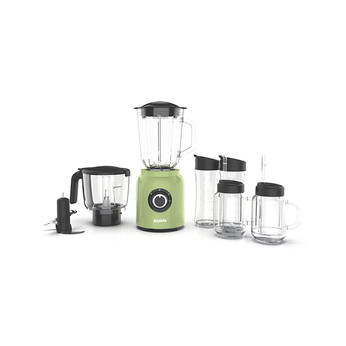
 BL467ABD 3-in-1 Food Processor Blender juice extractor,grind, mix jarFor every family in the world healthy eating, energy saving and environmental protection, intelligent manufacturing of high-quality kitchen appliances, freehand and wo...View Product →
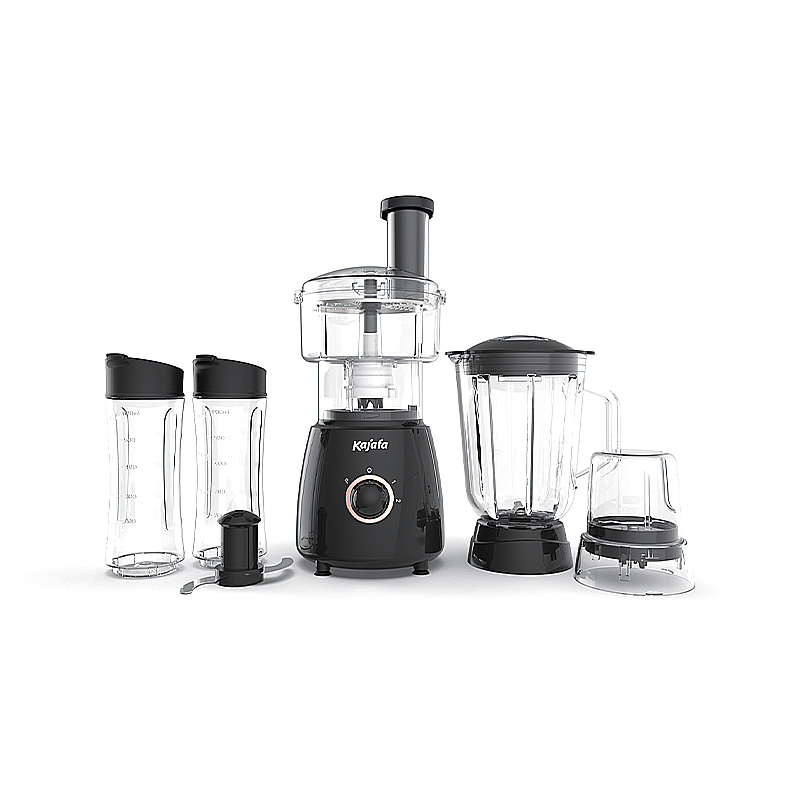
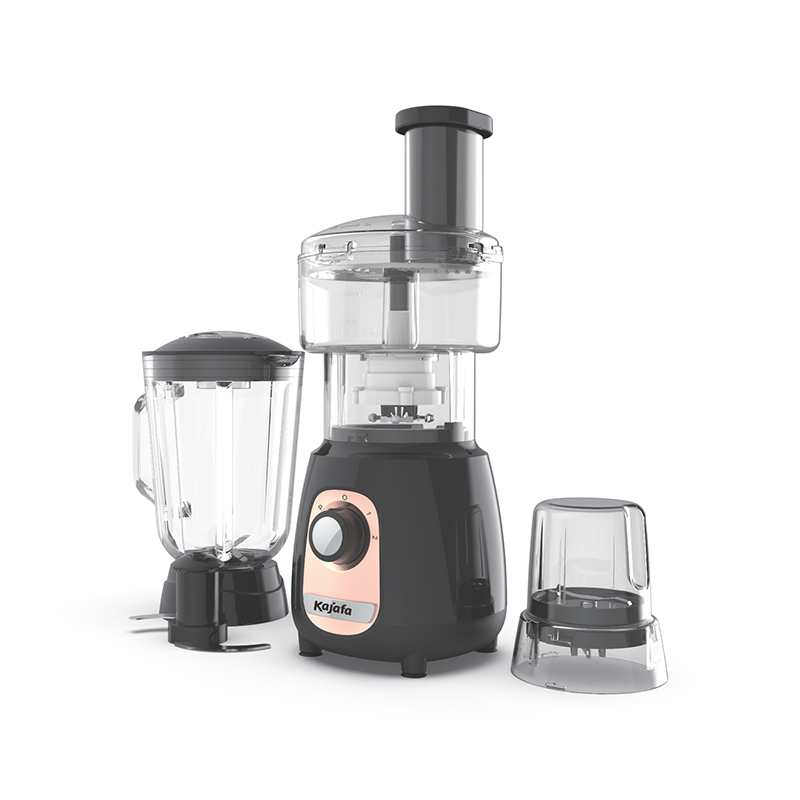
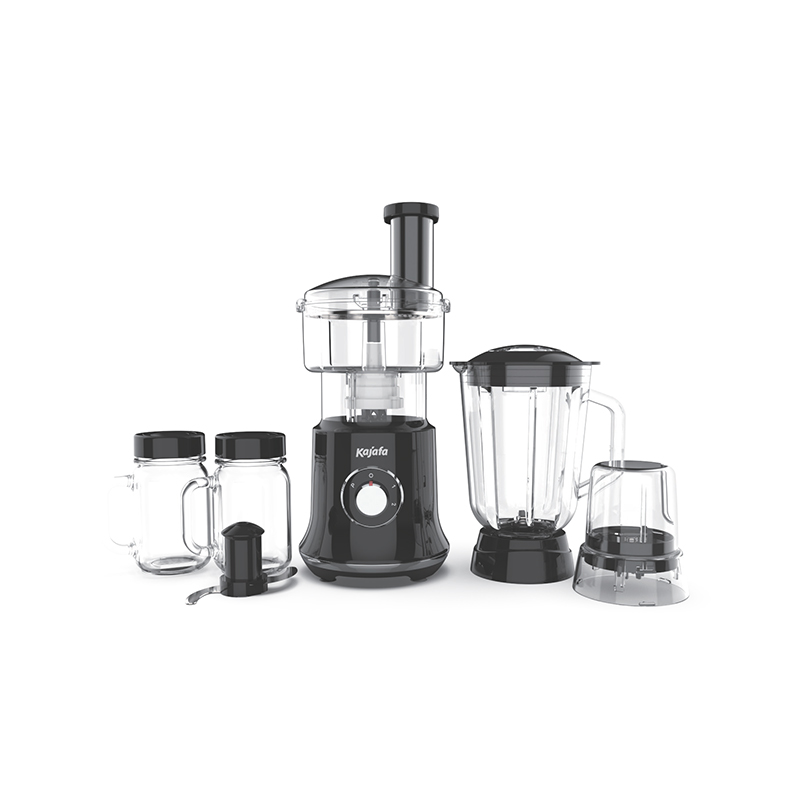
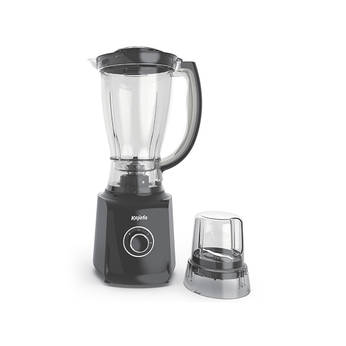
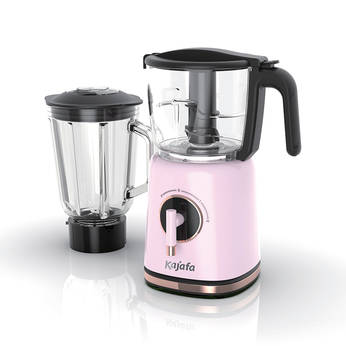
For buyers who want one base to cover juicing, grinding and chopping in a single footprint, the BL467abd 3 in 1 configuration pairs a 400 W motor with a juice extractor attachment, a grind mill and a 1.5 L jar, so fresh turmeric can be pressed and dried spices can be milled on the same counter space.
What You Realistically Get From a Batch
Recipe books tend to skip this part. Here are working numbers from a slow auger press and a 1200 W blender with an 80 mesh bag, both starting from clean, scrubbed roots at room temperature.
| Input | Prep | Juice collected | Note |
|---|---|---|---|
| 500 g fresh ginger | Scrubbed, cut to 3 cm | 280 to 340 ml | Foams heavily, rest 10 minutes |
| 500 g fresh turmeric | Scrubbed, quartered lengthwise | 240 to 300 ml | Strain twice through fine mesh |
| 400 g ginger plus turmeric 3:1 | Mixed segments, alternate feeds | 250 to 320 ml | Add lemon only after pressing |
| 1 kg carrot plus 100 g turmeric | Rough chopped, alternating | 700 to 800 ml | Carrot keeps the screen moving |
| 200 g ginger plus 1 lemon | For six 60 ml shot bottles | About 360 ml total | Fill bottles immediately, cap tight |
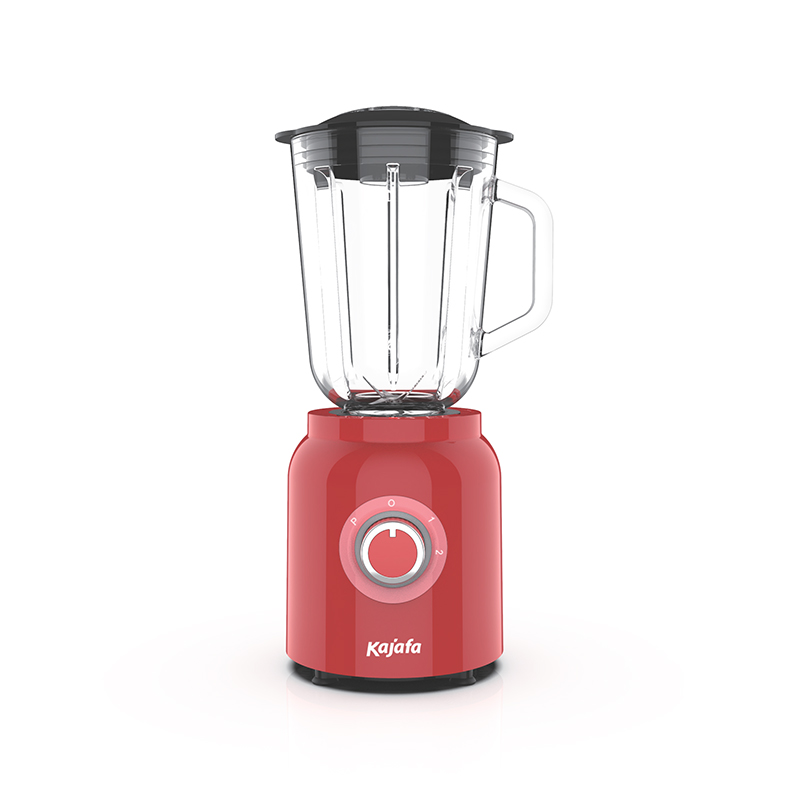
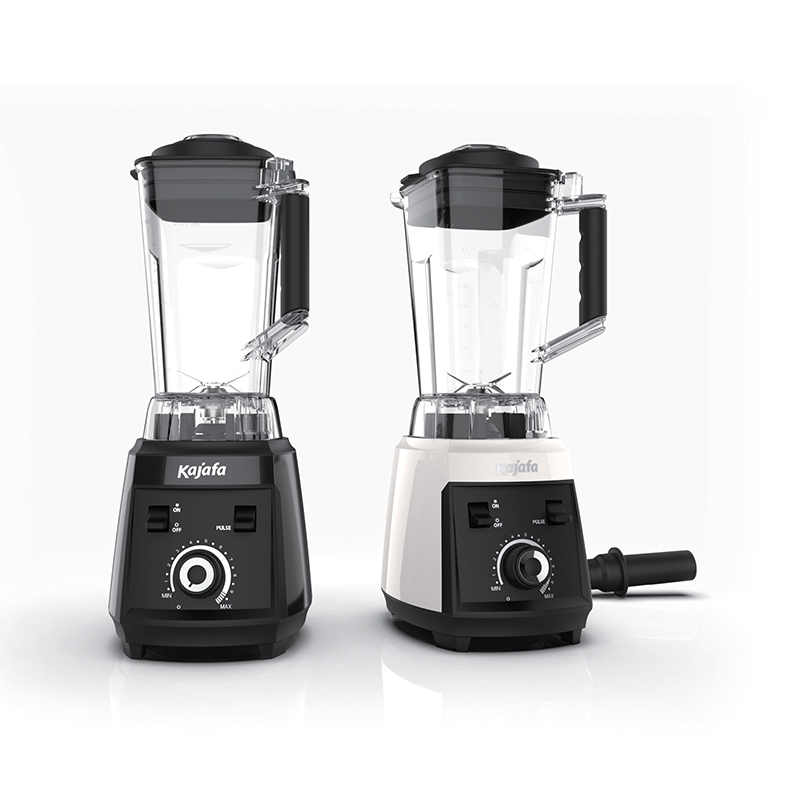 CB1216 Blender, Countertop Blender ,Blender for kitchen Max 1200W High Power Home and CommFor every family in the world healthy eating, energy saving and environmental protection, intelligent manufacturing of high-quality kitchen appliances, freehand and wo...View Product →
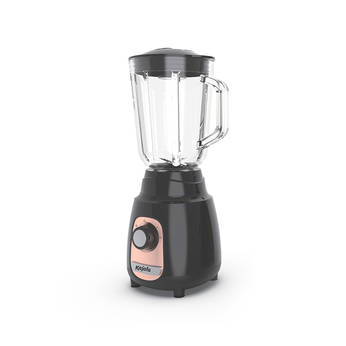
A 1200 W base such as the CB1216 with a 2000 ml jar is the practical ceiling for blender style extraction. It will break down turmeric fiber in 45 to 60 seconds, but you still need the straining step; the blender separates nothing on its own. Budget 60 seconds of blending plus 90 seconds of pressing through the bag for every litre of finished root juice.
Fresh Root and Dried Root Need Two Different Machines
Fresh turmeric is roughly four fifths water. Dried ground turmeric is a different material entirely: USDA FoodData Central lists ground turmeric at about 22.7 g dietary fiber per 100 g and roughly 3.2 g total fat per 100 g. Push that powder through a juicing screen and you get paste, not juice. Push fresh root through a dry spice grinder and you get a gummed up bowl.
Drying and milling turmeric at home
- Slice fresh turmeric into 4 to 5 mm coins. Thicker slices stay soft in the middle and clog the blade.
- Dry at 50 to 55 degrees C for 8 to 12 hours until a slice snaps instead of bending.
- Grind in 30 second bursts with 30 second rests so the powder never gets warm enough to lose aroma.
- Sieve the result and re-grind the coarse fraction once. Fine powder dissolves into drinks far more evenly.
A small stainless bowl grinder with detachable cups keeps the spice job away from your coffee beans. The FP136ab uses two removable SUS304 stainless steel bowls, which means one bowl can be dedicated to turmeric permanently and the other kept clean for coffee, cardamom or dried ginger.
 FP136AB Coffee Grinder Electric, Spice Grinder Electric, Herb Grinder, Grinder for Coffee For every family in the world healthy eating, energy saving and environmental protection, intelligent manufacturing of high-quality kitchen appliances, freehand and wo...View Product →
One warning from the workshop: turmeric oil migrates into silicone gaskets. If you mill spices and press roots on the same bench, keep separate gasket sets and rinse them in warm water rather than hot.
Cleaning, Staining and Keeping the Screen Alive
Turmeric dries into a hard lacquer in about 20 minutes. Everything after that becomes scrubbing. Rinse the drum, auger, screen and pulp chute with warm water within 10 minutes of the last piece going through, even if you plan a full wash later.
- Soak the screen and auger in warm water with two tablespoons of baking soda per litre for 15 minutes.
- Brush the screen in both directions with a nylon brush. One direction only pushes pulp deeper into the slots.
- Never leave the blade assembly or screen in the sink overnight. Standing water dulls the edges and softens silicone seals.
- Two hours on a sunny windowsill fades most turmeric staining on plastic parts. Vinegar alone rarely lifts it.
- Check the gasket monthly. Turmeric oil makes silicone swell slightly, and a swollen gasket is the usual cause of juice leaking from the base.
If you want a longer step by step routine that covers pulp chutes, baskets and motor bases, the juicer cleaning and maintenance guide walks through the full disassembly order most people get backwards.
A Repeatable Ten Minute Root Juice Workflow
- Chill the roots in cold water for 20 to 30 minutes. Cold tissue presses cleaner and foams less.
- Scrub with a stiff brush rather than peeling. You lose 8 to 12 percent of usable root with a peeler.
- Cut turmeric lengthwise into quarters and ginger into 3 cm fingers so both feed at the same rate.
- Alternate a fibrous piece with a watery one such as carrot, apple or cucumber. The watery piece rinses the screen as it passes.
- Strain through an 80 mesh bag if you used a blender, then press the pulp a second time with a spoon.
- Bottle immediately, cap tight, and refrigerate. Use within three days or freeze in ice cube trays for up to three months.
Black pepper is the classic culinary partner for turmeric juice, and it is not only about flavor. Research by Shoba and colleagues published in Planta Medica in 1998 reported that piperine substantially increased curcumin absorption in human volunteers. A quarter teaspoon of freshly cracked pepper per litre of juice is a sensible working amount.
Buying for a Home Kitchen or for Volume
Two people making one glass a day need very little. A juice bar pushing 300 shots a shift needs a completely different duty rating, and buying the wrong one is the most expensive mistake in this category.
Home scale
One to six glasses a week. A 700 W countertop blender with a 1.5 L glass jar, or a compact 400 to 700 W food processor with a juicer extractor basket, is enough. Prioritise a glass jar and stainless blades over extra wattage. A 300 W mini blender handles a single 250 ml shot if you pre-cut the root small, but expect to strain through cloth.
Cafe and juice bar scale
Twenty litres a day and up. You want 1200 W, a 2 L jar, a built in timer, and a spare blade assembly on the shelf. Continuous ratings matter more than peak ratings: a machine advertised at 1200 W peak but rated for 60 seconds is not a commercial unit, no matter what the box says.
If you are sourcing for a private label program
Ningbo Kajafa Electric Appliance has been building kitchen appliances since 2013 from a 66,000 square metre facility in Ningbo that runs at more than five million units a year with roughly 500 staff, and works with over 500 overseas buyers. Product lines for root juicing and spice grinding pass through CE, GS, ETL, CB, RoHS, REACH, LFGB and FDA testing, with ISO 9001, ISO 14001 and OHSMS 18001 management systems behind the factory floor. You can review the wider kitchen appliance range to see which platforms fit a root juice program, from compact personal blenders to 1200 W high speed bases.
Frequently Asked Questions
Can a normal blender juice ginger and turmeric?
Yes, with two conditions: add 100 to 150 ml of water per 300 g of root so the blades can circulate, and strain the result through a fine mesh bag. Expect 450 to 600 ml from a kilogram, which is roughly 15 percent below a slow auger press and slightly more oxidized.
Do I have to peel turmeric root before juicing?
No. Scrub it under running water with a stiff brush. Peeling removes 8 to 12 percent of usable root and most of the pigments sitting just under the skin. Peel only if the root was waxed or the surface is damaged.
Is a centrifugal juicer good enough for these roots?
It works if you accept the trade-offs. Pre-cut the root into small pieces, alternate with a watery ingredient, empty the pulp basket every 300 g, and strain the juice afterwards. Yield typically drops 30 to 40 percent compared with a slow press.
How much juice does one kilogram of fresh turmeric produce?
Between 480 and 600 ml on a slow masticating machine and 280 to 350 ml on a centrifugal one. Fresh turmeric is roughly 80 percent water, so anything far below these figures means the pulp is still wet and you are leaving juice in the basket.
How long does fresh ginger and turmeric juice keep?
Three days in a sealed glass bottle in the fridge, and up to three months frozen in ice cube trays. Plastic bottles pick up turmeric odor permanently, so use glass or Tritan.
Can I juicing and grind dried turmeric on the same machine?
Only if the machine has a separate dry grinding cup or bowl. Dried turmeric is a powder with about 22.7 g fiber per 100 g and around 3.2 g fat per 100 g, so it turns into paste inside a wet juicing screen and clogs the mesh within seconds.
Why does my root juice turn out foamy?
Foam is air whipped into the liquid, and it comes from high rotational speed. Let the juice stand for 10 minutes, skim the top with a spoon, and the layer underneath will be clear. Slow auger pressing produces very little foam because it never aerates the juice.
What motor power should I look for?
700 W minimum on a blender based setup, 1200 W if you press roots four or more times a week or run a small juice program. On an auger machine, check torque and rpm instead of wattage; 40 to 80 rpm with adequate torque outperforms a fast, loud motor every time.
Can I juice frozen turmeric chunks straight from the freezer?
Thaw them first. Frozen root is hard enough to stall a home motor and it wears the auger surface. Thaw in the fridge overnight, then press as normal.
Does the juice need black pepper or fat added?
From a flavor standpoint, a pinch of cracked pepper and a squeeze of lemon balances the bitterness of turmeric. From an absorption standpoint, published research on piperine and curcumin suggests pepper helps, and a small amount of fat in the same drink is a traditional pairing in many cuisines.
The Bottom Line
Ginger and turmeric are unforgiving test subjects. They reward low speed, high torque and stainless steel, and they punish anything that spins fast, warms up, and relies on a plastic screen. If you press roots once a week, a slow single auger machine between 40 and 80 rpm is still the best juicer for ginger and turmeric, and a 700 W blender with a mesh bag is a close and much cheaper second. If you press daily or sell shots, go to 1200 W, a 2 L jar, and a machine with a genuine continuous duty rating.
Whichever route you take, the same three habits protect your yield: cut the root small, alternate fibrous pieces with watery ones, and rinse everything within ten minutes. Do that and a kilogram of turmeric keeps giving you the full 480 to 600 ml instead of the 300 ml most people settle for.