
 英语
 中文简体


Content
- 1 What Makes an Apple Good for Applesauce
- 2 Thirteen Apple Varieties Compared
- 3 Sweet Apple Varieties
- 4 Tart Apple Varieties
- 5 Best Apple Blends for Homemade Applesauce
- 6 Smooth vs Chunky: Controlling Texture
- 7 Prep and Equipment That Save Time
- 8 Storing Your Homemade Applesauce
- 9 Frequently Asked Questions
- 9.1 What are the best apples for no-sugar applesauce?
- 9.2 Can I mix sweet and tart apples in the same batch?
- 9.3 Do I need to peel apples before making applesauce?
- 9.4 Which apples break down the fastest?
- 9.5 How long does homemade applesauce last?
- 9.6 Why is my applesauce watery?
- 9.7 Can I use bruised or blemished apples?
Which apples make the best homemade applesauce? The honest, kitchen-tested answer is a blend: two parts sweet apples to one part tart apples. Golden Delicious plus McIntosh is the most forgiving combination, while Fuji with a Granny Smith accent produces a brighter, more modern sauce. When you start from that ratio, you almost never need added sugar, and the sauce develops a roundness that single-variety sauces simply do not have. This guide walks through the specific varieties that earn their place in the pot, the ones you should leave at the market, and the cooking choices that control whether your sauce turns out silky or chunky. The goal is to get you from a pile of apples to a perfectly seasoned jar without second-guessing.
What Makes an Apple Good for Applesauce
Three measurable traits separate a great sauce apple from one you would rather eat out of hand: break-down speed, sugar-to-acid balance, and pectin content. Once you understand these three, choosing apples becomes a matter of mixing traits rather than memorizing names.
- Break-down speed. Apples with soft, loose flesh disintegrate quickly. McIntosh and Cortland begin to fall apart after about ten minutes of simmering. Firm apples such as Granny Smith, Pink Lady, and Fuji can hold their shape for twenty-five minutes or more, which makes them useful when you want a lightly textured sauce or need to control cook time.
- Sugar-to-acid balance. According to USDA FoodData Central, Fuji averages about 11.3 grams of sugar per 100 grams of fruit, while Granny Smith sits near 10.5 grams. The two are not far apart in sugar, yet Granny Smith tastes dramatically more sour because it carries roughly twice the malic acid. That acid is what makes tart apples taste tart and what gives the finished sauce lift.
- Pectin content. Tart, firm apples have more natural pectin, so a sauce made entirely from Granny Smith turns thick and jammy. Overly soft or overripe apples contain less pectin, which is why sauce made only from Red Delicious tends to turn watery.
- Yield and moisture. Softer apples lose less volume during cooking because they collapse into sauce rather than drying out. Firm apples need a few extra minutes of simmering and can require a splash of water or cider to reach the right consistency.
In practice, you want at least one variety from the fast-breakdown group and one from the balanced-sweet group in every batch. That pairing delivers body, flavor, and a naturally thick texture.
Thirteen Apple Varieties Compared
The chart below summarizes how the most commonly available varieties perform in the saucepot. Ratings reflect repeated home-batch testing plus tasting notes from orchard cider rooms, which tend to prioritize the same qualities home cooks care about.
| Variety | Flavor Profile | Break-down Speed | Added Sugar Needed? | Best Role |
|---|---|---|---|---|
| McIntosh | Tart-sweet, floral | Very fast | Rarely | Classic base |
| Golden Delicious | Sweet, mild honey | Fast | No | Base / sweetener |
| Fuji | Very sweet, crisp | Medium | No | Sweetener in blends |
| Gala | Sweet, soft vanilla | Medium-fast | No | Mild base |
| Honeycrisp | Sweet-tart, complex | Medium | No | Premium solo |
| Granny Smith | Sharp, bright | Slow | Yes | Tart balance |
| Braeburn | Tangy, spicy | Medium | A little | Depth / aromatic |
| Jonathan | Tart, winey | Fast | A little | Old-fashioned |
| Cortland | Sweet-tart, white flesh | Fast | A little | Pink sauce |
| Stayman | Tangy, rich cider | Medium-fast | A little | Small batch |
| Pink Lady | Sweet-tart, firm | Medium | No | Solo sauce |
| Red Delicious | Muted, mealy | Unpredictable | Yes | Skip |
A common thread across orchard-run tastings is that Fuji, Golden Delicious, Stayman, Granny Smith, and Pink Lady consistently earn top marks for sauce flavor. The single most important step you can take is to avoid relying on one variety alone.
Sweet Apple Varieties
Sweet varieties supply the mellow base of a great applesauce. They do most of the work in a no-added-sugar recipe.
Fuji
With 11 to 13 grams of sugar per 100 grams, Fuji is one of the sweetest supermarket apples. Its flesh stays firm, so it melts into sauce with a clean, honeyed finish. Use Fuji as roughly one-third of a three-apple blend: two Fujis, one Honeycrisp, one Granny Smith.
Golden Delicious
The workhorse of applesauce. Golden Delicious breaks down quickly, turns pale gold, and carries a mild honey flavor that pairs with almost anything. It is the single best base apple for beginners because it behaves predictably every time.
Gala
Milder than Fuji, with a vanilla note. Gala breaks down faster than Fuji and produces a soft, smooth sauce. Because it is low in acid, pair it with a tart apple or a little lemon juice.
Honeycrisp
Expensive but memorable. Honeycrisp has a sweet-tart complexity that survives cooking, so the sauce tastes more like the apple itself. Budget-conscious cooks use it only in small-batch no-sugar sauces.
Pink Lady
Firm, fragrant, and balanced. Pink Lady holds its shape longer, so it works best when you chop it small and simmer it longer. It produces a refined sauce with a faint berry-like note.
Tart Apple Varieties
Tart varieties add structure, color, and acidity. They are the balancing ingredient that keeps sweet apples from tasting flat.
McIntosh
The classic sauce apple. McIntosh breaks down faster than almost anything commercial, releasing a soft, creamy sauce with a tangy red-apple flavor. For the smoothest no-strain sauce, McIntosh is the benchmark.
Granny Smith
The sharp green apple that holds its ground. Because it is high in acid and pectin, it firms up the sauce and adds a green-apple snap. Limit it to one-third of the blend, or you will be reaching for the sugar bowl.
Jonathan
A traditional cider apple with a bright, winey taste. Jonathan breaks down moderately fast and keeps a slightly rosy tint. It gives old-fashioned sauces a noticeable tart kick.
Cortland
A McIntosh relative with white flesh that resists browning. Cortland breaks down quickly and produces a naturally pink-tinted sauce when you leave the skin on. It is a favorite for zero-sugar recipes that still taste lively.
Braeburn
Spicy, tangy, and aromatic. Braeburn holds texture better than McIntosh, so it suits chunky sauces. A single Braeburn in a sweet-heavy batch adds a subtle spiced note that pairs well with cinnamon.
Stayman
A heirloom apple with a rich, cider-like tang and tender flesh. Stayman makes a superb single-variety sauce with a complex flavor that is hard to find in supermarket fruit. It is worth seeking out at farmers' markets in October.
Best Apple Blends for Homemade Applesauce
Blending sweet and tart apples is the fastest way to elevate your sauce. These four combinations are proven ratios, not guesses.
- Golden Delicious + McIntosh (2:1). The classic beginner blend. Golden Delicious brings sweetness and body; McIntosh brings creaminess and a rosy tang. No sugar, no spice, no water needed.
- Fuji + Granny Smith (2:1). A bright, modern sauce. Fuji contributes a honeyed sweetness; Granny Smith adds a sharp finish that keeps each spoonful interesting. Add a cinnamon stick during cooking for gentle warmth.
- Honeycrisp + Pink Lady (2:1). The no-sugar showstopper. Both varieties are naturally sweet with enough acid to balance themselves. This is the most expensive batch you will make, but it is also the one people ask about.
- Cortland + Jonathan (1:1). An old-orchard pink sauce. Cortland creates the creamy body, Jonathan supplies bright acidity, and the unpeeled skin tints the whole pot blush pink. Serve it warm over vanilla ice cream.
A few practical rules: keep tart apples at or below one-third of the total weight if you do not plan to add sweetener; chop all apples into similar-size pieces so they soften at the same rate; and add spices after the sauce is done, never at the start, because simmering dulls their aroma.
Smooth vs Chunky: Controlling Texture
Your cooking time is the texture controller.
For chunky applesauce, simmer the apples for 12 to 15 minutes until the edges turn translucent, then crush them twice with a potato masher. You want recognizable pieces that still hold a little bite. If the mixture looks dry before the apples soften, add a quarter cup of water or apple cider.
For silky applesauce, simmer for 20 to 25 minutes and puree while warm. A hand blender does the job directly in the pot and gives you complete control over consistency, from lightly textured to completely velvety.
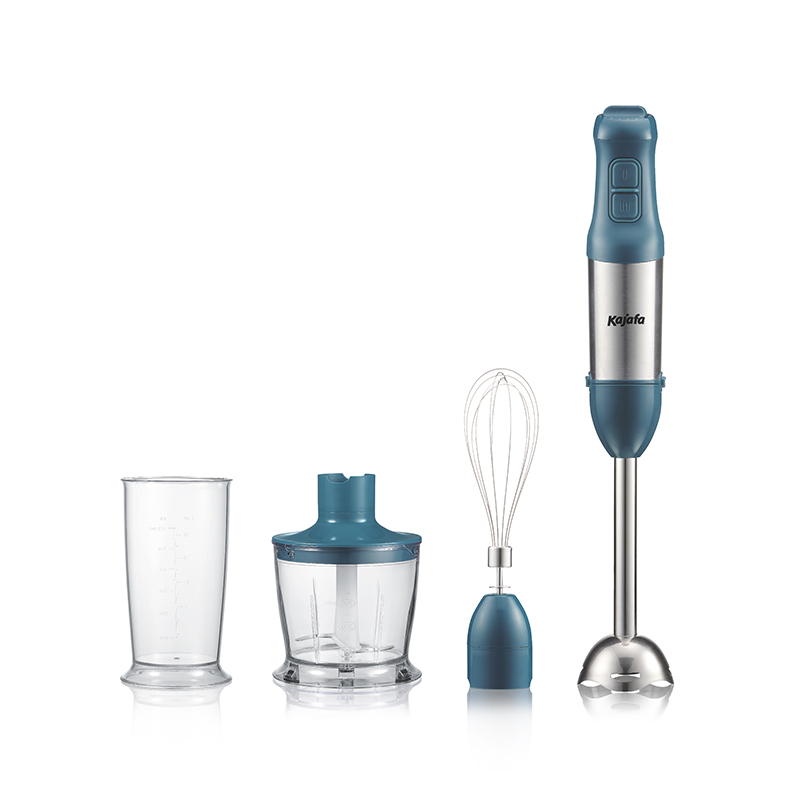 KAJAFA HB829BCE 4-in-1 Immersion Blender with Whisk and ChopperThis 700W handheld blender with 8 speeds and a 500ml food processor suits the applesauce recipe, letting you puree warm apples directly in the pot for a smooth, custom texture.View Product →
Smooth sauce benefits from a brief final simmer of five minutes, uncovered, to concentrate flavor. If you prefer a velvety baby-food consistency, run the puree through a food mill after blending to catch any stray seeds or skin fragments.
Prep and Equipment That Save Time
You do not have to peel apples for applesauce, but the choice changes the result. Unpeeled apples add fiber, color, and a slightly rustic texture; peeled apples give a silkier, more uniform sauce. If you leave the skin on, wash the fruit thoroughly and pick a pink- or red-skinned variety so the color carries into the sauce.
For peeling and coring a large batch, a crank-style peeler turns a fifteen-minute chore into a two-minute one. Our guide on what to look for in an apple peeler covers blade sharpness, suction base stability, and crank smoothness, which are the three details that separate a useful tool from a frustrating one.
 KAJAFA AP-01 Manual Apple Peeler and CorerThis crank-style apple peeler addresses the prep step mentioned ahead, quickly removing peels and cores so you can slice uniform apple pieces for even cooking and batch processing.View Product →
Once the apples are peeled, cut them into uniform quarters or eighths. A food processor with a slicing disc creates identical pieces in seconds, which helps the apples cook evenly. A processor also lets you chop a bushel's worth of apples before the first one starts to brown.
A large pot, a lid, a wooden spoon, and a potato masher are the only other tools you need. If you want to skip peeling entirely, a high-speed blender can puree cooked, skin-on apples into a completely smooth sauce, though you lose the rustic texture some people love.
Storing Your Homemade Applesauce
Homemade applesauce keeps in the refrigerator for 7 to 10 days in a sealed glass container. For longer storage, freeze it.
- Freezer: portion the cooled sauce into freezer-safe containers or zip-top bags. Leave about one inch of headspace because the sauce expands, and lay bags flat so they stack easily. Frozen applesauce keeps for 6 to 12 months without meaningful flavor loss.
- Refrigerator: add a teaspoon of lemon juice per quart to slow browning if you plan to keep the sauce for more than a week.
- Reheating: warm refrigerated sauce in a small pot over medium-low heat, stirring occasionally. Do not microwave in a sealed container, and stir frozen sauce gently to avoid a separated texture.
Color will darken slightly over time. That is oxidation, not spoilage; the sauce is still safe as long as it smells fresh and shows no mold.
Frequently Asked Questions
What are the best apples for no-sugar applesauce?
Fuji, Golden Delicious, and Honeycrisp are the best zero-sugar choices because they are naturally high in sugar and low in aggressive acidity. Blend them with one part McIntosh or Cortland for a balanced flavor that needs no sweetener.
Can I mix sweet and tart apples in the same batch?
Yes, and you should. A two-to-one ratio of sweet to tart is the safest starting point. Adjust to your own taste after the first batch: more tart apples for a sharper sauce, more sweet apples for a dessert-like one.
Do I need to peel apples before making applesauce?
No. Leaving the skin on adds fiber and color and saves significant prep time. For a smooth, light-colored sauce, peel them. For a rustic, pink or amber sauce, keep the skin on.
Which apples break down the fastest?
McIntosh and Cortland break down fastest, collapsing into sauce after about ten minutes of simmering. Granny Smith, Pink Lady, and Fuji hold their shape the longest.
How long does homemade applesauce last?
Seven to ten days in the refrigerator, and six to twelve months in the freezer. Always cool the sauce completely before storing, and use airtight containers to prevent off-flavors.
Why is my applesauce watery?
The usual causes are low-acid apples that break down unevenly, overripe fruit that has lost structure, or too much added water. Fix it by simmering uncovered for five to ten minutes to evaporate excess moisture.
Can I use bruised or blemished apples?
Yes. Cut out the bruised and broken areas, peel or scrub the rest, and cook them as usual. Slightly damaged fruit is actually a perfect candidate for applesauce because appearance does not matter once it is simmered.