
 英语
英语 中文简体
中文简体

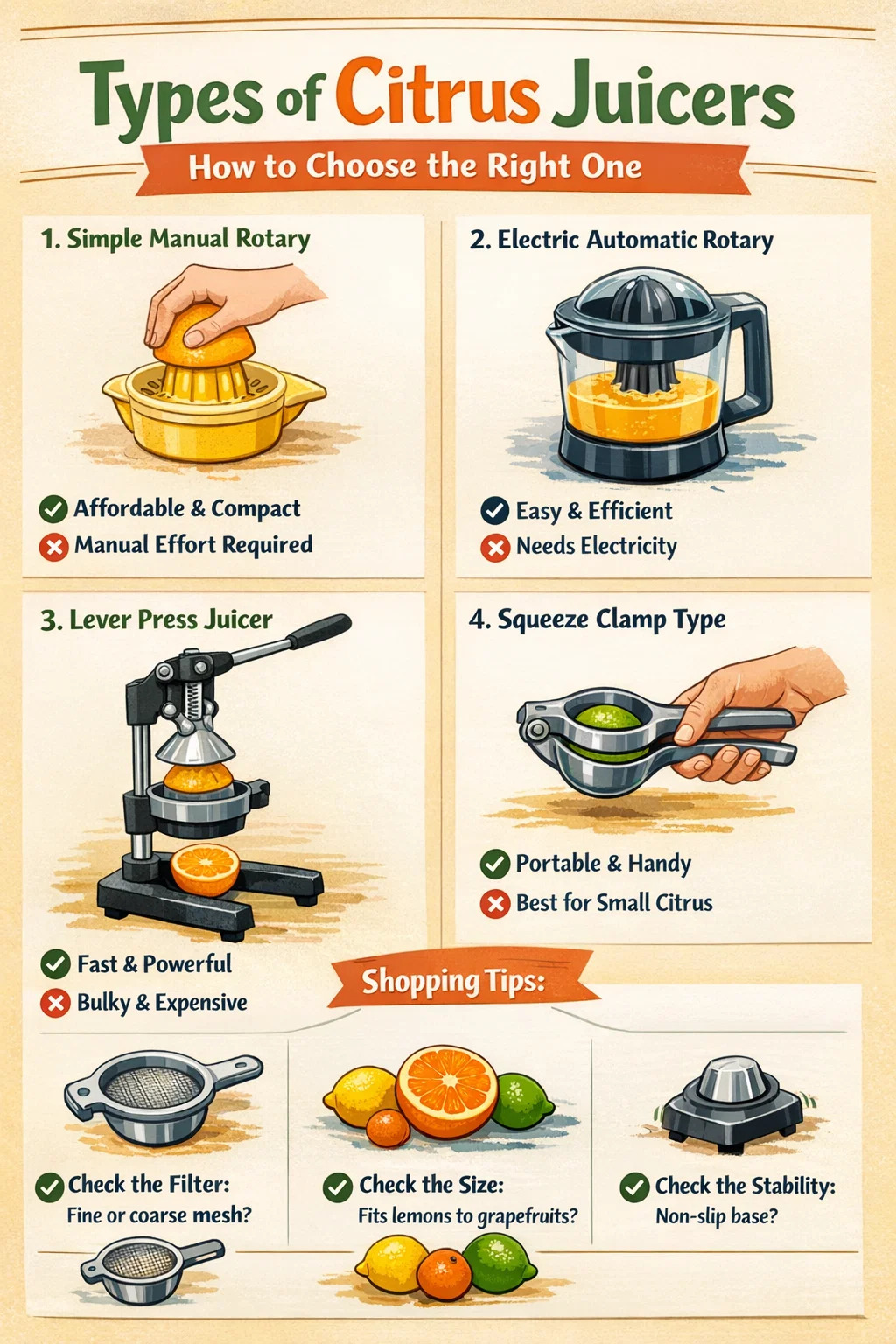
Faced with the dazzling array of citrus juicers on the market, many people find it difficult to choose. In fact, the best choice depends mainly on how often you drink juice, the number of people in your household, and your preference for manual effort.
▲ Several common types of citrus juicers on the market
1. Simple Manual Rotary Type (Most economical, most compact)
This is the most common small plastic or glass tool with a pointed, grooved head in the middle.
How to use: Place the cut fruit on top and twist it back and forth with your wrist; the juice will flow into the small groove below.
Suitable for: Those who occasionally cut a lemon for flavoring, or those with very limited kitchen space who don't want to use electricity.
Pros and cons: Very inexpensive and easy to clean; however, if you want to squeeze a whole jug of orange juice, your wrist might get tired.
2. Electric Automatic Rotary Type (Most convenient, most popular)
This is the most commonly used citrus juicer for families. It looks similar to the manual version, but has a motor in the base.
How to use: Simply press the fruit gently onto the juicing head, and the machine will rotate automatically. Some more advanced models even automatically switch directions to ensure every drop of juice is extracted.
Suitable for: Families who want a glass of fresh orange juice every morning, prioritizing efficiency without too much effort.
Pros and cons: Saves time and effort, and the price is relatively affordable; however, it makes a buzzing motor sound when working and requires electricity.
3. Lever Press Type (Most stylish, fastest juicing)
This machine is usually quite tall and has a long metal handle.
How to use: Place the fruit in place and press down the handle firmly, using the lever principle to "squeeze" out the juice.
Suitable for: Those who pursue a high quality of life, or those who need to process large grapefruits. It also looks like a decorative item in the kitchen.
Pros and cons: Extremely fast juicing speed, and no need to twist with your hands, very easy on the wrists; however, it is relatively large and takes up more space, and is more expensive than the previous two types.
4. Squeeze Clamp Type (Most portable, most convenient)
It looks like a large clamp, usually made of metal or silicone. How to use: Place half of the fruit cut-side down and squeeze with both hands, like cracking a walnut.
Suitable for: Bartenders, people who frequently make salads or enjoy seafood, as it's convenient for squeezing lemon juice to remove fishy odors and enhance flavor.
Pros and Cons: Easy to use and clean; however, it's only suitable for lemons or small limes, and not powerful enough for larger oranges.
▲ Shopping Tips
Check the filter: If you prefer a pulpier texture, choose one with larger filter holes; if you dislike seeds falling into your bowl, choose one with a finer mesh filter.
Check the size: If you frequently juice grapefruits, be sure to buy a citrus juicer that comes with different-sized "juicing heads," so you can handle everything from large grapefruits to small limes.
Check the stability: The base should ideally have non-slip pads so the machine doesn't move around on the table when you're applying pressure.