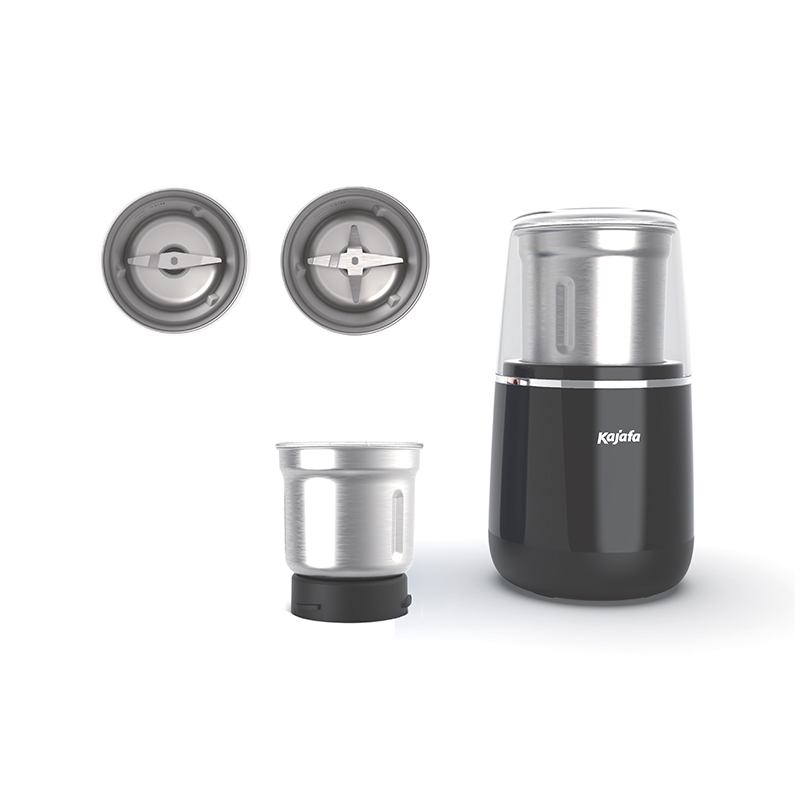
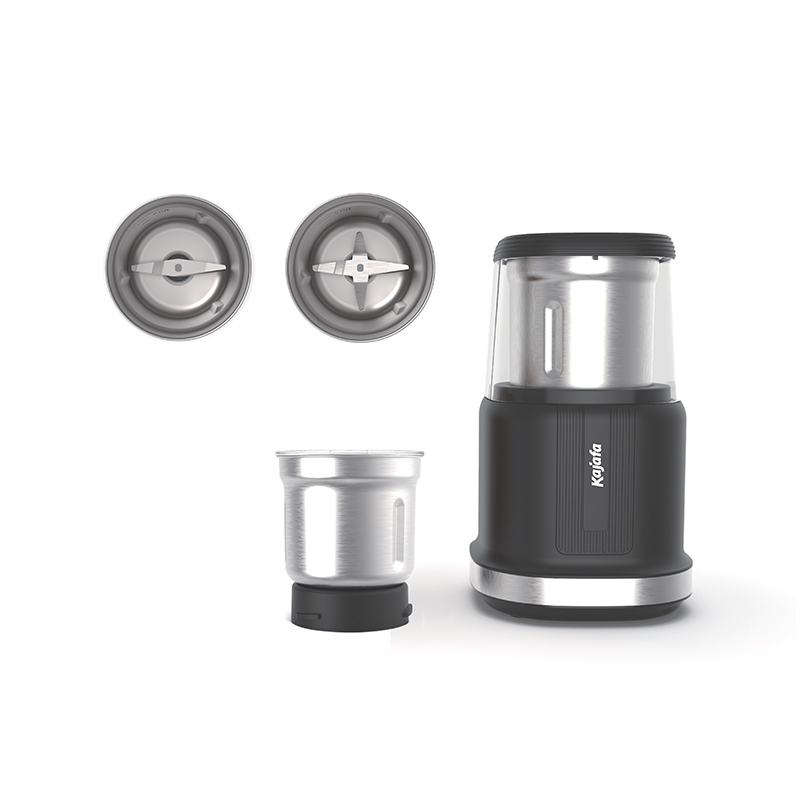
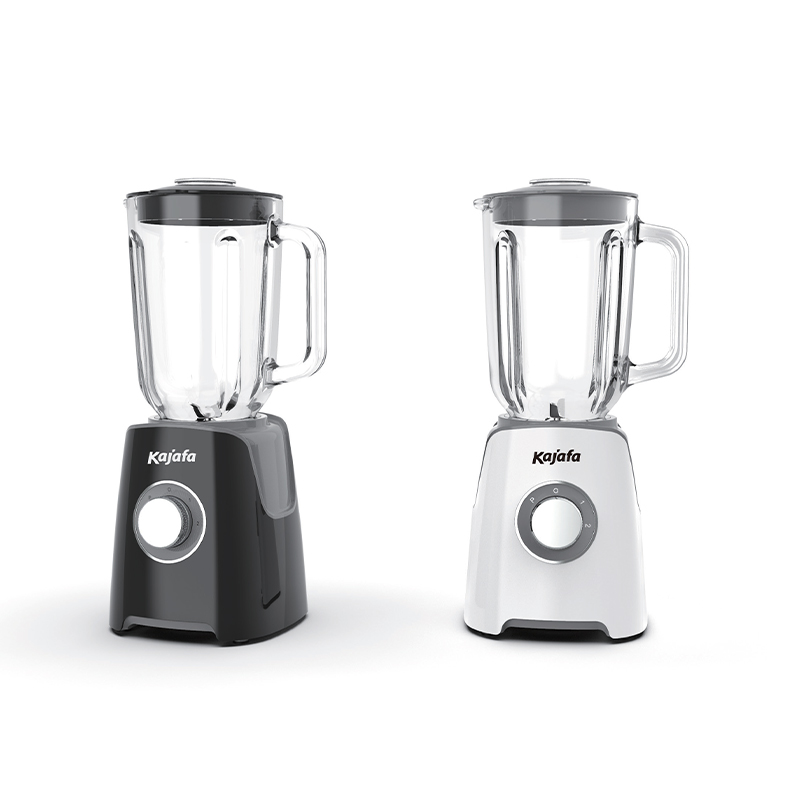
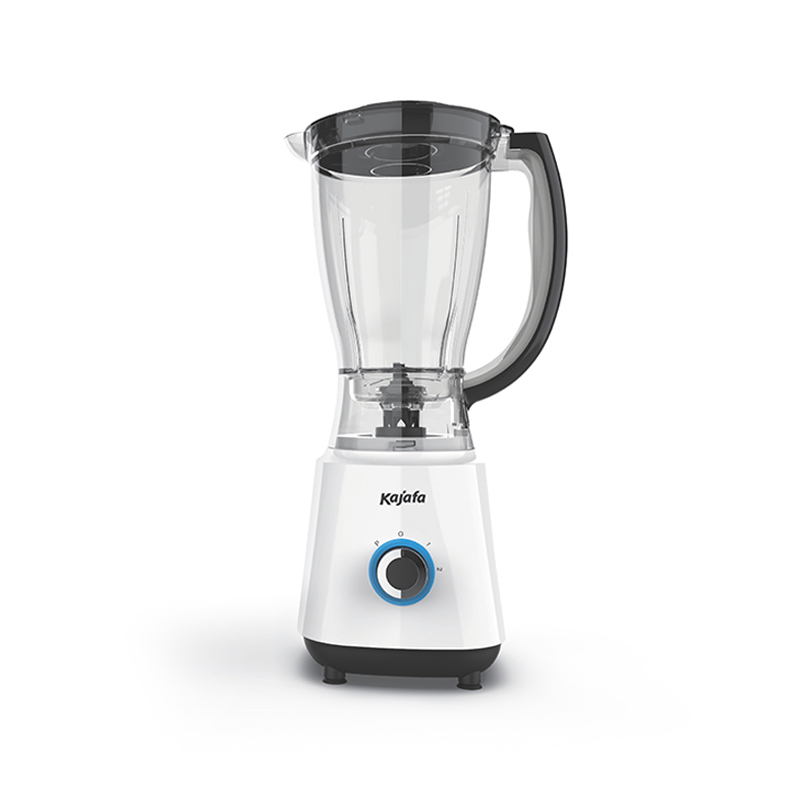
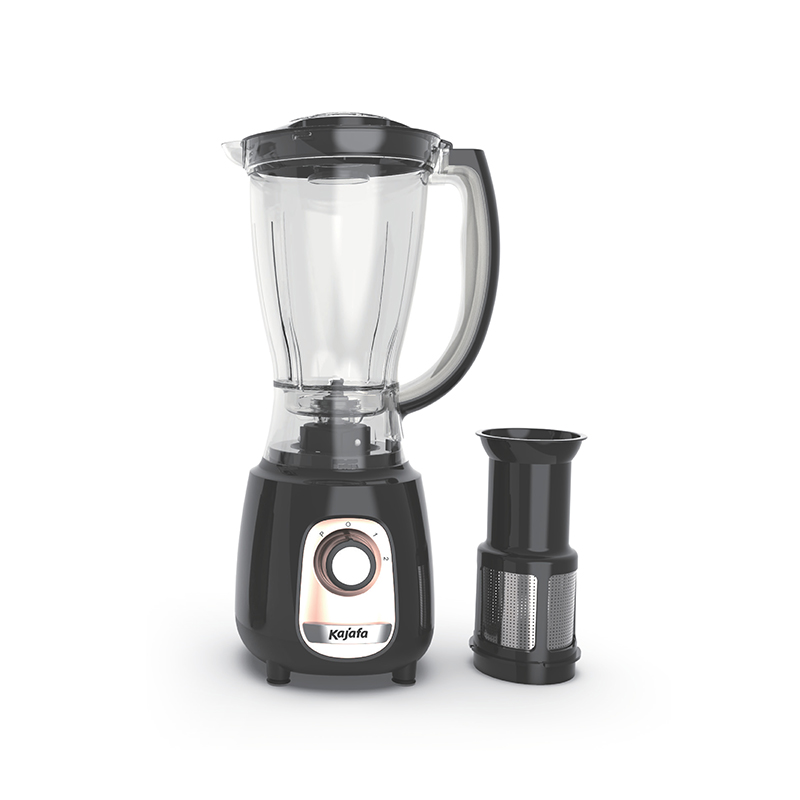
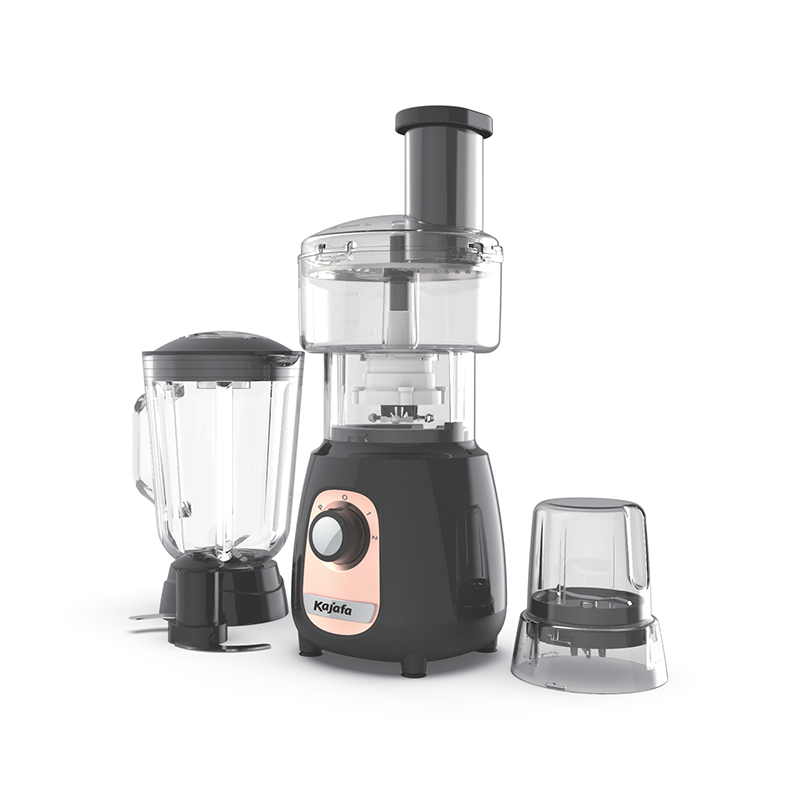
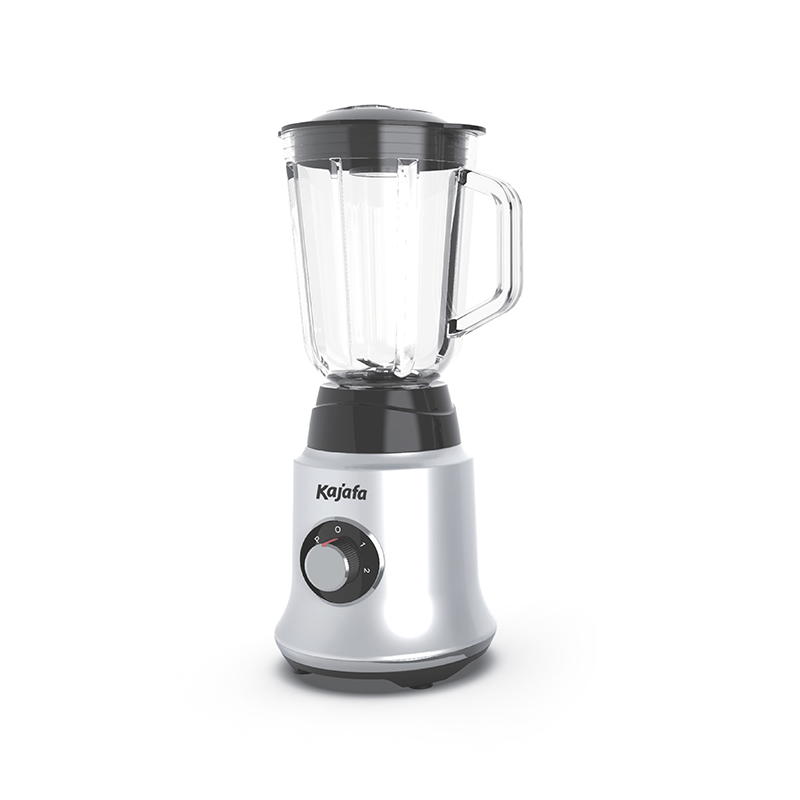
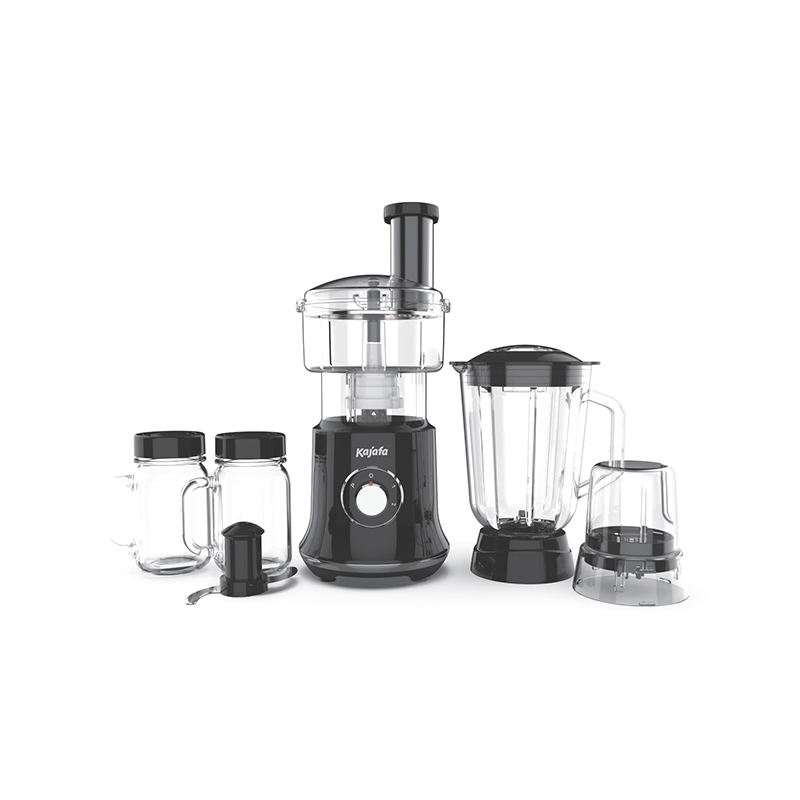
There are four main types of blenders you'll encounter: countertop blenders, hand blenders (immersion blenders), personal blenders, and commercial blenders. Each one is built for a different job, a different kitchen, and a different level of commitment. If you've ever grabbed the wrong one — tried to make a frozen margarita with a hand blender or blend hot soup in a countertop jar — you know exactly why the distinction matters. This guide lays out what each type actually does well, where it falls short, and how to match the right blender to the way you actually cook.
The Four Main Types of Blenders at a Glance
Before diving into each category, here's a quick-reference comparison that puts all four types side by side — wattage ranges, typical use cases, price points, and storage footprint.
Overview comparison of the four main blender types by key specifications
| Type |
Typical Wattage |
Best For |
Average Price |
Storage Footprint |
| Countertop Blender |
500–1,800W |
Smoothies, soups, frozen drinks |
$30–$600+ |
Large (countertop) |
| Hand Blender |
150–1,000W |
Soups, sauces, purees, emulsifying |
$20–$200 |
Minimal (drawer) |
| Personal Blender |
700–1,200W |
Single-serve smoothies, protein shakes |
$25–$150 |
Small (countertop) |
| Commercial Blender |
1,800–3,500W |
High-volume blending, ice crushing |
$300–$1,500+ |
Large (countertop) |
Each type earns its place not by being the most powerful, but by being the right tool at the right moment. The sections below break down each one with real-world context.
Countertop Blenders: The Kitchen Standard
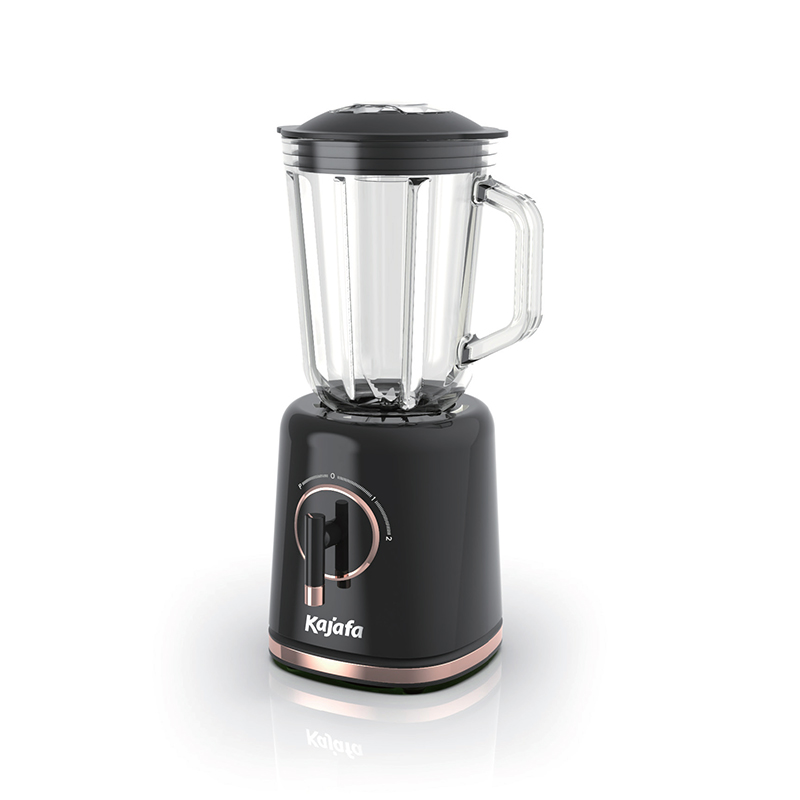
The countertop blender is what most people picture when the word "blender" comes up — a motor base on your kitchen counter topped with a jar, a lid, and a spinning blade inside. It's the workhorse of the blender world, and for good reason. These machines handle the widest variety of tasks: blending frozen fruit, crushing ice, making silky soups, grinding nuts, and even kneading certain doughs in high-end models.
Jar capacity typically runs between 4 and 8 cups (roughly 1 to 2 liters), which makes the countertop blender the right choice when you're cooking for a family or batch-preparing meals. Motor wattage spans a huge range — entry-level models start around 500W, while premium performance blenders reach 1,800W or higher. The practical difference is texture: a 500W blender might leave visible fibrous bits in a green smoothie, while a 1,400W model will produce a completely smooth result from the same ingredients.
Speed Settings and Control
Most countertop blenders offer between 3 and 10 variable speed settings, plus a pulse function. Higher-end models add preset programs (smoothie, soup, ice crush) that automatically cycle through speeds and stop at the right point. If you find yourself blending at odd times of day or night, it's worth checking noise ratings — some blenders are significantly louder than others, and a few premium models come with sound-enclosure lids.
Jar Materials: Glass vs. Plastic
Countertop blenders come with either glass or BPA-free plastic jars. Glass is heavier, more scratch-resistant, and doesn't retain odors or stains — useful if you blend a lot of strongly spiced sauces or curries. Plastic jars weigh less and are less likely to crack if dropped, but they scratch over time and can absorb smells. Many home cooks prefer glass for daily use, while plastic suits families with more kitchen chaos.
A useful purchase rule: if you'll blend frozen ingredients more than three times a week, prioritize motor wattage above 1,000W. Below that threshold, motors work harder, run hotter, and tend to wear out faster under sustained frozen-food loads.
Hand Blenders: Compact Power with Surprisingly Wide Range
The hand blender — also called an immersion blender, stick blender, or wand blender depending on what country you're in — works on a completely different principle from countertop models. Instead of pouring ingredients into a container and closing a lid, you insert the blender directly into the pot, bowl, or cup where the food already is. The blade at the end of the shaft does the work right there, in place.
This changes everything about how you use it. Blending a pot of tomato soup on the stove? No need to ladle it into a countertop jar in batches, risk a burn, and wash two containers afterward. With a hand blender, you blend it right in the pot, then wipe down the shaft. That single workflow difference saves a meaningful amount of time and mess, especially when cooking soups, stews, and sauces regularly.
What a Hand Blender Does Exceptionally Well
- Pureeing hot soups directly in the pot, without transfer or cooling time
- Emulsifying dressings, mayonnaise, and hollandaise sauce in a narrow jar or cup
- Blending smoothies, protein shakes, or baby food in a single cup with minimal cleanup
- Making quick sauces, salsas, and dips directly in the prep bowl
- Frothing milk for coffee drinks (with a whisk attachment on multi-function models)
- Blending small quantities that would get lost in a full-size countertop jar
Power and Speed on a Hand Blender
Most consumer hand blenders run between 150W and 700W, which is lower than a typical countertop blender but more than sufficient for their intended workload. Liquid-heavy tasks like soups and sauces don't need the same motor muscle as crushing frozen fruit or blending dry ingredients. Some high-output models — often marketed as professional or restaurant-grade — push to 1,000W, which gives them enough power to handle tougher ingredients like raw carrots or fibrous greens in larger quantities.
Variable speed control is standard on mid-range and up. Most hand blenders offer a simple two-speed switch (low/high) plus a turbo boost button you hold down for maximum power. More advanced models offer a dial or slider for fine-tuned speed control, which matters when you're going from a coarse chop to a smooth puree in the same session.
Corded vs. Cordless Hand Blenders
Cordless hand blenders run on rechargeable lithium-ion batteries and have gotten significantly better in recent years. The trade-off is runtime — most cordless models give you between 12 and 20 minutes of continuous use per charge, which is plenty for a single cooking session but can fall short if you're prepping for a big event. The advantage is freedom of movement in the kitchen, especially useful in larger spaces or when you need to move between a pot on the stove and a bowl on the prep counter.
Attachments That Expand the Hand Blender's Range
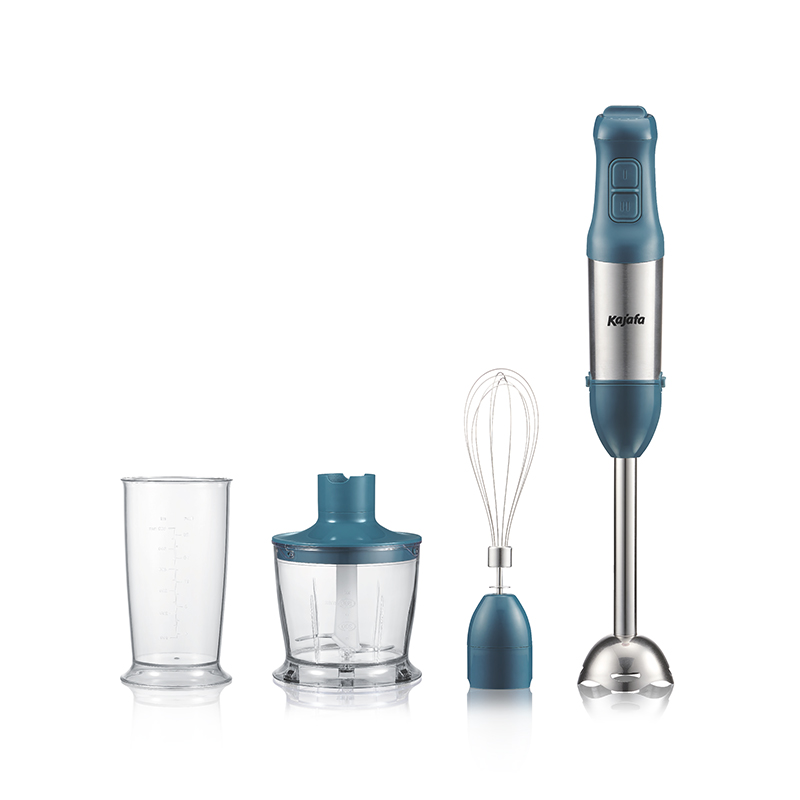
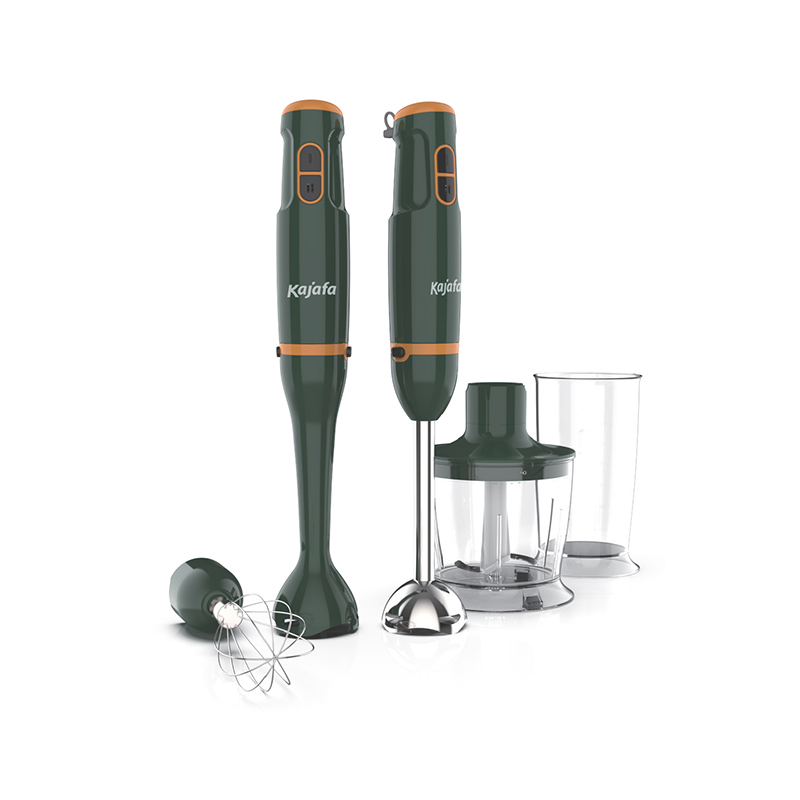
Many hand blender sets come with interchangeable attachments that substantially expand what the base motor can do. Common additions include:
- Whisk attachment — for whipping cream, beating eggs, or aerating batters
- Mini chopper bowl — a small food processor cup for onions, garlic, nuts, and herbs
- Milk frother — a separate wand attachment for cappuccinos and hot drinks
- Measuring/blending beaker — a tall narrow cup that comes with many sets, useful for emulsifying mayo or making single-serve smoothies
A 5-in-1 hand blender set with all of these attachments can genuinely replace several separate kitchen gadgets, which is part of the appeal for people with smaller kitchens or tighter budgets. The savings in drawer and countertop space are real.
What a Hand Blender Cannot Do
Honesty matters here. A hand blender is not a replacement for a countertop blender in every scenario. It cannot crush ice effectively — the blade design and motor power aren't built for that kind of resistance. It won't produce the ultra-smooth, completely homogenous texture that a high-speed countertop blender achieves with fibrous raw greens or hard frozen fruit. And it requires you to hold it throughout the blending process, unlike a countertop blender you can walk away from. For large-batch blending — a gallon of soup, several liters of smoothie — a countertop model is simply more practical.
Quick Guide
If you make soup at least once a week and value fast cleanup, a hand blender will pay for itself in time saved within the first month of use. If frozen drinks are your priority, stick with a countertop model.
Personal Blenders: Built for Single-Serve and On-the-Go
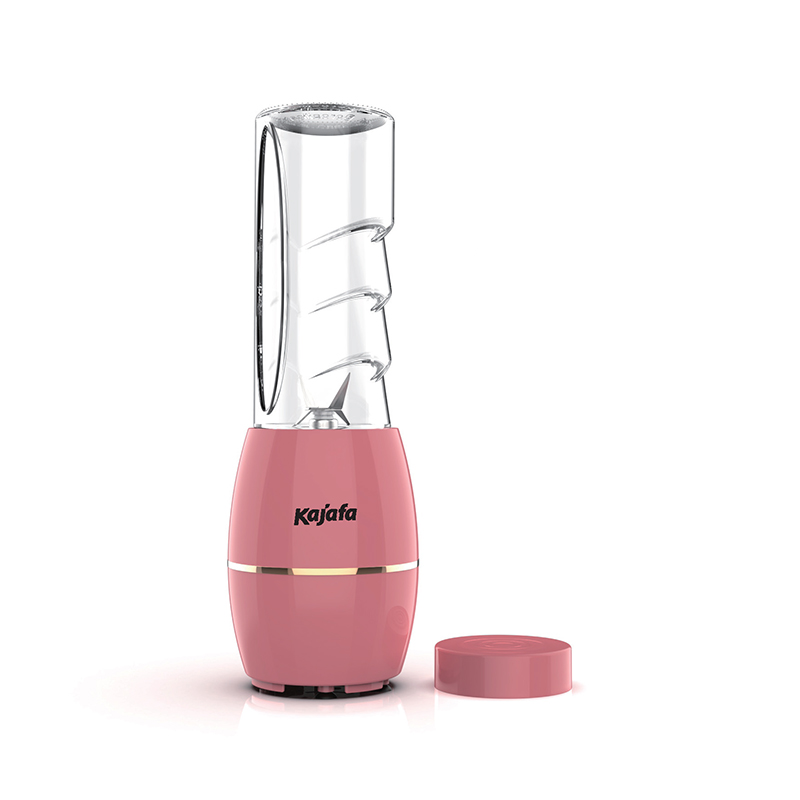
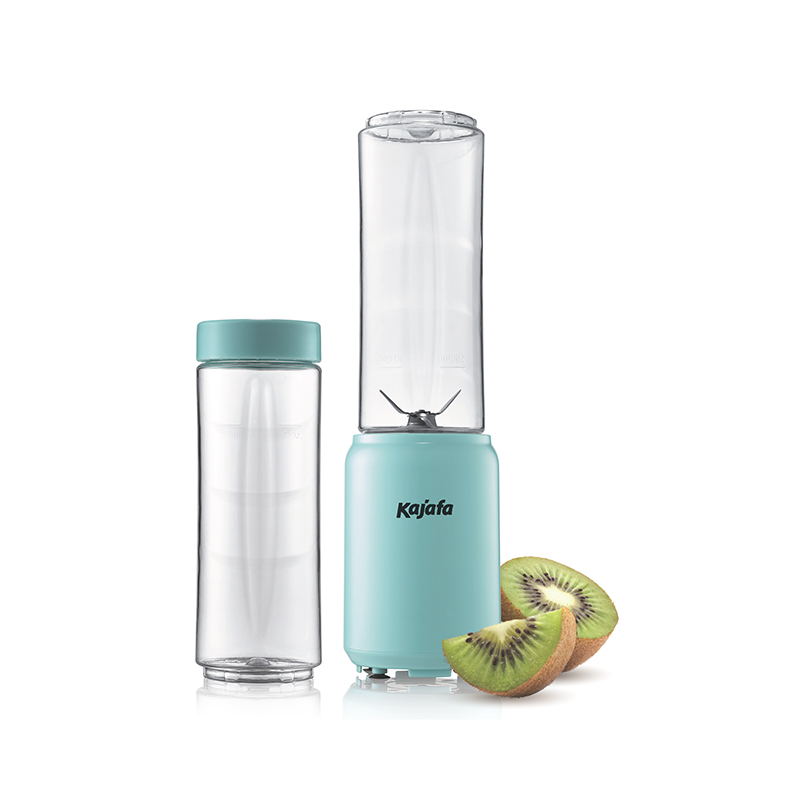
Personal blenders — sometimes called single-serve blenders or bullet blenders — are compact countertop machines designed to blend directly into a cup that doubles as a travel container. You load your ingredients into the cup, screw on the blade assembly, flip it onto the motor base, blend, then detach the cup, pop on a drinking lid, and take it with you. The entire process from loading to leaving takes under three minutes.
The category is dominated by models built for smoothies, protein shakes, and yogurt-based drinks — not heavy-duty blending work. That said, motor power in this category has climbed steadily. Many current personal blenders operate between 700W and 1,200W, which gives them enough muscle to handle frozen berries, spinach, and ice cubes without stalling — the core requirement for anyone making green smoothies or protein shakes before the gym.
Cup Sizes and Capacity
Personal blender cups typically range from 18 oz to 32 oz (roughly 530ml to 950ml). Some sets include multiple cup sizes — a smaller one for a quick shot-style blend and a larger one for a full meal-replacement shake. Capacity is a real limitation if you're trying to make two servings at once; for that, a countertop blender is the better tool.
Where Personal Blenders Fall Short
Personal blenders are not designed for hot liquids, and most manufacturers explicitly warn against blending soups or steamed vegetables directly in the cup. They also have limited versatility compared to a hand blender or countertop model — you can't use them for emulsifying sauces, blending in a pot, or working with large batches. The blade assembly and cup threading can wear out over time, and replacement parts aren't always easy to source for budget models.
Commercial Blenders: What Professional Kitchens Actually Use
Commercial blenders are built for sustained, high-volume operation. Where a home countertop blender might be rated for blending cycles of 30–60 seconds with cool-down time between them, a commercial blender is designed to run multiple cycles back-to-back throughout an entire service shift. The motors are larger, the blades are heavier-gauge stainless steel, and the jar materials are typically thicker and more impact-resistant.
Motor power in the commercial category starts around 1,800W and can reach 3,500W or more in high-end professional units. At that wattage, these machines can pulverize virtually anything — ice, frozen fruit, whole nuts, raw vegetables — in under 60 seconds and consistently produce completely smooth results. The noise levels are significant, which is why many commercial models come with sound enclosures.
Do You Actually Need a Commercial Blender at Home?
For most home cooks: probably not. Commercial blenders start at around $300 and can exceed $1,500 — a steep investment for blending that happens a few times a week. The exception is serious home cooks who use a blender multiple times per day, make thick nut butters or raw-vegetable smoothies regularly, or have found that consumer blenders wear out within a year or two under their usage patterns. In those situations, the durability premium of a commercial machine often pays off over a 5–10 year horizon.
How to Choose the Right Blender Type for Your Kitchen
The best blender is the one that matches what you actually cook — not the most powerful, not the most expensive, and not the one with the most attachments you'll never open. Here's a decision framework based on cooking habits rather than marketing specs.
01
You make a lot of soups and sauces
A hand blender is the standout choice. The ability to blend directly in the pot eliminates transfer steps, reduces cleanup, and prevents hot-liquid spill risks. A 400–600W model handles most home soup volumes without effort.
02
You want daily smoothies or frozen drinks
A countertop blender with at least 1,000W is the right call. If it's always single-serve, a powerful personal blender works and saves countertop space. For frozen margaritas or large batches, go countertop.
03
You have minimal storage space
A hand blender wins this category outright. It fits in a kitchen drawer and, with the right attachment set, replaces a food chopper, whisk, and smoothie blender. No countertop footprint required.
04
You cook for a large family or meal-prep in volume
A full-size countertop blender with a 6–8 cup jar is the practical choice. For professional-level durability under heavy daily use, consider stepping up to a commercial-grade model.
05
You want one versatile tool that does many jobs
A mid-range hand blender with a full attachment kit (chopper, whisk, frother, beaker) is often the most space-efficient and cost-effective solution for kitchens that need flexibility without clutter.
Key Specs to Understand Before You Buy Any Blender
Blender marketing frequently uses wattage numbers as the main selling point, but wattage alone tells an incomplete story. Here's what the numbers actually mean — and what to look at instead.
Wattage vs. Horsepower
Wattage measures electrical input, not mechanical output. A 1,500W motor isn't necessarily twice as effective as a 750W motor — the blade design, gearing, and thermal management all affect real-world blending power. Horsepower (HP) ratings describe output and are more meaningful, but they're less commonly listed on consumer products. As a rough guide, 1 HP ≈ 746W.
Blade Design
More blade tips aren't always better. What matters is the angle (pitch), material (hardened stainless steel vs. standard), and the gap between blade and jar wall. Blenders with blades that sit close to the jar wall create a stronger vortex and blend more efficiently than wide-gap designs, even at the same wattage.
Speeds and Programs
Three to five variable speeds cover most home blending scenarios. More speeds give finer control but aren't necessary for typical use. Preset programs — smoothie, pulse, ice crush — are genuinely useful if you want consistent results without experimenting with manual settings each time.
BPA-Free Materials
All reputable blender manufacturers now use BPA-free plastics for jars and cups. This is now a standard feature rather than a premium one — if a product listing highlights BPA-free as a headline feature, it's worth verifying other quality claims are equally solid.
Warranty and Durability
Consumer blenders typically carry 1–5 year warranties. Commercial models often come with 5–7 year warranties on the motor. A longer warranty is a reasonable signal of build quality confidence from the manufacturer, though it doesn't replace reading user reviews for real-world durability data.
Noise Level
Blenders operate between 80 and 100 decibels at peak power — comparable to a lawnmower at the loud end. If noise is a concern (early morning, sleeping family members, apartment neighbors), look for models marketed specifically as "quiet" or those that come with a sound enclosure housing. Hand blenders are notably quieter than countertop models at equivalent tasks.
Frequently Asked Questions About Blender Types
Can a hand blender replace a countertop blender entirely?
For many home cooks, yes — with one important caveat. A hand blender handles soups, sauces, purees, emulsified dressings, and single-serve smoothies without issue. It cannot crush ice effectively or produce the ultra-fine texture that a high-speed countertop blender achieves with frozen ingredients. If you make smoothies with a lot of frozen fruit daily, keep both. If soups and sauces are your primary blending tasks, a hand blender alone covers the workload.
What wattage should a hand blender have for daily use?
For typical home cooking — soups, sauces, baby food, single-serve smoothies — a hand blender in the 400–600W range performs well and won't overheat with regular use. If you plan to use it on tougher ingredients like raw root vegetables or fibrous greens in larger quantities, stepping up to 700–800W provides a useful margin. The highest-output hand blenders at 1,000W are built for demanding kitchen environments and offer durability under continuous daily use.
Is a personal blender the same as a hand blender?
No — these are two distinct types. A personal blender is a compact countertop machine that blends in a sealed cup and is primarily designed for single-serve smoothies you take on the go. A hand blender (immersion blender) is a handheld device you insert directly into open containers — pots, bowls, cups — without a fixed jar or lid. They're optimized for completely different tasks.
Which type of blender is easiest to clean?
Hand blenders have the clear advantage here. Most models feature a detachable blending shaft that rinses under running water or wipes clean in seconds. Some have dishwasher-safe shafts. Countertop blenders require washing the jar (which can be awkward for wide-mouth models) and dealing with the blade assembly. Personal blenders are reasonably easy to clean but have blade assemblies with thread grooves that can trap residue over time.
The Bottom Line on Blender Types
The four types of blenders each have a clear lane. Countertop blenders handle the widest range of tasks and are the right default for most households. Hand blenders are the most practical tool for soups, sauces, and emulsifying — and their compact footprint, fast cleanup, and lower price make them the smartest first purchase for many home cooks. Personal blenders are purpose-built for single-serve smoothies and on-the-go use. Commercial blenders are for high-volume, professional-grade demands.
If you're starting from zero and can only buy one, consider the hand blender first. It's the most versatile tool relative to its cost and storage footprint — and if you later find you need more blending power for frozen drinks or large-batch work, a countertop model makes a logical addition rather than a replacement. Most experienced home cooks eventually keep both on hand. They don't overlap as much as you'd think.


 英语
英语 中文简体
中文简体