
 英语
英语 中文简体
中文简体

Content
- 1 Yes, Turmeric Works in Smoothies - Here Are the Rules
- 2 Why Your Daily Turmeric Smoothie Actually Matters
- 3 How Much Turmeric Should You Add to a Smoothie?
- 4 The Best Ingredients to Pair with Turmeric in a Smoothie
- 5 Three Turmeric Smoothie Recipes That Actually Taste Good
- 6 Choosing the Right Blender for Turmeric Smoothies
- 7 Common Mistakes When Adding Turmeric to a Smoothie
- 8 Frequently Asked Questions About Turmeric Smoothies
- 8.1 Does turmeric in a smoothie need to be cooked first?
- 8.2 Can I use fresh turmeric root instead of powder?
- 8.3 How much turmeric is too much in a smoothie?
- 8.4 Can I prepare a turmeric smoothie in advance and store it?
- 8.5 What if my blender is low-powered?
- 8.6 Is turmeric in a smoothie better than taking curcumin supplements?
- 8.7 What does turmeric taste like in a smoothie?
- 8.8 Can I put turmeric in a smoothie without black pepper?
Yes, Turmeric Works in Smoothies - Here Are the Rules
Adding turmeric to a smoothie is not just a health trend; it is one of the simplest ways to consume curcumin daily. But the difference between a good turmeric smoothie and a bitter, gritty paste comes down to three factors: fat, black pepper, and blending technique.
Curcumin, the main bioactive compound in turmeric, is fat-soluble. This means when you drink a smoothie made only with fruit and turmeric, the curcumin largely passes through your digestive tract without being absorbed. A study published in Planta Medica in 1998 by Shoba et al. demonstrated that adding piperine from black pepper can increase curcumin bioavailability by as much as 2,000%. This remains one of the most widely referenced findings in herbal medicine research.
The practical implication: for every 1/2 teaspoon of turmeric you use, add about 1-2 tablespoons of a fat source such as yogurt, nut butter, or coconut cream, plus one small pinch of black pepper. Then blend at high speed for at least 30 seconds to create a stable emulsion.
One common mistake is adding turmeric at the end of blending. This leaves the powder suspended but not emulsified, creating a gritty layer at the bottom of the glass. Instead, add liquid and turmeric first, give it a short pulse, then add all remaining ingredients and blend thoroughly.
Why Your Daily Turmeric Smoothie Actually Matters
Turmeric, botanically known as Curcuma longa, is the yellow spice that gives curry its color. Its therapeutic potential has been extensively studied. A review of curcumin's anti-inflammatory effects published in The Journal of Nutrition in 2020 found that daily supplementation of 500-1000 mg of curcumin led to measurable reductions in inflammatory markers such as C-reactive protein (CRP).
However, there is a wide gap between what is in a teaspoon of ground turmeric and what is in a curcumin extract supplement. Ground turmeric typically contains only 2-5% curcumin by weight. So 1/2 teaspoon of turmeric powder holds roughly 50-80 mg of curcumin. While that may seem low, regular consumption over time is what matters, especially when you pair it with fat and pepper to improve absorption.
Why a smoothie is one of the best delivery vehicles for turmeric:
- The liquid base helps disperse the powder more evenly than mixing with dry foods.
- You can combine fat and pepper without thinking about it.
- Fruit like mango, banana, and pineapple easily masks the earthy taste.
- Cooling in a smoothie is perfectly fine. Curcumin does not need heat to be effective, although gentle heating in a small amount of oil can improve solubility.
A quick comparison: adding turmeric to plain water or tea offers very little curcumin absorption, because water contains no fat. A smoothie solves both the absorption problem and the taste problem in one step.
How Much Turmeric Should You Add to a Smoothie?
The right amount depends on your smoothie volume and whether you are using ground powder or fresh root. The table below gives practical proportions based on commonly used smoothie sizes.
| Smoothie Volume | Ground Turmeric | Fresh Turmeric Root | Black Pepper | Fat Source |
|---|---|---|---|---|
| 250 ml / 8 oz | 1/4 tsp (0.5 g) | 1/2 inch (3 g) | 1 pinch | 1 tbsp |
| 400 ml / 14 oz | 1/2 tsp (1 g) | 1 inch (6 g) | 2 pinches | 1-2 tbsp |
| 750 ml / 25 oz | 1 tsp (2 g) | 1.5 inches (9 g) | 1/8 tsp | 2 tbsp |
For daily use, 1/2 to 1 teaspoon of ground turmeric per smoothie is the most commonly recommended range in culinary and nutritional sources. If you prefer fresh root, wash and peel it well before slicing, as the skin is gritty and soil-bearing.
It is best to stay under 2 teaspoons of ground powder per day. Higher amounts can cause stomach discomfort in sensitive individuals. A 2021 open-label trial in the journal Current Developments in Nutrition tracked 28 adults taking approximately 1.5 teaspoons of turmeric daily for 30 days; no severe adverse effects were reported, but some participants did experience mild gastrointestinal discomfort.
The Best Ingredients to Pair with Turmeric in a Smoothie
The flavor of turmeric is earthy, mildly bitter, and slightly warming. Without thoughtful pairing, a turmeric smoothie can taste like diluted soup. Here are ingredients that work best.
Fat Sources That Improve Curcumin Absorption
- Coconut cream or coconut yogurt: 1-2 tbsp, adds richness without overpowering
- Full-fat Greek yogurt: 2-3 tbsp, adds creaminess and protein
- Avocado: 1/4 of a medium one, adds creaminess without strong flavor
- Almond butter, peanut butter, or cashew butter: 1 tbsp, also helps mask bitterness
- Extra virgin olive oil or flaxseed oil: 1 tsp, subtle and rich in omega-3
Flavor Masks That Make Turmeric Taste Great
- Mango, pineapple, banana, or orange, frozen or fresh
- Apple plus a large handful of spinach for a green option
- Dates, honey, or maple syrup for sweetness; a ripe banana often does the job
- Vanilla extract, about 1/2 teaspoon, rounds out the earthy notes
Spices That Complement Turmeric
- Ginger: 1/4 inch fresh root or 1/4 teaspoon dried, works synergistically
- Cinnamon: 1/4 teaspoon, adds warmth
- Nutmeg: a tiny pinch is enough
Liquid Bases
- Oat milk, almond milk, or coconut water are common and effective choices
- Filtered water works fine if you are also using yogurt or nut butter, around 1 cup
A practical consideration: if you are using a small personal blender, choose ground turmeric instead of fresh root. The limited blade speed of a compact blender often fails to break down fibrous fresh turmeric root. If you prefer fresh root, a blender with at least 800W power and a larger jar will do a better job.
Three Turmeric Smoothie Recipes That Actually Taste Good
Recipe 1: Golden Mango Turmeric Smoothie
For a creamy tropical breakfast smoothie:
- 1 cup frozen mango
- 1/2 ripe banana
- 1/2 teaspoon ground turmeric
- 1/8 teaspoon black pepper
- 1 tablespoon coconut cream
- 1 cup oat milk
Blend on high for 40 seconds. The mango masks the bitterness almost completely, and the banana adds body. This is a good morning drink because the fat from coconut cream improves curcumin absorption.
Recipe 2: Tropical Turmeric Green Smoothie
For a nutrient-dense anti-inflammatory blend:
- 1 cup fresh spinach
- 1/2 cup pineapple chunks
- 1/2 banana
- 1/2 teaspoon ground turmeric
- 1 pinch ground black pepper
- 1 tablespoon almond butter
- 3/4 cup coconut water
Blend for 45 seconds. The spinach is not overpowering when paired with pineapple and banana. Almond butter provides the fat needed for curcumin absorption, and coconut water keeps it refreshing.
Recipe 3: Ginger-Turmeric Berry Smoothie
For a focused anti-inflammatory meal:
- 3/4 cup mixed fresh or frozen berries
- 1 tablespoon almond butter
- 1/2 inch fresh ginger root, peeled
- 1/2 inch fresh turmeric root, peeled, or 1/2 teaspoon ground turmeric
- 1/8 teaspoon black pepper
- 3/4 cup unsweetened milk of your choice
Blend for 35 seconds. If using fresh turmeric root, cut it into small pieces before blending. Ginger pairs beautifully with turmeric, and berries add antioxidants along with natural tartness.
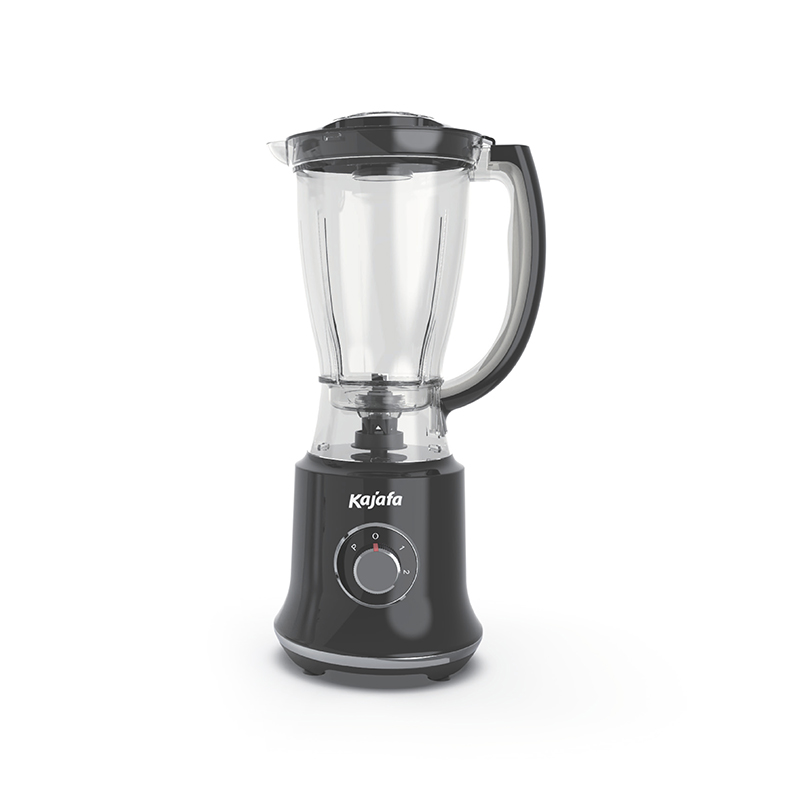
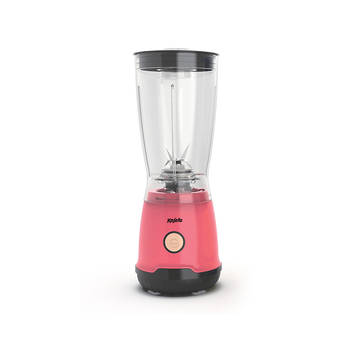
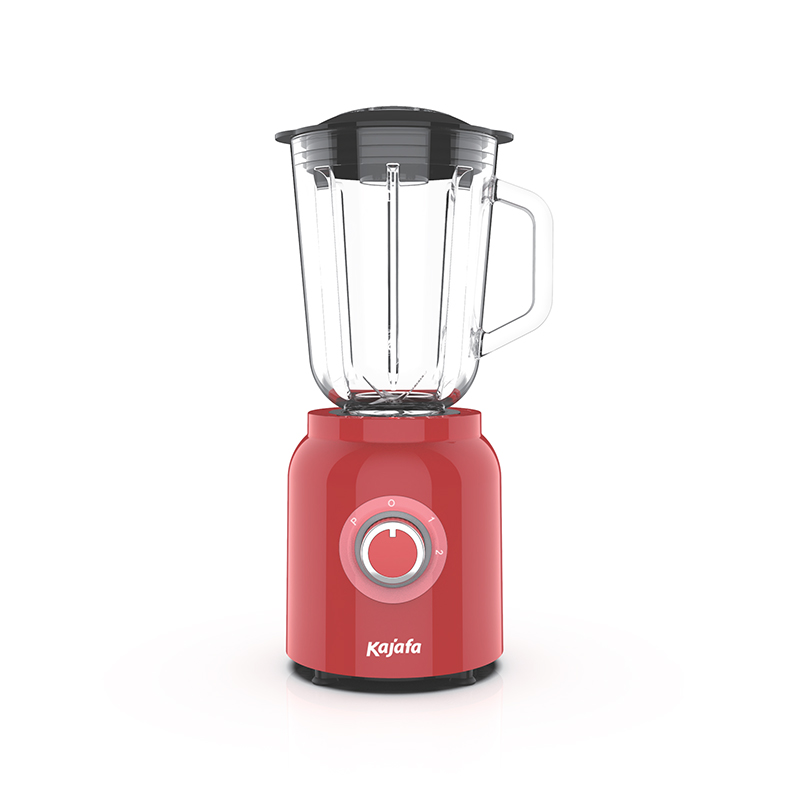
If you are making a smoothie just for yourself, a mini blender with a 14-ounce cup is a convenient tool. Use about 1/4 teaspoon of pre-ground turmeric, a small dose of fat, and a squeeze of citrus, then blend for 50-60 seconds to ensure the powder fully incorporates. For making these recipes regularly at home, a 700W countertop blender offers a practical balance of power and jar size.
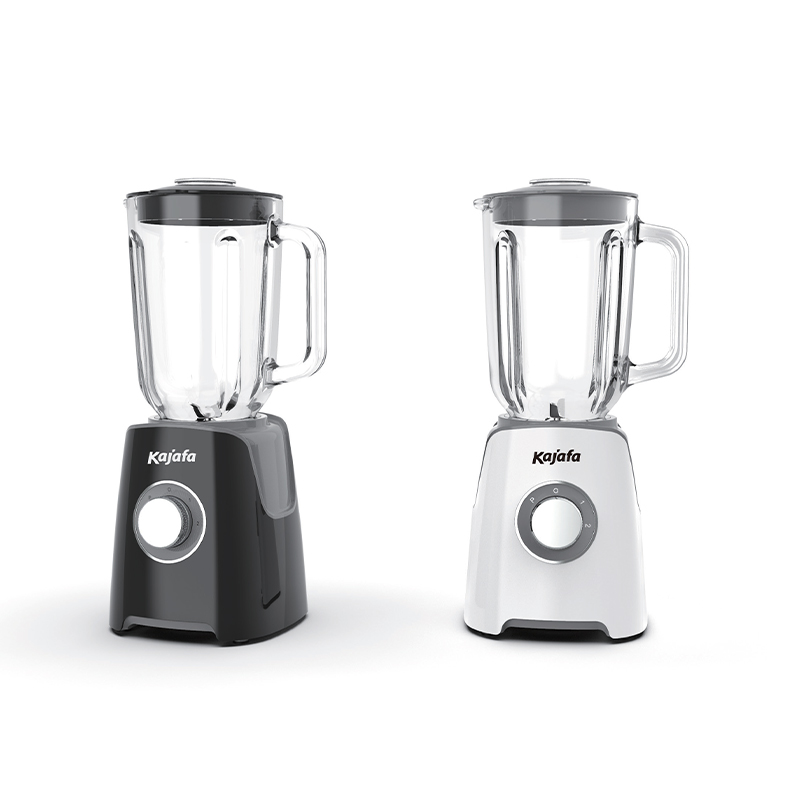
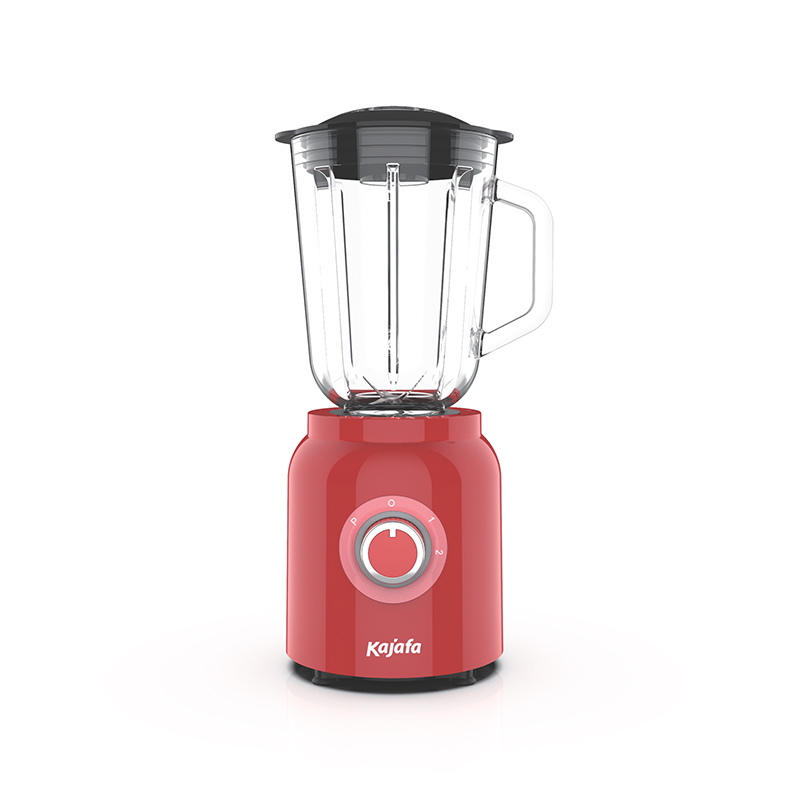 700W Countertop Blender with 1.5L Glass Jar for Smoothies and Crushed IceThis 700W blender with a 1.5L glass jar offers two speeds and pulse functions, making it a practical choice for incorporating ground turmeric into regular smoothies at home.View Product →
Choosing the Right Blender for Turmeric Smoothies
Turmeric smoothies put certain demands on a blender that a regular fruit smoothie might not. Powder clumping, fibrous root particles, and oily mixtures all need specific capabilities.
The Three Most Important Features
Motor power. To blend ground turmeric powder into a smooth emulsion, you need at least 500 watts. Powder is heavier than fruit and can easily settle at the bottom of the jar. With a strong motor, the blades generate enough force to keep the powder suspended. For fresh turmeric root, move up to 800W or higher, because the root is woody and requires strong blades to fully puree.
Blade design. Blades arranged in a cross pattern create a vortex that pulls ingredients from the sides toward the center. This is critical for turmeric powder, which tends to stick to the jar walls. A pulse function is especially useful, because it helps break the powder into the liquid in short bursts before the high-speed blend.
Jar capacity and material. A glass jar is more durable and does not stain as strongly as plastic, which is a real concern with yellow turmeric. A 1.5L glass jar is a reliable household choice for daily turmeric smoothies.
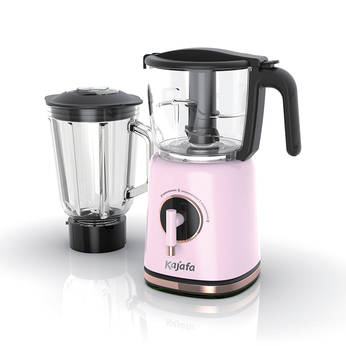
If you want to use fresh turmeric root in larger batches, a high-speed blender with 1200W or more is the better option. The extra power fully breaks down the fibrous root and also handles frozen mango, whole spices, and seeds such as flax or chia.
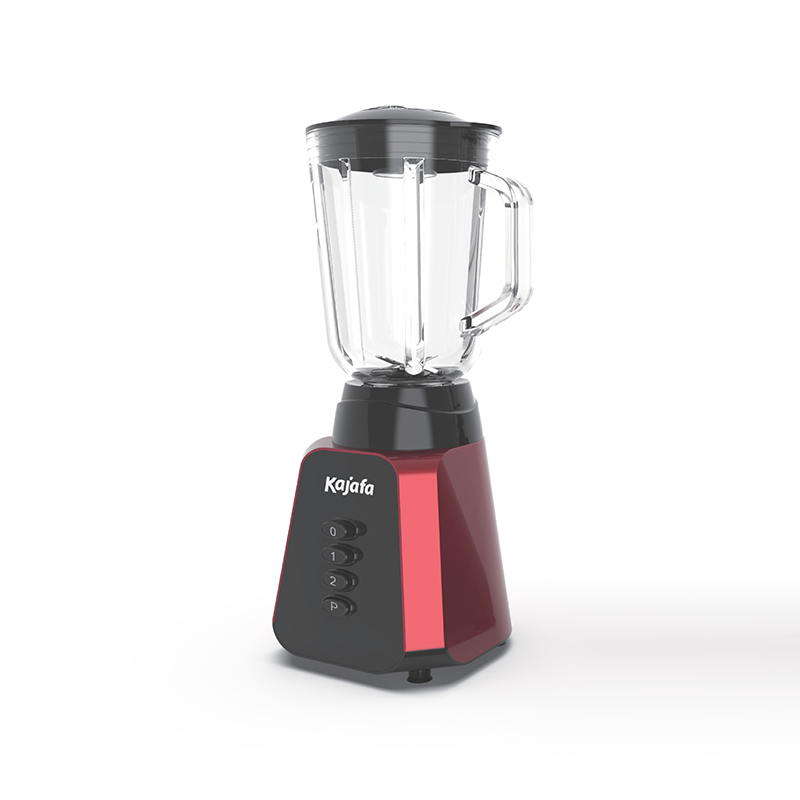
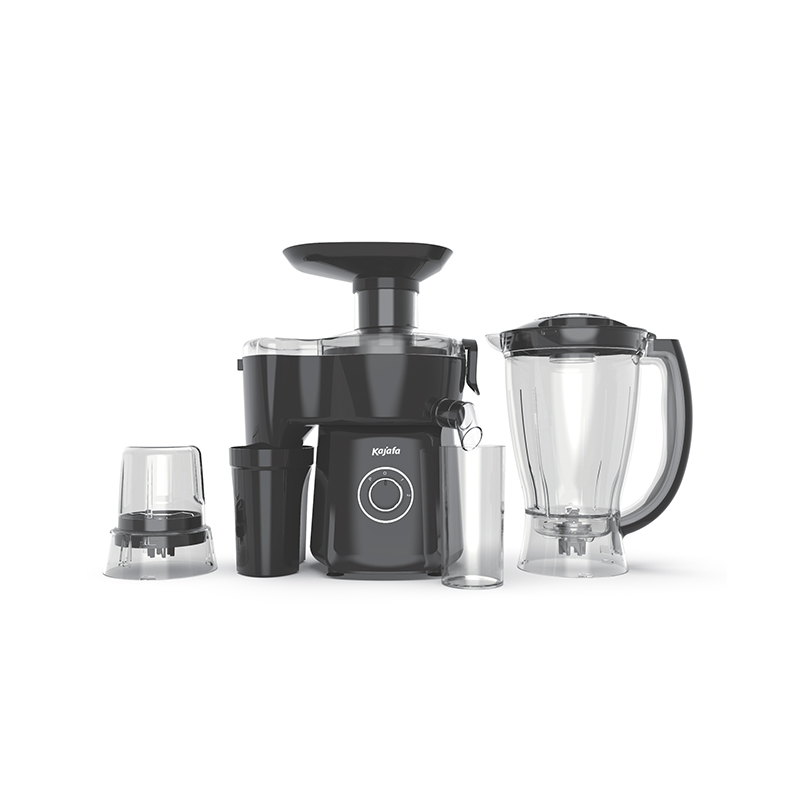
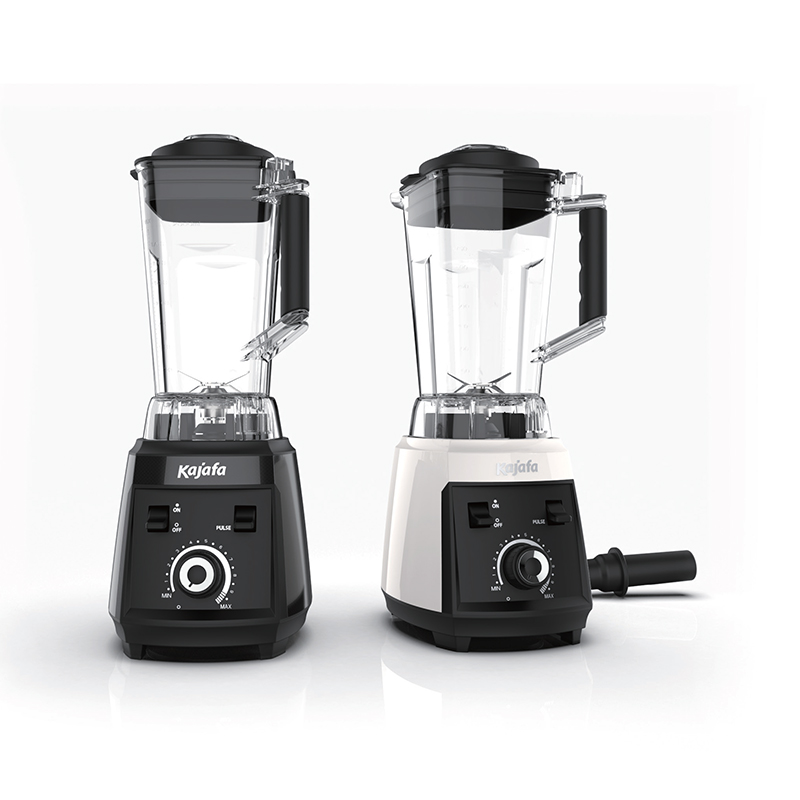 1200W High-Power Blender with 2000ml Capacity for Versatile Kitchen UseWith 1200W power and a 2000ml jar, this blender can handle fresh turmeric root and fibrous ingredients, plus ice, seeds, and more for larger batches.View Product →
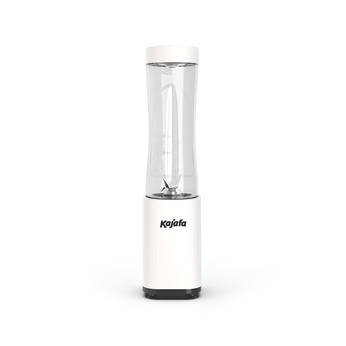
When you are traveling, at the gym, or packing breakfast for the office, a mini blender with a travel lid is convenient, provided you stick to ground turmeric. Mini blenders are typically between 250W and 400W, which is enough for powders and soft fruits but not for fresh turmeric root.
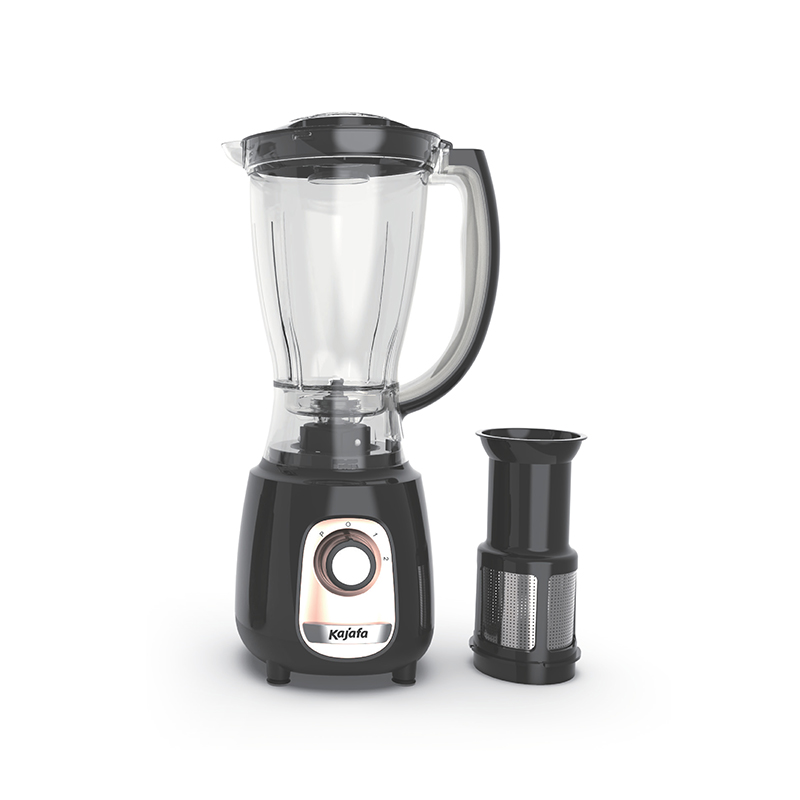
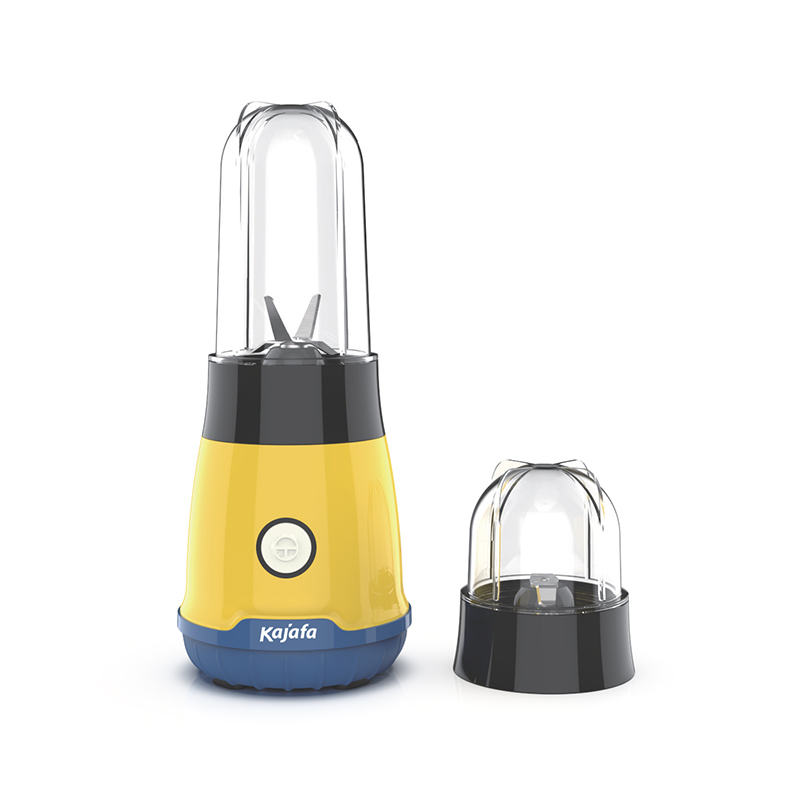 250W Personal Blender with Two Cups for Shakes and SmoothiesThis compact personal blender includes two cups and a pulse function, ideal for making single-serving turmeric smoothies with ground powder while on the go.View Product →
For a deeper look at what matters when selecting a countertop blender, the article on tips for buying a countertop blender covers motor power, jar materials, and speed settings in detail. If you are weighing wattage specifically, the breakdown of how to choose a countertop blender based on motor power offers a practical comparison of common power classes.
Common Mistakes When Adding Turmeric to a Smoothie
Below are the most frequent errors people make when adding turmeric to smoothies, and how to fix each one.
Mistake 1: Skipping the Fat
Without a fat source, curcumin passes through the digestive system mostly unabsorbed. Add at least 1 tablespoon of coconut cream, yogurt, avocado, or nut butter.
Mistake 2: Skipping the Black Pepper
Piperine in black pepper is the single most effective natural enhancer of curcumin absorption. The combination is well documented. A small pinch is enough; you will barely taste it.
Mistake 3: Using Old Turmeric Powder
Ground turmeric loses its volatile oils and curcumin content over time. After 6-12 months of storage in a spice jar, its potency declines noticeably. Write the purchase date on the container and replace it every year.
Mistake 4: Blending Too Briefly
Some people pour ingredients into a blender, pulse for five seconds, and pour. That leaves a layer of powder at the bottom. For turmeric, blend on high for 30-45 seconds to create a fully emulsified texture.
Mistake 5: Adding Turmeric Without Liquid
The powder needs to combine with liquid first. If you put powder, banana, and frozen fruit in all at once, the powder can clump. Always add liquid and turmeric first, pulse a couple of times, then add the rest.
Mistake 6: Using Only Ice and Frozen Fruit
Ice is fine, but without liquid and a fat source, there is very little to hold the curcumin in solution. Add the liquid first, then the fat, then the ice.
Mistake 7: Overdosing Turmeric
More is not better. Adding 3 teaspoons to one smoothie will ruin the taste and may cause stomach discomfort. Stick to 1/2 to 1 teaspoon per smoothie.
Frequently Asked Questions About Turmeric Smoothies
Below are clear, direct answers to the most common questions about adding turmeric to a smoothie.
Does turmeric in a smoothie need to be cooked first?
No, raw turmeric is perfectly fine. The body absorbs curcumin from raw turmeric when it is consumed with fat and black pepper. However, gentle cooking in a small amount of oil can increase solubility. If you prefer, you can warm the turmeric with a tablespoon of coconut oil for about 30 seconds, let it cool, and then add it to the smoothie.
Can I use fresh turmeric root instead of powder?
Yes. One inch of fresh turmeric root is roughly equivalent to 1/2 teaspoon of ground turmeric. Peel the root and slice it into small pieces first. Fresh turmeric has a more citrus-like and aromatic flavor compared with the warm and earthy taste of dried powder.
How much turmeric is too much in a smoothie?
A single smoothie can safely contain up to 2 teaspoons of ground turmeric, but that is already on the strong side. Staying between 1/2 and 1 teaspoon per day is a reasonable guideline. Higher amounts over long periods may cause digestive irritation in some people.
Can I prepare a turmeric smoothie in advance and store it?
Turmeric can stain and its color will deepen over time. The best practice is to consume turmeric smoothies within 4-6 hours when stored in a sealed container in the refrigerator. Beyond that, the texture and flavor will degrade.
What if my blender is low-powered?
Use ground turmeric instead of fresh root. Also, add the liquid and turmeric first, pulse a few times, and then blend on high for a full 30-40 seconds. A 400W to 500W mini blender can handle this as long as you do not add too many frozen items at once.
Is turmeric in a smoothie better than taking curcumin supplements?
Turmeric in food offers natural, balanced intake because you are pairing it with fat and spices. Supplements provide higher, standardized amounts of curcumin. Both are valid in different contexts, but food does not replace doctor-recommended supplementation in clinical situations.
What does turmeric taste like in a smoothie?
Ground turmeric tastes earthy, warm, and slightly bitter. In small amounts it is almost unnoticeable. When paired with mango, pineapple, banana, and citrus, the flavor is almost completely masked. Fresh root has a brighter, slightly aromatic quality.
Can I put turmeric in a smoothie without black pepper?
Yes, but you will get less benefit. Black pepper contains piperine, which has been shown in clinical research to improve absorption of curcumin. If you do not like the taste of pepper, use a very small pinch; it is barely noticeable.