
 英语
英语 中文简体
中文简体

Content
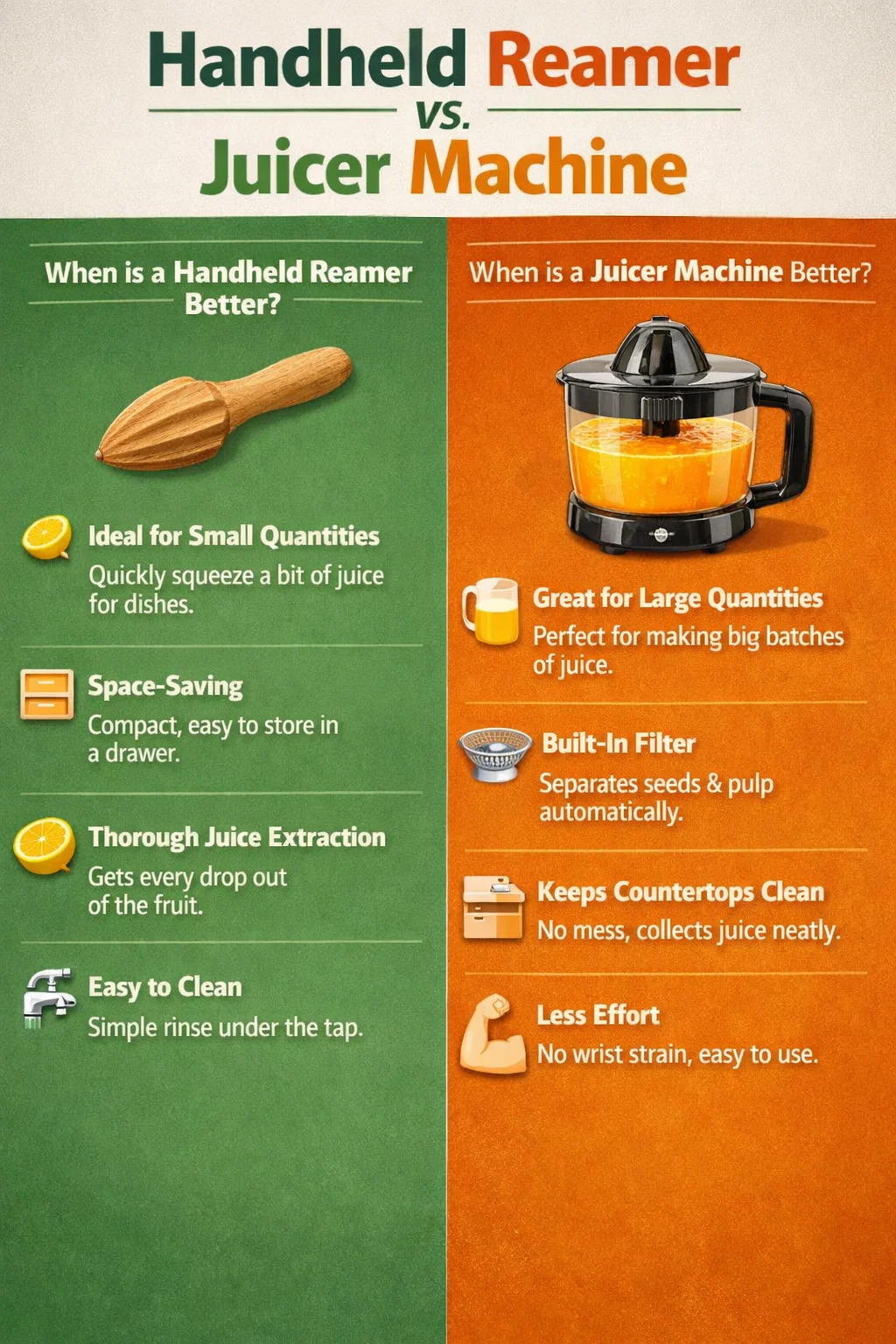
In the kitchen, is it more cost-effective to use a handheld reamer or a juicer with a bowl or motor? This is essentially a trade-off between "effort" and "efficiency."
Both tools have their uses, and there's no absolute "better" option; it simply depends on which is more suitable for your current task:
□ When is a handheld reamer better?
This type of reamer is usually a small wooden or plastic stick with grooves.
Suitable for small quantities:
If you only want to squeeze a little lemon juice onto grilled fish, or need the juice of half a lime for a salad, a reamer is the fastest. Just pick it up, twist, and you're done.
Space-saving and easy to store:
It's like a large spoon; you can just toss it in a drawer, taking up no counter space.
Very thorough juice extraction:
Because you're twisting it directly into the fruit pulp, you can specifically crush every corner of the fruit. Among manual tools, it often yields more juice than the clamp-style juicers.
Effortless cleaning:
It's just a stick; a quick rinse under the tap and it's clean.
□ When is a juicer better?
Here, "juicer" usually refers to a base-mounted machine with a collection container (whether manual press or electric rotation).
A lifesaver for large quantities:
If you need to squeeze a whole pitcher of orange juice for the whole family, using a handheld reamer will make your wrists ache. In this case, an electric or lever-operated juicer is much easier.
Built-in "filter":
Most citrus juicers have a built-in filter. With a reamer, seeds and large pieces of pulp will fall directly into the bowl, requiring secondary filtering; the machine automatically filters out the seeds, and the juice is ready to drink.
Keeps countertops clean:
Handheld reamers can easily splash juice everywhere, making your hands sticky. Juicers usually have a dedicated juice collection container, making the process cleaner and more hygienic.